AI Translation Services Hit $5.18 Billion as Businesses Expand Globally
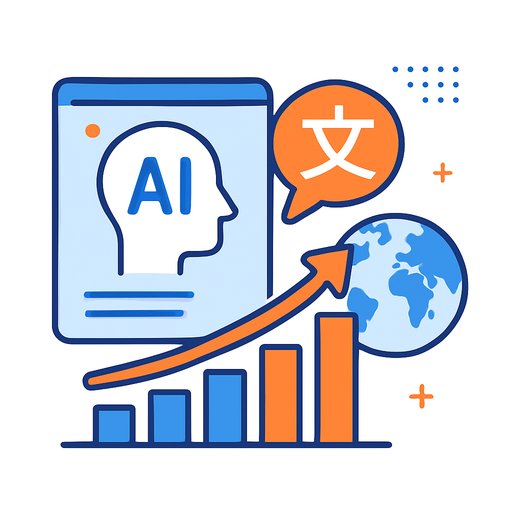
The global market for AI-enabled translation services reached $5.18 billion in 2025 and is projected to grow to $50.69 billion by 2035, expanding at an annual rate of 25.62%. The growth reflects widespread adoption across industries that need to serve customers in multiple languages.
For customer support teams, this shift matters directly. AI translation services now handle product descriptions, customer reviews, support documentation, and live chat interactions across languages at scale. Companies can respond to customer inquiries in their native language without hiring multilingual staff for every market.
How AI Translation Works
Neural machine translation-the core technology-processes entire sentences or paragraphs at once instead of translating word-by-word. The system uses deep learning models trained on billions of text samples to understand context, tone, and cultural references.
Three technologies power these systems:
- Natural Language Processing (NLP) helps machines understand context, sentiment, and idioms beyond literal word meanings.
- Neural Machine Translation uses encoder-decoder architecture to produce fluent, natural-sounding output.
- Machine Learning allows systems to improve over time by learning from user feedback and new data.
The result: translations that sound natural rather than mechanical, delivered in seconds instead of days.
Where AI Translation Delivers Immediate Value
E-commerce and retail use AI to translate thousands of product descriptions and localize search results automatically. Customer reviews get translated instantly, and support teams respond in the buyer's language.
Healthcare providers translate medical records and patient communications to ensure safety and compliance. AI handles high volumes while human specialists review critical documents.
Legal firms use AI to review foreign-language documents and translate contracts, cutting the time spent on initial analysis. Regulatory compliance documents are translated with consistent terminology.
Travel and hospitality companies deliver real-time translations to guests, improving satisfaction through personalized experiences in native languages.
Financial services rely on AI for compliance filings and customer statements, where precision prevents costly regulatory violations.
What AI Translation Cannot Do
AI misses humor, slang, and cultural nuance. A joke translated literally becomes confusing. Marketing copy that works in one culture may offend in another.
Neural machine translation covers only a fraction of the world's 7,000-plus languages. Rare languages still require human translators.
Creative content-advertising campaigns, brand messaging, emotionally resonant customer communications-still needs human judgment. AI produces technically correct translations that lack the insight to connect with audiences.
The Hybrid Model: AI and Humans Working Together
The most effective approach combines AI speed with human expertise. AI handles high-volume, routine translation. Humans review output for accuracy, cultural fit, and tone.
This shift changes job roles. Translators move from producing translations to editing and refining them. Customer support specialists spend less time manually translating and more time ensuring responses feel authentic to each market.
Nearly 96% of companies now use AI translation services and report positive returns. The cost savings come from automating repetitive work, not eliminating people.
Speed and Cost Benefits
AI translation delivers three concrete advantages:
- Speed: Instant translation of customer inquiries, product updates, and documentation.
- Cost: Reduced need for manual translation of high-volume, low-stakes content.
- Scale: Ability to launch in new markets without proportionally increasing translation costs.
Integration with existing systems is straightforward. AI translation tools connect to e-commerce platforms like Shopify and content management systems like WordPress. When a product description updates in English, the system automatically re-translates it across all languages using translation memory to maintain consistency.
What This Means for Customer Support
Support teams can now respond to customers in their preferred language without waiting for a translator. Ticket volumes that would require hiring multilingual staff can be handled by smaller teams using AI assistance.
The trade-off is clear: AI handles volume and speed. Humans handle complexity and judgment. A standard refund request gets an instant translated response. A complaint about a product defect gets reviewed by a person who understands both the technical issue and the customer's frustration.
For professionals in customer support, this means the role evolves. The work shifts from manual translation to quality review, customer insight, and ensuring responses match brand voice across markets. That requires human judgment AI cannot replicate.
Learn more about AI for Customer Support and AI Translation Courses to understand how these tools integrate into support operations.
Your membership also unlocks: