
AI news ·
AI unifies hotel revenue management and group sales in United States travel industry
U.S. hotels merge revenue, sales, and marketing into AI-driven commercial engines. Room rates now fluctuate like financial instruments, creating risk and opportunity for travelers.
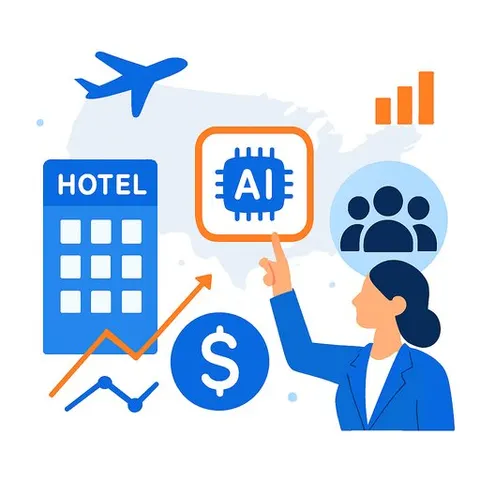
The U.S. hotel industry is embedding artificial intelligence as its central operating layer, merging revenue management, group sales, and marketing into unified commercial engines that adjust pricing in real time. This structural shift changes how travel demand is captured and monetized, moving beyond human forecasting into a continuous intelligence loop.
Traditionally, revenue managers, sales teams, and marketers worked in separate cycles with delayed data. AI now connects these functions, allowing hotels to respond instantly to market shifts rather than hours later. The result is a hotel that functions as a real-time data ecosystem, redefining United States travel industry operations through a commercial engine concept.
Predictive Pricing Replaces Static Forecasting
Revenue management systems now rely on predictive analytics to evaluate booking velocity, competitor changes, event-driven demand, and channel conversion rates. This enables dynamic pricing across multiple platforms simultaneously, creating a market where room rates fluctuate like financial instruments. For travelers, that means prices respond faster to demand, introducing both opportunity and added volatility.
Group Sales Becomes an Automated Demand Engine
Manual negotiation cycles that once took days or weeks are now compressed by AI-driven proposals, instant inventory matching, and conversion predictions. Hotels can generate dynamic group pricing that shifts with demand pressure, transforming corporate bookings into a faster, more competitive process. Cities reliant on business travel and conventions see the strongest impact as meeting and event tourism becomes algorithm-driven.
The resulting commercial intelligence systems merge property management, CRM, and digital marketing tools into a single predictive framework. Hotels can simulate outcomes before making pricing decisions, aligning room rates with broader tourism economics. This integration reflects a shift toward AI for Hospitality & Events commercial intelligence.
Linking Hotel Pricing to Airline Demand Cycles
AI integration allows hotels to align pricing with flight booking surges, route demand fluctuations, and regional tourism campaigns. When airline demand rises for a destination, hotel systems automatically adjust rates in response. This synchronization between airlines, hotels, and online travel agencies tightens revenue efficiency but also availability during peak periods.
Risks of Algorithmic Dependence
Over-dependence on algorithmic pricing reduces human flexibility in group negotiations and can increase consumer price volatility. Legacy system integration adds further complexity. The transformation demands a careful balance between automation and human commercial judgment.
Why this matters for hospitality and events professionals
Hotel pricing is no longer set by seasonal calendars; it's a live algorithm reacting to booking velocity, flight demand, and competitor movements. Professionals who manage events, conferences, and group bookings must now negotiate in an environment where room rates change within minutes. Understanding these AI-driven dynamics is essential for securing favorable contracts and anticipating availability during peak travel windows. The tools that once supported pricing decisions are making them directly, shifting the skillset needed from pure negotiation to data-aware strategy.