AI isn't killing collaboration. It's changing how it shows up.
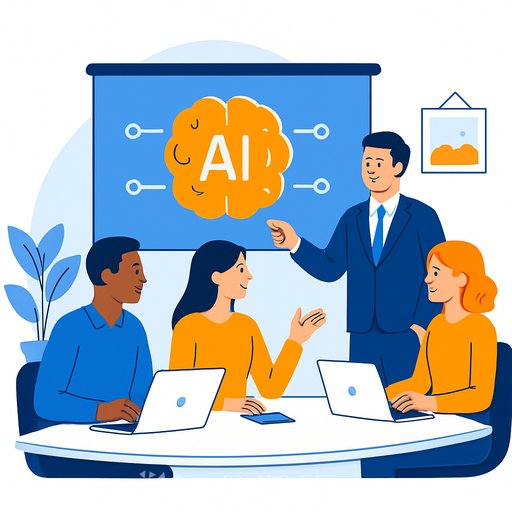
A new report from Gensler tells a different story about AI at work. Among 16,400 office workers across 16 countries, 30% are now "AI Power Users" who rely on AI in both work and life. These employees spend less time working alone, more time learning, and report stronger team relationships than late adopters.
As Janet Pogue McLaurin put it: "The employees most embedded in AI workflows are also the ones most engaged in learning and have better team relationships." That reframes the office and how HR should support it.
Key findings you can use
- 30% AI Power Users: Heavier AI use correlates with less solo work and more learning and social connection.
- Collaboration lifts, not drops: Power users spend more time working with others virtually and socialising compared to late adopters.
- Office pull = technology: 40% of power users say access to technology is their top reason to come in, vs 29% of late adopters.
- Human connection stays central: More open idea-sharing, learning from colleagues, and meaningful friendships among power users.
- Learning is the bridge: There's a clear link between AI adoption and learning needs-upskilling rises as adoption grows.
Source: Gensler Research Institute
What this means for HR
If AI removes rote tasks, people reallocate energy toward learning and relationships. That's good news for culture-if HR builds the right systems. The office has to earn the commute with tech access, real-time collaboration, and visible learning opportunities.
Moves HR can make this quarter
- Map your AI segments: Identify power users, mid adopters, and late adopters. Run a quick pulse on how AI use affects solo vs team time, learning habits, and office attendance.
- Reposition the office around "tech + together": Prioritise secure AI tools, high-performance devices, private rooms for AI-assisted work, and fast help when tools fail.
- Upgrade learning fast: Launch weekly micro-sessions, peer-to-peer demos, and "AI clinics." See our AI Learning Path for Training & Development Managers for structure.
- Coach managers: Train them to pair AI with team rituals-idea jams, design critiques, code or content reviews-so AI outputs get socialised, not siloed.
- Set simple guardrails: Data privacy, quality checks, and where AI is encouraged vs restricted. Keep it pragmatic and visible.
- Link AI use to growth: Reward contributions to playbooks, prompts, and internal learning communities. Make public sharing the norm.
Space checklist for learning-oriented workplaces
The report highlights factors that matter for effective learning. Pressure-test your spaces against these:
- Design look and feel
- Noise level
- Ability to rearrange meeting room furniture
- Equipped with the latest technology
- Accessible spaces to relax, recharge, and take breaks
Translate that into action: flexible rooms that flip from workshop to stand-up in minutes, clear acoustic zones, reliable AV for hybrid collaboration, and quiet lounges where people can reset between deep work and team sessions.
Metrics to track (tie them to talent outcomes)
- % of employees using AI weekly, and % classified as power users
- Time spent working alone vs with others (by role and team)
- L&D participation and skill attainment in AI-related topics
- Office visits driven by technology access (badge + survey)
- Team cohesion signals (eNPS, peer recognition, cross-team project count)
- Cycle times for rote tasks vs creative or collaborative work
For HR: act where the signal is clear
The "different story" here is simple: heavier AI use pairs with more learning and stronger relationships. Lean into that. Give people the tools, the rooms, and the rituals to make collaboration easy-and make the office worth the trip.
Want more practical ideas for people teams? Explore AI for Human Resources for recruiting, L&D, and people analytics strategies that match these trends.
Your membership also unlocks: