AI washing: When layoffs wear a tech halo
AI is the new cover story. Companies say "automation made us do it," then cut headcount for reasons that look a lot like old-fashioned overreach and cleanup. That's AI washing: using artificial intelligence as the headline to justify decisions rooted in hiring sprees, acquisitions, and management choices.
For HR, this matters. You're asked to execute the plan, protect culture, and keep talent aligned to strategy. You need a clear way to separate true AI-driven redesign from a cost-cut masked as innovation.
The Block case, in brief
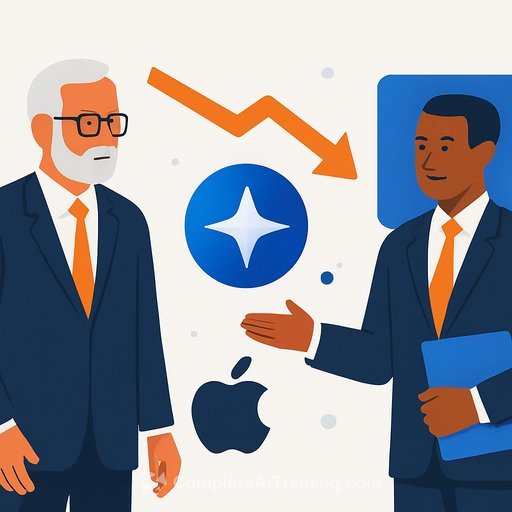
- Layoffs: 4,200 roles (~40% of staff), explained as a shift to smaller teams enabled by AI.
- Headcount: Grew from 3,835 (2019) to nearly 13,000 (2023) through hiring and big buys, including the $29B Afterpay deal in 2022.
- Financials: $24.19B revenue in 2025, but only $1.3B in net profit-an expensive cost structure.
- Efficiency gap: Operating income per employee ~ $167K vs. PayPal ~$269K and Adyen ~$281K. For each $1 of gross profit, Block keeps $0.16 vs. PayPal $0.41 and Adyen $0.53.
- Questionable spend: A $68.1M company party in Sept 2025 (plus moves like acquiring Tidal) raised eyebrows.
- Leadership line: AI enables "smaller and flatter" teams; better to do one decisive cut than a slow bleed. Later, an admission of over-hiring and structural mistakes during Covid, and a new target of >$2M gross profit per person (about 4x pre-Covid efficiency).
- Market reaction: Stock jumped ~24% post-announcement, even as shares are down ~72% over five years.
Block isn't alone. Salesforce and HP have also leaned on AI as a backdrop for large cuts. Amazon took a different tack: it didn't pin its layoffs on AI at all.
Why "AI did it" is so tempting
- It sounds strategic, not defensive. Investors hear "future productivity," not "we overspent."
- It deflects blame from past bets (acquisitions, org design, lavish costs) to an external force.
- It buys time. Markets often reward decisive action, even if operational proof is thin.
Fast test: Is this real AI-driven redesign or AI washing?
- Can leadership show which workflows are being automated, by what tools, and how work is being reassigned?
- Is there a role-level impact map (jobs eliminated, jobs redesigned, new roles created) with timelines?
- Have they run pilots proving measurable gains (cycle time, error rate, unit cost), or is it all projection?
- Are efficiency gaps tied to prior decisions (hiring surge, M&A, expensive projects) more than to AI opportunities?
- Is there a clear redeployment and reskilling plan for adjacent roles-or just exits?
What good looks like (before cuts)
- Process inventory with automation candidates tagged by value and feasibility.
- Documented tools, governance, and data readiness (access, quality, privacy, risk).
- Role redesign: task decomposition, RACI shifts, and updated job descriptions.
- Evidence from pilots: baseline vs. post-AI metrics with confidence intervals.
- People plan: redeploy, reskill, or reduce-sequenced to minimize disruption and legal risk.
Questions HR should ask leadership-before signing off
- Which processes are being automated now, and which are assumptions for later?
- What specific tools and models are in use, and what's the governance/risk posture?
- Where is the headcount impact by function, role, location, and timeline?
- What metrics prove the need (unit economics, per-employee output, gross profit per person)?
- What alternatives were weighed (hiring freeze, attrition, contractor reduction, redeployment)?
- How will workloads be rebalanced to prevent burnout in "survivor" teams?
- What's the reskilling budget and success criteria? Who qualifies and how?
- How will we measure post-cut productivity and course-correct if targets aren't met?
- Which legal, DEI, and works council requirements are triggered, and what's the plan to comply?
The responsible AI workforce reduction playbook
- Map work, not titles: break roles into tasks; automate the tasks, redesign the role.
- Pilot before promises: 60-90 day proofs with clear baselines and audit trails.
- Measure unit outcomes: cost per ticket, claims per FTE, time-to-resolution-not vanity KPIs.
- Redeploy first: internal mobility funnels, apprenticeships into AI-augmented roles, and time-boxed reskilling.
- Rightsize vendors and contractors before core staff when practical and lawful.
- Fair exits: consistent selection criteria, enhanced severance, outplacement, and visa-sensitive support.
- Transparent comms: specific operational rationale, not buzzwords; avoid blaming "the machines."
- Post-cut safeguards: workload caps, change freezes, and weekly metric reviews for 90 days.
Metrics that separate hype from execution
- Gross profit per employee and operating income per employee (trended vs. peers).
- Cycle time, rework/defect rate, SLA adherence, and customer NPS/CSAT.
- Automation coverage (% of eligible tasks automated) and human-in-the-loop accuracy.
- Span of control and management layers post-reorg.
- Reskilling throughput (% redeployed within 90 days) and 6-12 month retention of redeployed talent.
Communication that preserves trust
- State the business gap in plain numbers. Then show the process and role maps.
- Be honest about past choices that drove today's structure. Employees can handle the truth.
- Replace generic "AI efficiency" lines with specifics: where, how, and with what results.
- Publish a simple before/after org view and service-level commitments customers can expect.
Alternatives to straight layoffs
- Backfill freeze + targeted attrition with internal mobility to growth teams.
- Contractor consolidation and vendor renegotiation.
- Job sharing, reduced hours, and voluntary separation programs.
- Task-level automation to lift capacity before removing roles.
Bottom line for HR
AI can boost output. It doesn't erase decision-making. If leadership can't point to specific processes, tools, metrics, and a people plan, you're likely seeing AI washing. Push for evidence, protect the workforce, and document the path to real productivity-before you're asked to "make the numbers."
If you're building your own capability to judge AI claims and design responsible org changes, this helps: AI Learning Path for HR Managers.
Your membership also unlocks: