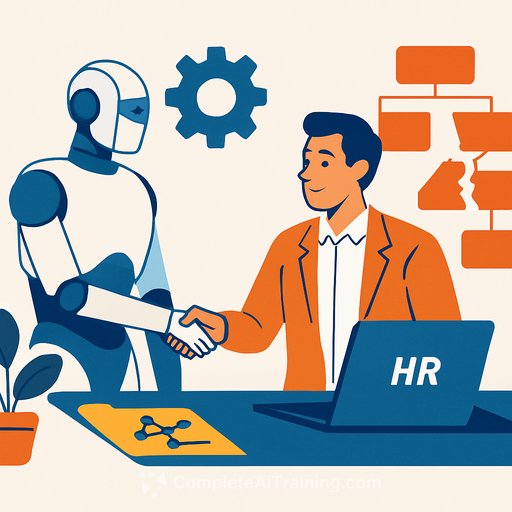
Leadership AI Won’t Replace HR, But It Will Expose Every Broken System
We’re living in a time where AI tools get adopted quickly, often more for appearances than readiness. Leaders rush to implement sleek technology without fixing the underlying systems—structures, ethics, and culture—that need attention first. This issue is glaring in HR.
Many companies plug AI into outdated job frameworks, inconsistent feedback practices, and unfair career paths. The result? AI speeds up existing bias and chips away at trust. If your competency models are old and your performance rewards focus only on output, AI won’t save you. It will simply mirror your dysfunction, but faster and louder.
The real question isn’t if AI will replace HR, but whether your systems can handle AI without breaking trust. If feedback is confusing, career options unclear, or internal mobility favors only the well-connected, AI will reflect that reality—amplified.
Automation Scales Everything, Including Confusion
AI isn’t neutral. It magnifies whatever already exists in your organization, good or bad. Take the example of a company that introduced a talent-matching platform to boost internal mobility. The tool worked, but top performers didn’t apply for new roles. Why? They hadn’t received the feedback or coaching needed to feel confident pursuing new opportunities.
In another case, an AI rollout was paused for 90 days—not because the technology wasn’t ready, but because managers weren’t prepared to lead through the change. The delay allowed for better training and resetting expectations, which led to lower turnover, increased mobility, and faster rebuilding of trust.
These stories highlight why the “fix it after the pilot” mindset is risky. You can’t automate what you haven’t clearly defined. And you definitely shouldn’t automate what you haven’t audited. Before launching AI tools for hiring, feedback, or performance, ask:
- Are job levels clear and fair?
- Do feedback loops create clarity or protect power?
- Is psychological safety practiced or just promised?
These aren’t abstract questions—they’re essential design choices. Trust is the foundation for AI success.
HR’s New Mandate: Architects Of Humanized AI
HR can’t avoid AI. Instead, HR must shape it. HR leaders are in a unique position to embed ethics, clarity, and inclusion into the AI systems their companies rely on. But this requires more than just input—it demands real influence. Here are steps to make sure your AI tools deliver real value:
- Audit before automating. Broken systems don’t get better by automation. Look for missing or uneven performance signals before introducing AI.
- Build cross-functional launch teams. Bias doesn’t live in just one department. Involve DEI, legal, IT, and operations early to ensure cultural alignment.
- Measure behavior, not just output. Behavioral science should guide your AI governance. Check if your AI rewards insight or just speed, encourages dissent or punishes it.
- Design recovery and feedback loops. No AI is perfect. Set clear protocols for when things go wrong. Who handles escalations? Who can override decisions? Are employees aware of how to raise concerns?
Human-Centered AI Must Become Our Standard
More than 60% of companies plan to increase AI investment in 2024, yet few have clear policies addressing ethics and employee well-being, according to McKinsey’s 2024 State of AI report. This isn’t a technology gap—it’s a leadership gap.
Rejecting AI won’t protect people. Real protection comes from refusing to build systems that ignore how people actually work, grow, and thrive. Machine learning may write your organizational philosophy in code. So if you don’t trust your current performance system without AI, don’t trust it with AI.
AI won’t disrupt HR. It will shine a light on who’s already stopped doing the hard work.
Your membership also unlocks: