AI Is Breaking the "More Heads = More Revenue" Rule. HR Has to Rethink the Plan.
Executives are starting to decouple revenue growth from headcount growth. AI lets smaller teams ship more, faster. That sounds like a contraction story-until you zoom in on where demand is actually spiking.
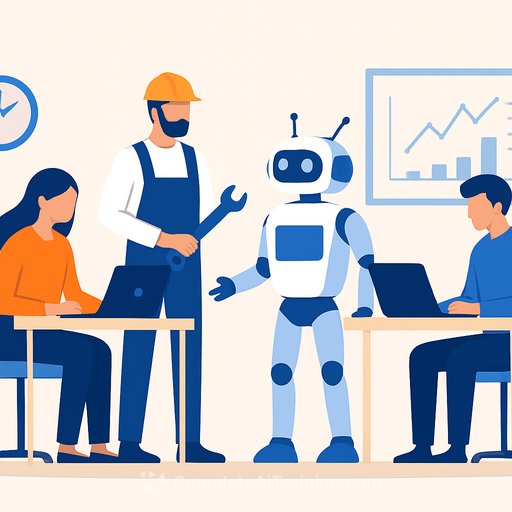
Three areas are hiring hard because of AI: skilled trades to build infrastructure, L&D to reskill workforces, and a new class of white-collar roles that supervise and orchestrate AI systems. For HR, this isn't a distant trend. It's showing up in workforce plans and budget meetings right now.
What This Means for HR-Right Now
- Workforce planning splits: fewer hires in certain back-office roles, more in technical trades, AI ops, and L&D.
- Job definitions shift from "doing the task" to "designing, supervising, and improving the task with AI."
- Budgets tilt from headcount to tech-without always reducing headcount. Expect more redeployment and upskilling.
Where Demand Is Surging
1) Skilled Trades: The Bottleneck No One Budgeted For
AI infrastructure needs humans: electricians, electrical engineers, low-voltage techs, and construction crews. Data centers, power delivery, and networking builds are outpacing available talent. Leaders in the sector report shortages in the thousands, with key markets constrained by electrician supply.
This isn't just about available megawatts. It's about the people who can bring that power safely into racks and servers. Skills take years to develop, which means the gap will stick around unless HR stands up pipelines now.
- Prioritize regional hiring partnerships: IBEW locals, community colleges, military transition programs.
- Fund apprenticeships and fast-track programs for power distribution, substation work, and data center commissioning.
- Offer relocation, shift differentials, and project-completion bonuses in constrained markets.
- Make "time-to-power-on" a hiring KPI alongside time-to-fill and quality-of-hire.
U.S. BLS outlook for electricians and IEA data on data center energy demand help quantify the pressure.
2) Training and Reskilling: L&D Just Became a Profit Lever
Companies are restructuring roles around AI tools and need people who can work with them. Enterprise enrollments in AI courses are surging-platforms report usage nearly doubling year over year. Learning management systems are now mission-critical to deliver training at scale.
- Run a rapid skills inventory: map current roles to AI-adjacent skills (prompting, data literacy, workflow design, QA).
- Launch role-based tracks: ops + agents, sales + copilots, support + triage AI. Tie to certifications and performance goals.
- Stand up an L&D "ship fast" loop: 4-week sprints, cohort learning, applied projects, and manager sign-off on outcomes.
- Track outcomes: time-to-proficiency, task cycle-time reduction, error rates, and percent of work augmented by AI.
Need a structured starting point? See the AI Learning Path for Training & Development Managers.
3) AI Supervisors and Orchestrators: The New White-Collar Job
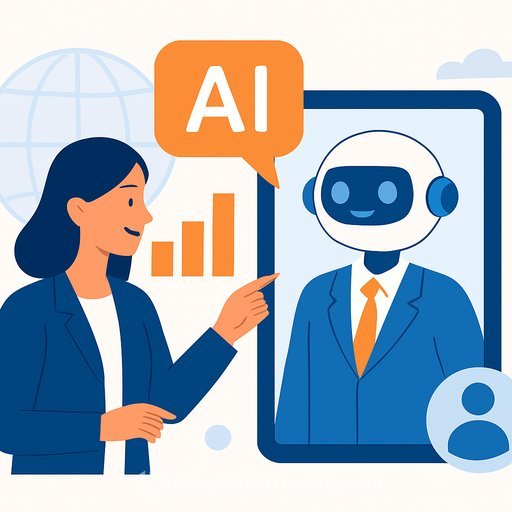
As agents take on routine tasks, humans move up a layer: designing workflows, setting guardrails, feeding context, reviewing exceptions, and improving prompts and SOPs. Several enterprises now tell staff that future roles will manage standard operating procedures and context for AI agents, not run operations directly.
Even metrics are changing. One large SaaS company introduced "Agentic Work Units" to quantify the value delivered by AI agents and the humans who manage them. HR should be ready with titles, comp bands, and assessments for these roles.
- Sample titles: AI Operations Manager, Agent Orchestrator, Workflow Designer, LLM Quality & Safety Analyst.
- Core skills: process mapping, prompt and retrieval design, data hygiene, KPI setting, exception handling, basic scripting.
- Interview prompts: "Show a before/after workflow you improved with an AI tool." "How do you measure agent quality and drift?"
- Success metrics: agent coverage (% tasks automated), exception rate, cycle time, customer/employee satisfaction, audited accuracy.
A Tale of Two Labor Markets
Some teams are shrinking as AI improves throughput. Others are hiring into trades, L&D, and orchestration roles. Companies are leaning on natural attrition, shifting spend from labor to technology, and reallocating headcount toward technical talent-while redefining job content across the board.
This is less a layoff story and more a remix. The winners are moving people into higher-leverage roles, not just cutting.
Your 90-Day HR Plan
Days 0-30: See the Field
- Audit functions for AI impact: what's automating, where throughput is rising, and where quality risk exists.
- Map role changes: who moves from "doer" to "orchestrator," and what training they need.
- Open reqs for critical trades in priority regions; launch two apprenticeship partners.
- Define safety and data policies for AI use (PII, approval flows, human-in-the-loop checkpoints).
Days 31-60: Build the Muscle
- Launch role-based AI upskilling cohorts with manager-backed projects and clear performance targets.
- Publish starter JDs for AI Ops/Orchestrator roles; align comp bands with process-improvement or product-ops peer roles.
- Pilot "agentic" KPIs with one team: coverage, exception rate, time-to-resolution, and audited accuracy.
- Negotiate talent pipelines: staffing vendors for electricians and data center technicians with SLAs tied to project milestones.
Days 61-90: Scale What Works
- Codify new career paths: doer → orchestrator → AI ops lead. Tie promotions to measured outcomes.
- Convert high-signal pilots into SOPs. Roll to two more functions.
- Stand up an internal mobility sprint: redeploy at-risk roles into L&D cohorts heading for orchestration or analytics.
- Report to the exec team: productivity lift, redeployment rate, and avoided external hiring costs.
Role Design Cheat Sheet
- AI Operations Manager: Owns agent workflows, QA, and improvement backlog; partners with product/IT for tooling; reports on agentic KPIs.
- Agent Orchestrator: Builds prompts, SOPs, and context packs; triages exceptions; runs A/B tests; trains teams on usage.
- Data Center Electrical PM: Coordinates contractors, power delivery timelines, compliance, and commissioning handoffs; KPI: time-to-power-on.
Metrics to Put on the Board Slide
- Revenue per FTE vs. headcount trend (show the decoupling).
- Percent of tasks agent-assisted, exception rate, and defect rate.
- Time-to-proficiency post-training; internal fill rate for new AI roles.
- Project on-time delivery for data center builds and critical trades staffing SLAs.
Risks to Manage
- Quality and compliance drift from unsupervised agents-mandate human review thresholds.
- Vendor dependence-cross-train on multiple tools and keep process IP internal.
- Worker fatigue and change resistance-set realistic adoption targets and manager-led coaching.
- Market scarcity for electricians-lock in multi-year talent agreements where possible.
Bottom Line for HR
Headcount isn't the growth lever it used to be. Capability is. Hire where AI creates bottlenecks, retrain where it creates leverage, and redefine roles so people direct intelligent systems instead of competing with them.
If you're building HR's playbook for this shift, start with workforce planning, L&D, and role design. The companies that move first will capture the gains-and the talent.
Your membership also unlocks: