AI leaders warn of mass job displacement. Why the warnings go unheard
Elon Musk and Dario Amodei agree on almost nothing. They differ on politics, public style, and how they operate. But both are sounding the same alarm: AI is about to destroy jobs at a scale most people haven't grasped.
Amodei, CEO of Anthropic, calls it a "tsunami" visible on the horizon. Musk describes a "supersonic tsunami" already erasing white-collar positions and declared earlier this year that "we have entered the Singularity."
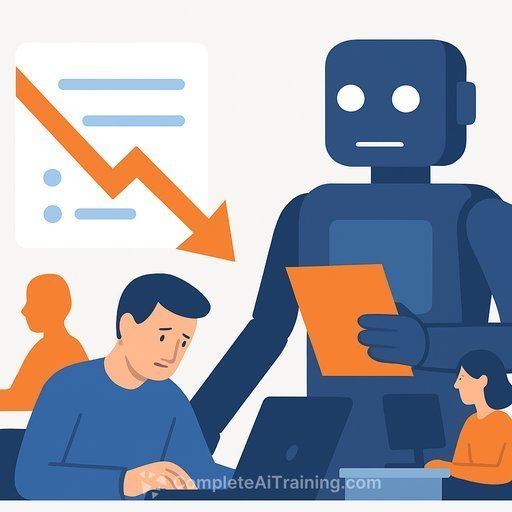
They are not speaking metaphorically. Both now view AI not as a tool that assists human work, but as a system that replaces it entirely.
Why warnings from insiders carry weight
Musk and Amodei are not critics of this technology. They helped build it. They invested billions to bring these products to market. When people this close to the machinery speak about trauma and upheaval, that carries a different kind of credibility than marketing.
Yet the warnings are being ignored.
The human response to crisis
People do not respond to vague warnings. They respond to pain. Until they feel it directly, they cling to normalcy.
Right now, most workers see helpful apps: chatbots, faster email drafting, better image generation. They do not yet see that the work they spent years learning to do-the work they are paid to do five days a week-can now be done better, faster, and far cheaper by a machine.
This gap between what is visible and what is coming creates what crisis professionals call "the brick wall of hope."
The messy middle no one wants to discuss
Nobody knows what the end state looks like. But the path from here to there will be brutal. History shows that major economic transformations produce long-term gains while inflicting severe dislocation on the people caught in them.
The real danger is not that AI will change the economy. It is that we are entering that transition completely unprepared.
What HR professionals face
For HR leaders, the stakes are immediate. Your role sits at the intersection of three forces now moving in different directions.
Schools continue steering students toward career paths that are shrinking in real time. Employers are racing to adopt AI tools with little thought about workforce impact. Government-the only institution with the reach to cushion economic disruption-is absent from the conversation.
You are being asked to manage growth and efficiency while the ground shifts beneath both.
Preparing for your moment of truth
Crisis professionals prepare by wargaming scenarios. Project yourself into the future at the moment change becomes personal. Imagine an ordinary Monday afternoon. A meeting invitation from HR arrives with no explanation and no agenda. Your stomach drops.
From that moment, options vanish fast. Bills go unpaid. Careers evaporate. The daily life you took for granted comes unglued.
Given this glimpse of the future, what would you want to have done today, while options still exist?
What you can do now
Build skills that machines cannot easily replicate. Strengthen your network before you need it. Understand your financial runway. Know what your next move would be.
For HR professionals specifically, develop expertise in AI for Human Resources and workforce analytics. If you lead HR strategy, the AI Learning Path for CHROs addresses the organizational transformation you will face.
Do not wait for the meeting invitation to arrive.
The real failure
Our society could fail not from the wave itself, but from refusing to believe it was coming until the water was already overhead. Right now, we are squinting at the horizon, telling ourselves it is a trick of the light.
The AI builders are warning with particular urgency because the political window for preparation is closing. Washington has shifted toward AI boosterism, leaving nothing between the disruption and the people in its path.
The warnings are real. The time to prepare is now.
Your membership also unlocks: