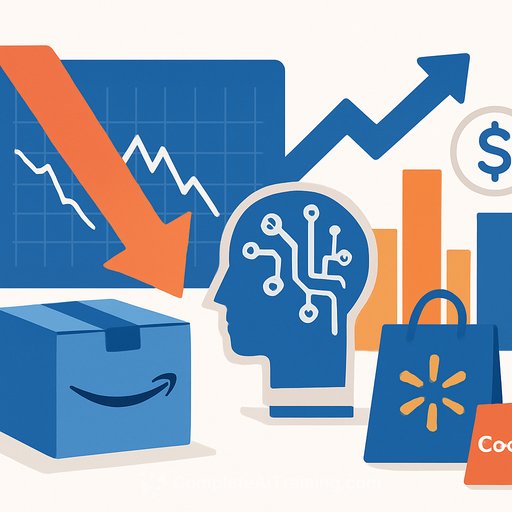
Amazon Stock Falls as Investors Favor AI Over E-commerce Dominance
Amazon's stock declined following its latest earnings report, even as the company maintains nearly 40% of the U.S. e-commerce market without meaningful competition. Investors are pricing the company based on its artificial intelligence work rather than its retail operations, which remain its largest business segment.
The shift reflects a broader market calculation: e-commerce leadership alone no longer commands premium valuations. Amazon's dominance in online retail is substantial and stable, but it's not where growth expectations lie.
Walmart Gains Ground With Digital Expansion
Walmart reported strong results for its fiscal fourth quarter ending in late January 2026, positioning itself as the world's second-largest retailer. The company's e-commerce sales rose 27% year-over-year in the U.S., while overall e-commerce grew 24%.
Three metrics stand out for sales teams: Walmart+ membership income increased 15% year-over-year. Fast delivery services, supported by the company's extensive physical store network, jumped 60% year-over-year. These numbers show how Walmart is converting store assets into competitive advantages in digital channels.
The membership program and fulfillment speed matter because they create recurring revenue and reduce friction in the buying process-both critical for sales growth.
Costco's Digital Sales Surge Past Expectations
Costco's fiscal second quarter results, released in mid-February 2026, reversed recent market skepticism. The company reported 9.1% year-over-year sales growth and 7.4% comparable sales growth.
Costco's digital strategy is producing outsized returns. Digitally enabled sales-the company's term for e-commerce-rose nearly 23% year-over-year. App visits increased 63%, website traffic grew 35%, and average order value climbed 15%.
For sales professionals, these numbers illustrate a pattern: membership models paired with digital channels and strong order economics create momentum that traditional retail metrics alone don't capture.
What This Means for Sales Strategy
The three retailers show different paths forward. Amazon owns scale but faces questions about growth. Walmart combines store density with digital execution. Costco demonstrates that membership-based models can drive double-digit digital growth even in mature markets.
The common thread: e-commerce is no longer a growth story by itself. Speed of delivery, membership loyalty, and order value matter more than transaction volume. Sales teams should track these metrics, not just revenue.
Your membership also unlocks: