What Amazon's Corporate Layoffs Signal for HR Leaders
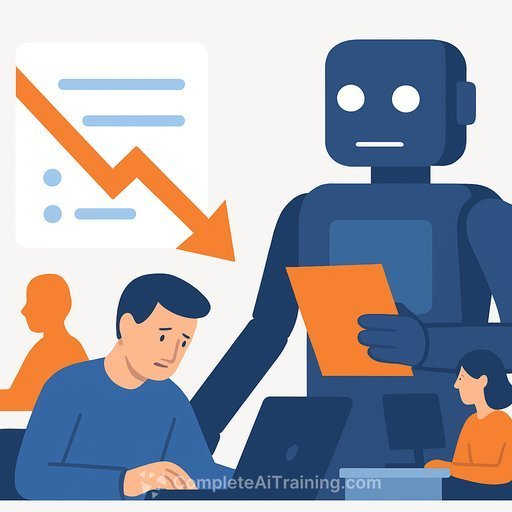
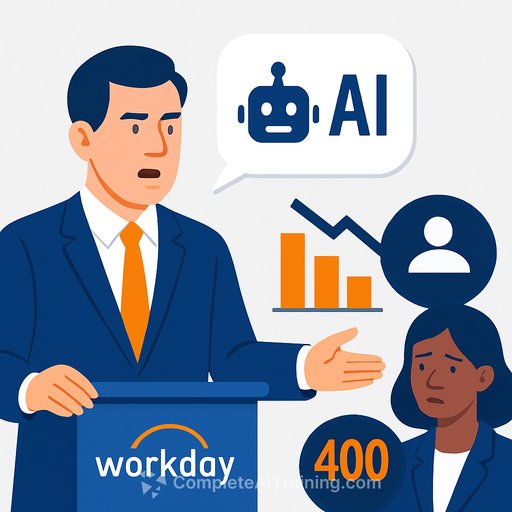
Amazon announced 14,000 corporate job cuts on October 28, 2025. The message: fewer layers, more AI investment, faster execution. The subtext for HR? Rethink org design, talent strategy and how people work alongside AI - without breaking governance or burning out your best people.
Executives framed the move around flattening bureaucracy and shifting resources into AI infrastructure. Analysts stress a key point: the cuts aren't proof that AI is replacing people at scale. They are a strategic reallocation to fund AI-driven products and platforms.
The headline vs. the signal
According to Gartner's Nate Suda, "Amazon's actions are not representative of a widespread AI-driven productivity gain." Nearly four in five layoffs in early 2025 were unrelated to AI, and less than 1% directly tied to AI productivity gains. Futurum's Dave Nicholson: this is a preemptive reorg to deliver AI services, not a victory lap on automation.
Translated for HR: treat this as a "talent remix," not a mandate to cut. Recompose teams around data, automation and platform capabilities - while keeping the domain experts who make automation safe and useful.
Why this matters for HR
- Headcount shifts from generalist roles to specialized AI-adjacent skills (data, automation, platform engineering).
- Flattening removes layers that also carry oversight, coaching and controls. That raises governance and compliance risk.
- AI can starve your pipeline of future leaders if juniors stop getting real experience.
- Change fatigue and knowledge loss spike if you cut the people who understand exceptions and edge cases.
Governance, Risk, and Org Design
Flattening speeds decisions, but it can also remove guardrails. AI doesn't change that equation. If you demand more from fewer people, you increase the odds of over-subscription and human error - especially in regulated functions.
The biggest automation risk Suda flags is "experience starvation." Senior staff armed with AI stop delegating, and juniors stop learning. AI can accelerate work; it can't manufacture judgment. You end up automating away tomorrow's leaders.
Chris Campbell, CIO at DeVry University, warns against cutting the experts who make automation work. Lose the SMEs, and you automate broken processes at scale. That's a fast path to rework, audit findings and customer issues.
If you operate in regulated sectors, flatten carefully. Keep clear accountability, separation of duties and audit trails intact. For practical guardrails, see the NIST AI Risk Management Framework and the EEOC's AI guidance for employment decisions.
Workforce Planning That Works with AI
Think tasks, not roles
Forrester's Mark Moccia suggests a simple approach: automate at the task level, not the role level. Start with low-variability tasks, rank by business value and error risk, then consider role implications. Skip the "who can we replace?" question - it leads to bad calls and failed programs.
- Inventory tasks by automation suitability (repeatable first; judgment-heavy last).
- Apply weighted criteria (business benefit, error risk, strategic priorities).
- Only then consider role redesign, redeployment or reductions.
Use Nicholson's test: "Would I bet my job on the output from this AI tool?" If the answer is no, keep human oversight. Many tools produce plausible results with subtle errors. Remove the human, inherit the risk.
Three AI patterns to watch (for HR planning)
- Experience starvation: Seniors go faster with AI; juniors stop learning. Response: hiring avoidance vs. reduction; protect apprenticeships and rotations.
- Experience compression: AI boosts juniors in low-to-mid complexity work. Reality check: true headcount reduction here is rare (fewer than 1% of cases observed).
- Experience redistribution: Pivot to AI-centric products and services. Response: reskill, redeploy and recruit for new revenue rather than "efficiency only."
Reskilling, Redeployment, and Budget
"Fix the process before you automate it." Keep the human expertise that helps automation learn and adapt. Then use part of the savings to build capability: data quality, training and governance - or the gains won't stick.
- Allocate roughly a third of AI program budgets to people: upskilling, reskilling, change management and hybrid roles (automation engineers, data translators).
- Prioritize internal mobility and retention of institutional memory. Replace "reduction-first" with "recompose-first."
- Stand up human-in-the-loop guardrails where AI outputs affect customers, finances or people decisions.
If you need a structured place to start reskilling, explore role-based AI learning paths at Complete AI Training - Courses by Job.
Technology Investment Meets People Capacity
AI shifts spend from OpEx on people to CapEx on infrastructure. The ROI is uneven and often delayed. Don't start with headcount targets; start with business value and work backward to tasks, roles and capacity.
Legacy systems complicate the math. Modernizing unlocks automation but carries risk, cost and learning curves. HR's role: ensure the workforce plan matches the technical roadmap - who runs what, where expertise sits and how you prevent burnout during the transition.
As infrastructure scales, operational risk climbs if staffing lags. Invest in observability and on-call maturity, or the remaining team will drown in exceptions. Burnout leads to attrition; attrition drains knowledge; knowledge loss kills velocity.
90-Day HR Action Plan
Days 0-30
- Map critical processes and the SMEs who handle exceptions. Freeze reductions in those pockets.
- Inventory tasks for automation suitability and error risk. Flag areas needing human-in-the-loop.
- Audit governance roles impacted by flattening (approvals, controls, audit trails).
Days 31-60
- Pilot task-level automation with clear success criteria and oversight.
- Launch apprenticeship and shadow programs to avoid experience starvation.
- Define redeployment pathways and learning plans for at-risk roles.
- Update job architectures with new hybrid roles (automation, data fluency, platform operations).
Days 61-90
- Begin redeployments; publish internal mobility windows before external hires.
- Commit ~33% of the AI budget to people (training, change, coaching, certifications).
- Set workforce KPIs: time-to-competency, exception rate, SME load, burnout indicators, quality metrics.
- Institutionalize governance: RACI for AI decisions, model risk review cadence, auditability standards.
Key Takeaways for HR
- Treat AI as a workforce remix, not a headcount shortcut.
- Protect governance, apprenticeships and SMEs - or you'll automate failure.
- Plan at the task level; validate with human-in-the-loop where stakes are high.
- Budget real money for people, not just infrastructure. The tech won't carry itself.
- Measure capacity, quality and risk as carefully as cost. Sustainable gains beat short-term cuts.
Your membership also unlocks: