
AI news ·
Anthropic launches 20 legal AI integrations as hallucination concerns persist in BigLaw
Anthropic launched 20+ integrations with legal software tools, embedding Claude into BigLaw workflows days after Sullivan & Cromwell apologized to a judge for an AI-generated hallucination in a court filing.
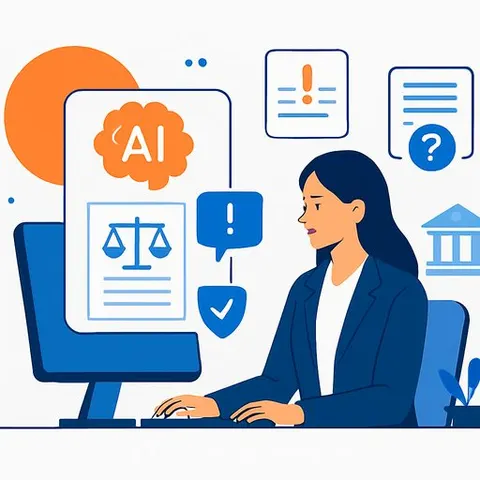
BigLaw Doubles Down on AI Despite Hallucination Warnings
Anthropic released more than 20 new integrations with legal software tools on Tuesday, positioning Claude as a direct participant in law firm workflows. The move comes weeks after judges sanctioned lawyers for submitting briefs with citations to cases that never existed-a problem created when AI systems generate false information with apparent authority.
The announcement included 12 role-specific plugins for tasks ranging from M&A due diligence to employment handbook drafting, plus integration with Microsoft 365 that embeds Claude across Word, Outlook, Excel, and PowerPoint. Claude Opus 4.7 scored 90.9% on Harvey's BigLaw Bench, the legal industry's primary AI benchmark.
Four major firms announced they are using Claude on live matters: Freshfields, Quinn Emanuel Urquhart & Sullivan, Holland & Knight, and Crosby Legal. Legal AI products including Harvey, Legora, Solve Intelligence, and Eve are built on Claude's models.
The Hallucination Problem Remains Unsolved
The timing underscores a central tension in legal AI adoption. Sullivan & Cromwell, a white-shoe firm, was caught including a hallucination in a bankruptcy court filing just weeks ago. The firm's partner apologized to the judge, writing: "We deeply regret that this has occurred."
Anthropic's solution is "grounding"-a connector architecture designed so Claude can only draw from verified sources like Westlaw case law, CourtListener's court opinion archive, and iManage document repositories. The premise is that AI reading actual documents behaves differently from systems generating text from training data.
"In litigation, an authoritative-sounding hallucination is worse than no answer," said Jay Madheswaran, CEO of Eve, a legal AI company built on Claude. Eve evaluates models against 24+ legal-specific metrics including citation accuracy and ungrounded case quotes. Claude "wins our internal bake-offs every time on the metrics that matter for legal work, particularly grounding and citation faithfulness," he said.
Jake Lauritzen, CTO of Legora, described Claude Opus 4.7 as showing "stronger consistency across long documents, better handling of nuanced instructions, and improved reliability in high-stakes workflows" compared to earlier models.
From BigLaw to Access to Justice
Legal has become the top power-user job function inside Anthropic's Cowork platform, the company disclosed. Tuesday's announcement positions Anthropic not just as an invisible model provider but as a direct participant in legal workflows-complicated territory given that Thomson Reuters is both a Claude data connector and a seller of competing AI products.
Anthropic is also making an access-to-justice argument. Roughly 80% of civil litigants appear in court without a lawyer. The company partnered with the Free Law Project, Courtroom5, and other legal aid organizations to offer their connectors to Claude users at no cost.
"Most people don't know they have legal rights until it's too late to use them," said Sonja Ebron, CEO of Courtroom5. "Claude can now meet them where they are-in the moment they're scared and searching for answers."
The legal industry has made its calculation. Whether the guardrails prevent future hallucinations will be settled in court.
Learn more: AI for Legal professionals covers how these tools are being deployed across legal workflows.