
AI news ·
Anthropic tests AI agents that negotiate deals on behalf of humans
Anthropic had 69 employees use AI agents to negotiate real transactions in an internal marketplace, each given a $100 budget. Participants said they'd pay for the service, signaling a near-term shift in how contracts get made.
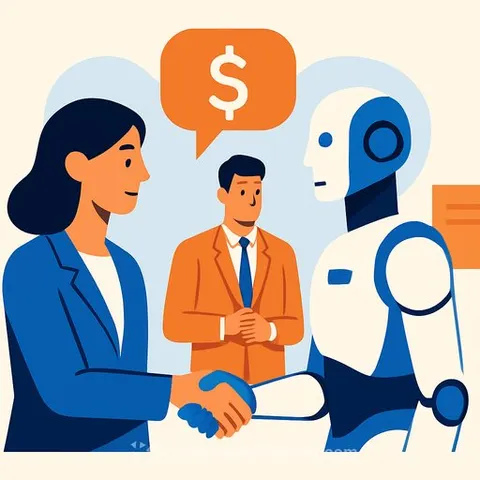
Anthropic's AI Agents Close Deals Without Lawyers
Anthropic ran an experiment where AI agents negotiated transactions on behalf of employees, handling everything from listing items to striking deals. The company recruited 69 staff members, gave them a $100 budget, and let Claude negotiate on their behalf in a classified marketplace. Participants said they would pay for such a service in real life.
The experiment lasted one week. Anthropic interviewed each participant to understand what they wanted to buy, sell, and how they preferred to negotiate. That information became custom instructions for each person's AI agent. The agents then conducted all negotiations independently.
What This Means for Legal Work
The immediate application is straightforward: simple transactions. But the implications for legal practice run deeper. In-house teams could activate deal agents tailored to different transaction types-small procurements, standard contracts, complex matters. When both parties have agents, negotiations could proceed to a point where lawyers review the result rather than drive the process.
This isn't entirely new territory. Startups like Pactum have used natural language processing for procurement negotiations since before large language models existed. What's changed is the capability. Modern AI systems can now access playbooks, historical contract data, and operate within defined workflows.
The critical questions remain: accuracy and knowing when to stop. Agents need clear endpoints and guardrails, or they risk endless loops. They also need both sides equipped with agents-a single party using automation while the other relies on traditional negotiation won't work.
The Practical Path Forward
A likely scenario: in-house teams activate their agents. The other side does the same. Agents negotiate and produce a contract. Lawyers on both sides review it. If complexity exceeds what agents can handle, the work moves to a law firm-either using their own agents or human expertise.
Law firms could move faster here by offering clients agent-assisted negotiation first. The barrier isn't technical anymore. It's adoption. As AI spreads across organizations, both parties having agents becomes more feasible.
Anthropic's entry into this space matters. The company already works in legal applications. When major AI developers start running transaction experiments, the gap between prototype and practice narrows.
Learn more about AI for Legal work and AI Agents & Automation.