
AI news ·
Korea releases English AI copyright guide ahead of WIPO talks
South Korea released English-language fair use guidelines for AI training data Monday, ahead of WIPO talks in Geneva. The framework judges each case on purpose, work type, amount used, and market impact - rejecting blanket rules.
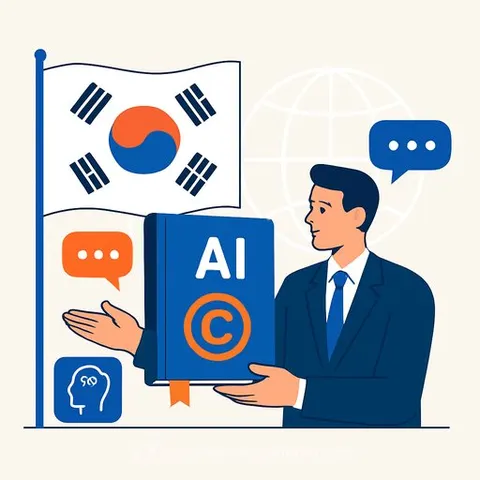
Korea releases AI copyright guidelines as courts worldwide weigh training data disputes
South Korea's Ministry of Culture, Sports and Tourism released an English version of its fair use guidelines for generative AI on Monday, positioning the country as a voice in the escalating global copyright debate. The guidelines, first published in Korean in February, outline when AI companies can legally use copyrighted material for training without compensation.
The timing is deliberate. Courts across the United States, Europe, and other jurisdictions are handling lawsuits from authors, artists, and media companies claiming tech firms committed mass copyright infringement by scraping their work. Korea's framework offers a structured alternative to litigation.
Four-pillar evaluation system
The guidelines break copyright analysis into four components: the purpose of AI use, the nature of the copyrighted work, the amount used, and the effect on the original work's market value. Each case receives individual assessment rather than blanket approval or rejection.
The approach is notably pragmatic. Commercial AI development and automated web crawling do not automatically disqualify a use from fair use protection. Instead, Seoul treats each situation on its merits, acknowledging that some commercial training may pass legal scrutiny while other uses do not.
The guidebook includes hypothetical scenarios showing where data scraping crosses legal boundaries. Officials stressed these are templates for analysis, not binding legal rulings. Courts retain final authority.
Diplomatic strategy at WIPO
Korea plans to debut the English guidelines at the World Intellectual Property Organization meeting in Geneva this week. Government delegates will use the document in bilateral meetings with U.S. and Chinese representatives to discuss harmonizing international AI policy.
By exporting its legal framework, Korea signals intent to shape AI governance rather than follow rules others set. The move reflects Seoul's strategy to establish itself as a policy leader in technology regulation.
For legal professionals navigating copyright disputes involving generative AI and LLM systems, Korea's guidelines provide a practical reference point. The framework's emphasis on case-by-case evaluation mirrors approaches emerging in U.S. courts, though with explicit government endorsement.
The guidelines address a core tension: whether AI for Legal applications and other commercial uses can operate under fair use doctrine. Korea's answer is conditional-legality depends on specific facts, not blanket rules.