ARAG: A Multi-Agent Framework for Context-Aware and Personalized Recommendations
Personalized recommendation systems have become essential in helping users find content, products, or services that match their preferences. Traditional approaches relied heavily on user history and simple filtering techniques. However, as user interests evolve, systems must adapt dynamically to provide relevant suggestions that reflect both long-term preferences and immediate context.
One key challenge in recommendation systems is the accurate modeling of user preferences, especially when historical data is limited or user behavior shifts unexpectedly. Methods based solely on recency or similarity struggle to capture deeper semantic connections or changing user intent. This often leads to recommendations that feel disconnected from what users currently want.
Limitations of Existing Approaches
Common strategies include recency-based ranking, which prioritizes items a user has interacted with recently, and Retrieval-Augmented Generation (RAG), which uses embedding similarity between user history and item metadata to select candidates. While effective at retrieving relevant items, vanilla RAG frameworks usually lack advanced reasoning capabilities and fail to integrate cross-session context, limiting their ability to rank items precisely according to user intent.
Introducing ARAG: Agentic Retrieval-Augmented Generation
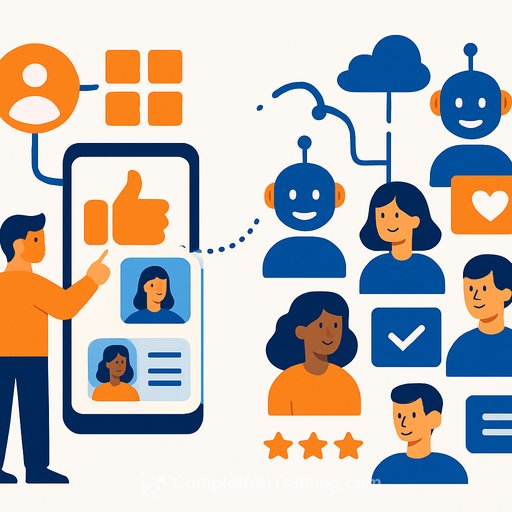
Researchers at Walmart Global Tech addressed these challenges by developing ARAG, a multi-agent system that breaks down the recommendation process into specialized reasoning tasks. Each agent handles a distinct function:
- User Understanding Agent: Profiles user behavior by summarizing past and recent interactions.
- Natural Language Inference (NLI) Agent: Scores how well item metadata aligns with inferred user preferences.
- Context Summary Agent: Condenses relevant information from candidate items to support ranking.
- Item Ranker Agent: Produces the final ranked list of recommendations based on inputs from other agents.
The agents operate collaboratively within a shared memory space, allowing them to consider each other's outputs. This setup enables parallel processing and complex reasoning that reflects both historical and session-level context.
How ARAG Works
The process starts by retrieving a broad set of candidate items using cosine similarity in the embedding space. The NLI Agent evaluates textual metadata of these items against the user's inferred intent, filtering candidates by alignment scores. The Context Summary Agent then extracts key information from the shortlisted items.
Simultaneously, the User Understanding Agent generates a profile summary from the user's behavior data. These profiles and summaries inform the Item Ranker Agent, which sorts the items to prioritize those most relevant to the user at that moment.
Performance and Validation
ARAG was tested on the Amazon Review dataset across various categories including Clothing, Electronics, and Home. The results demonstrated significant improvements compared to recency-based methods:
- Clothing: 42.12% increase in NDCG@5 and 35.54% increase in Hit@5
- Electronics: 37.94% increase in NDCG@5 and 30.87% increase in Hit@5
- Home: 25.60% increase in NDCG@5 and 22.68% increase in Hit@5
These metrics indicate ARAG’s effectiveness in ranking relevant items higher in the recommendation list.
Ablation Study Insights
Further analysis removed the NLI and Context Summary Agents individually, which led to noticeable drops in recommendation accuracy. This confirms that the multi-agent reasoning structure contributes significantly to the system's overall performance.
Implications for Recommendation Systems
ARAG addresses a common limitation in recommendation engines: the lack of deep contextual and semantic understanding of users’ preferences. By dividing the recommendation task into specialized reasoning components, ARAG achieves a more nuanced interpretation of user intent and session context.
This approach highlights how multi-agent frameworks can enhance recommendation accuracy and relevance by enabling collaborative reasoning. The findings suggest promising directions for building smarter, context-aware personalized systems.
For those interested in expanding their knowledge of AI-driven recommendation models and related topics, resources are available at Complete AI Training.
Your membership also unlocks: