
AI news ·
Ardent Health adopts Fujifilm imaging platform across 30 hospitals in six states
Ardent Health will deploy Fujifilm's Synapse imaging platform across 30+ hospitals in six states, integrating with Epic EHR. Clinicians can access radiology, cardiology, and other imaging data from one interface, including via mobile.
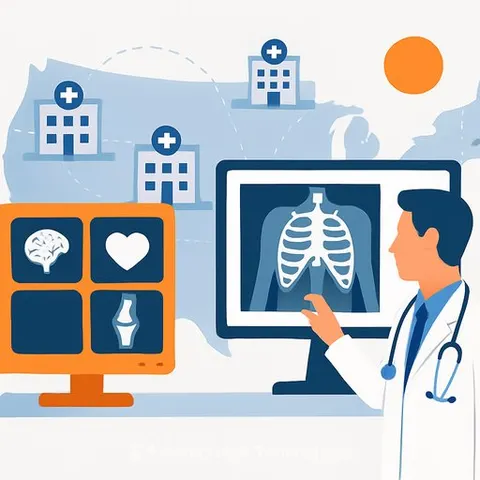
Ardent Health deploys Fujifilm imaging platform across six states
Fujifilm Healthcare Americas has signed a deal with Ardent Health to install its enterprise imaging software across more than 30 hospitals and 280 care sites in six states. The agreement gives clinicians access to patient imaging data from multiple departments-radiology, cardiology, and others-through a single interface integrated with Epic electronic health records.
Ardent, a Nashville-based healthcare operator focused on mid-sized urban markets, expects the deployment to reduce administrative burden on physicians and improve coordination among care teams. Financial terms were not disclosed.
What the platform does
Fujifilm's Synapse PACS system allows clinicians to retrieve a patient's complete imaging record remotely via mobile device or their existing Epic system. The integration eliminates the need to switch between separate applications to access reports and images.
The platform includes AI for Healthcare capabilities that flag urgent cases and accelerate test result delivery, according to Bill Lacy, senior vice president for Fujifilm's medical informatics business.
FJ Campbell, M.D., Ardent's chief medical officer, said the technology provides clinicians with "reliable, interoperable and clear diagnostic insights" while reducing documentation demands that contribute to physician fatigue.
Why this matters for healthcare operations
Healthcare systems increasingly face pressure to improve efficiency without expanding staff. Consolidating imaging data into one system reduces clicks and context-switching-direct time savings for busy clinicians.
The ability to access imaging remotely supports the shift toward distributed care models, where clinicians work across multiple locations. Mobile access lets physicians review cases outside the hospital without logging into separate systems.
Learn more about Generative AI and LLM applications in clinical settings.