AI Won't Kill Jobs-It Will Reshape Them
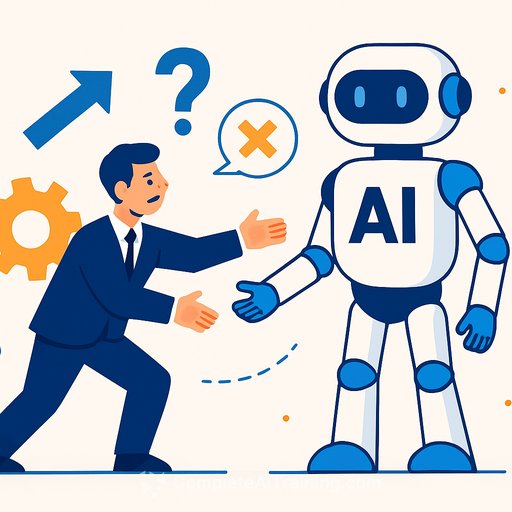
Executives face a critical decision: how to manage the workforce transition to artificial intelligence. The stakes are high. Employee anxiety is real, and how leaders respond will determine whether AI becomes a tool for growth or a source of organizational friction.
The fear is understandable. Amazon, Workday, Salesforce and others have announced major layoffs tied to AI investments. When large employers cite automation as the reason for job cuts, workers take notice. Some of those cuts may be genuine AI-driven efficiency gains; others may be "AI washing"-using AI as a convenient cover for planned reductions.
But the data points in a different direction. AI is transforming work faster than it is eliminating roles. The technology excels at repetitive, predictable tasks: writing software, reviewing documents, routing customer calls, detecting cancer in medical images, searching legal contracts and analyzing surveillance footage. None of those applications have eliminated the need for software engineers, customer service leaders, doctors, lawyers or security professionals.
Reframe the conversation around goals, not titles
The grunt work-the boring, repetitive tasks that consume employee time-is what AI targets best. Automating these tasks doesn't eliminate jobs. It frees people to focus on higher-value work that requires judgment, creativity and independent thinking.
This is where leadership strategy matters. Executives need to shift the internal conversation away from "checking daily boxes" and toward big-picture goals and business outcomes. When employees spend less time on administrative drudgery, they can focus on work that actually grows the business and feels more rewarding.
The priority becomes skills over job titles. A person's ability to learn, adapt and apply new expertise matters far more than their tenure or formal position.
Transparency builds trust faster than promises
Employee anxiety often stems from lack of information, not actual morale problems. Leaders who choose openness gain the trust and cooperation needed for AI to succeed.
Telling people "don't worry" doesn't work. A better approach is helping them understand what is changing and how they can prepare. Involve employees early in planning and testing. They know better than anyone which tasks are ripe for automation. Inclusion and transparency get everyone aligned faster.
This commitment to honest conversation builds real confidence-not through vague promises, but through clear preparation for what's ahead.
Make continuous learning the default
Skills become valuable and obsolete at unprecedented speed. Organizations need a new model for developing talent-one that treats learning as constant, not occasional.
A single training course for a new role no longer suffices. Learning must happen at the pace of work, with employees continuously picking up new expertise. Employers should support this through tuition programs, credentials and ongoing education.
Continuous learning won't make any employee future-proof. It will make them future-ready-able to respond, pivot and reskill as work changes.
Every organization will be touched by AI in some way. With the right approach, executive leaders can turn employee anxiety into planning and optimism. The alternative-fear and uncertainty-costs far more than investment in transparency and skills development.
Learn more about AI for Executives & Strategy and AI for Human Resources.
Your membership also unlocks: