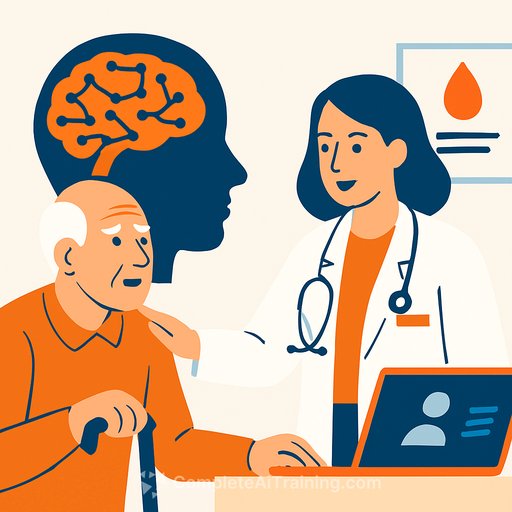
AI Meets Frailty: Rethinking Hematology in Older Patients
As people age, conditions like leukemia and myelodysplastic syndromes become more common. However, older patients often face additional challenges such as multiple comorbidities, increased physical and cognitive frailty, and reduced ability to tolerate intensive treatments. These factors make hematology care more complex.
Matteo Giovanni Della Porta, MD, head of the Leukemia Unit at Humanitas Cancer Center in Milan, highlights the need to assess patients holistically. He emphasizes balancing treatment effectiveness with quality of life—a challenge that requires multidisciplinary expertise and personalized therapy plans.
AI: Friend or Foe?
Older patients frequently manage multiple medications, making it difficult for any single physician to track all drug interactions alongside hematologic treatments. Torsten Haferlach, MD, co-founder of the MLL Munich Leukemia Laboratory, stresses that clinical decisions must consider age, comorbidities, and medication complexity to find the right balance between efficacy and vulnerability.
Artificial intelligence can help by integrating diverse clinical, functional, and social data into personalized risk profiles. This supports predicting treatment tolerance and suggesting suitable care pathways. Dr. Della Porta explains that AI-driven models may soon assist in complex decision-making, leading to treatments that are better balanced and more sustainable for older patients.
Currently, large language models contribute to automated diagnosis with promising clinical results. Still, most AI tools are not optimized for geriatric patients. A recent review showed that only 0.4% of FDA-approved AI devices focus exclusively on geriatric health, indicating a gap in tailored AI applications for older populations.
Reshaping the Doctor-Patient Relationship
AI is also taking on administrative tasks such as note-taking and report generation, potentially freeing clinicians to spend more meaningful time with patients. Esther Lueje, MD, a geriatrician from Madrid, points out that AI doesn’t replace doctors but enhances their effectiveness and helps build trust through clearer communication.
However, Dr. Della Porta warns against letting technology replace empathy or meaningful dialogue, which could cause emotional detachment. The goal is for AI to support, not hinder, the doctor-patient relationship.
Integrating large language models into daily practice faces challenges like hallucinations, clinical errors, the need for medical oversight, and varying digital literacy among physicians. As Haferlach notes, many clinicians have traditional tools like stethoscopes but lack experience with AI prompts or tools, highlighting a skills gap to address.
Synthetic Patients and Virtual Trials
AI-generated synthetic data offers new opportunities for research and clinical trials. Alfonso Piciocchi, PhD, chief scientific officer at Fondazione GIMEMA, describes synthetic patients as AI models that replicate real patient populations while preserving important data relationships. These models protect patient privacy and help train AI algorithms.
While synthetic patient data carries risks if the original data is flawed, current uses show they closely resemble actual cohorts. This allows creation of control groups in virtual clinical trials and improves representation of hard-to-enroll populations, such as elderly patients.
Alongside synthetic patients, digital twins are gaining attention. These virtual patient models combine biological, clinical, and environmental data, enabling clinicians to simulate disease progression and predict treatment responses before starting therapy. Dr. Della Porta points out these tools are already in experimental use and expected to become part of precision hematology care.
Final Thoughts
- Older hematology patients require careful assessment beyond their disease to balance treatment efficacy with quality of life.
- AI can assist by managing complex data, predicting treatment tolerance, and freeing clinicians for patient interaction—but must be applied with oversight and empathy.
- Synthetic patients and digital twins offer promising ways to improve clinical research and personalized care for older patients.
For those interested in exploring AI applications in healthcare and beyond, Complete AI Training offers a range of courses and resources to build relevant skills.
Your membership also unlocks: