
AI news ·
Artificial intelligence begins assisting radiologists in reading routine mammograms to detect more cancers
AI combined with human readers boosts breast cancer detection without needing more staff. Yet, AI-driven MRI screening for women with 25 percent lifetime risk remains too costly.
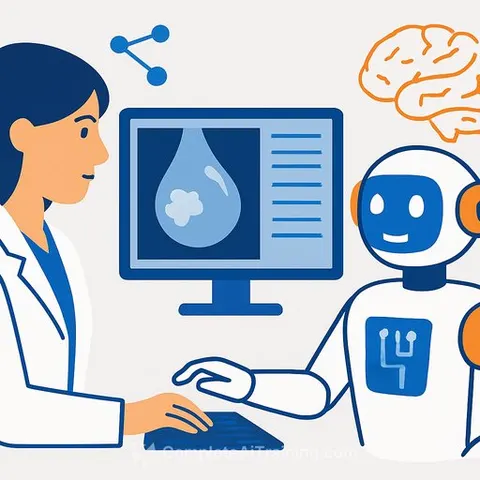
Dr. John Lewin, division chief of breast imaging at Yale School of Medicine, says artificial intelligence is shifting mammography from single-reader analysis to a combined human and computer model. This transition could increase cancer detection rates without requiring a proportional increase in radiologist staffing, though challenges remain around the cost of predictive screening.
The limits of current technology
Mammography screening has remained fundamentally unchanged since the 1970s, despite decades of technical improvements. Breast compression and imaging mechanics have stayed the same, though the industry shifted to digital formats around 2000 and later added tomosynthesis, which captures 15 to 25 images to create a 3-D view.
Lewin helped pioneer the first clinical trial of digital mammography. He noted that early digital prototypes were not better than film, but the convenience and storage benefits drove the industry shift.
"The hope was that digital mammography would make better pictures than film mammography but the first digital prototypes, which were the ones I tested, were not better than film," Lewin said. "They were not significantly worse though, which is all the company wanted so that they could get FDA approval."
How AI changes the reading process
AI is now being deployed to assist radiologists in reading these scans. In Europe, where mammograms traditionally undergo double reading by two radiologists with a third as a tiebreaker, AI is positioned to replace one of those human readers.
In the United States, where single reading has been the standard, the model shifts to single reading plus AI. Studies show this combined approach finds more cancers than a human reader alone. Lewin noted that while AI will continue to improve, surpassing the accuracy of a human working alongside a computer remains a high bar.
Predicting risk and future screening
Beyond detection, researchers are exploring whether AI can predict a patient's future risk of developing breast cancer. Current models can estimate risk, such as assigning a 10 percent or 25 percent lifetime risk to different groups, but acting on those predictions presents logistical and financial hurdles.
Screening high-risk groups annually with MRI is already standard practice, but broadening MRI screening to normal-risk women based on AI predictions would strain existing infrastructure. "In Connecticut, we don't have enough MRI machines to do everybody," Lewin said. "Nationwide, we don't have the money to do an MRI on everybody because it's an expensive technology."
Evaluating the clinical and financial viability of these new screening protocols remains a key area of study in AI for Healthcare. Researchers must determine if earlier detection through broader MRI use translates to saved lives that justify the added cost and false positives.
Why this matters for healthcare professionals
Healthcare administrators and clinical leaders must prepare for a workflow that integrates AI as a primary reading assistant rather than a passive tool. Facilities will need to validate AI outputs against existing diagnostic standards and manage the potential increase in false positives that accompany higher sensitivity. Understanding these operational shifts is critical for maintaining diagnostic accuracy while controlling imaging costs.