
AI news ·
AstraZeneca CEO says AI improves drug discovery odds and cuts development time
AstraZeneca is using AI to speed up drug design and predict clinical trial outcomes before spending up to $500M on Phase 3 studies. CEO Pascal Soriot says better trial success rates translate directly into major productivity gains.
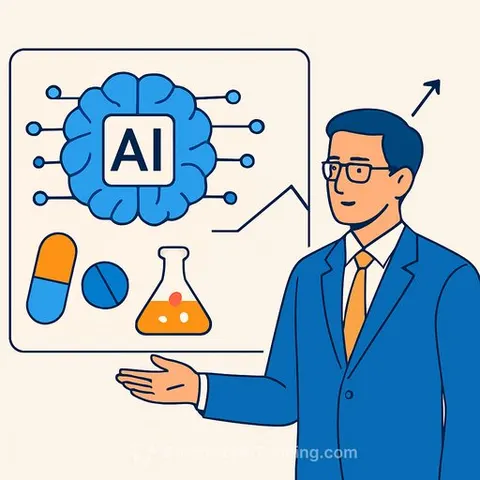
AstraZeneca CEO: AI is cutting drug development time and boosting trial success rates
AstraZeneca is using artificial intelligence to accelerate drug discovery, identify promising targets, and improve the odds of success in expensive clinical trials, CEO Pascal Soriot said Friday.
The pharmaceutical company applies AI data analysis to speed up the design of new medicines and optimize molecular structures before they enter testing. Soriot said the company can now remove potential side effects from drug candidates more efficiently than traditional methods allow.
"The value of AI in our industry is productivity improvement," Soriot said on CNBC's "Mad Money." "In the way you design a new medicine, a new drug, you can actually do it faster, do it smarter."
Predicting trial outcomes before spending hundreds of millions
AstraZeneca's partnership with Tempus AI focuses on a specific problem: predicting whether a drug will succeed in Phase 3 trials before the company commits $300 million to $500 million to run them.
The company has built an AI agent that analyzes clinical and laboratory data to calculate the probability of trial success. If AI can improve those odds even modestly, the financial impact is substantial.
"If you increase the probability of success, the productivity improvement is enormous," Soriot said.
Addressing investor skepticism on AI spending
Soriot's comments arrive as investors question whether massive AI investments are delivering real returns in healthcare and other industries.
AstraZeneca's approach suggests practical applications exist beyond research hype. The company is identifying new drug targets, optimizing molecular designs, and making go-or-no-go decisions on expensive trials using AI-generated insights.
The drugmaker also works with Pathos, another AI partner, as part of its broader effort to embed AI decision-making across its pipeline.