
AI news ·
Attorney oversight makes legal AI more accurate and trustworthy, not slower
Attorney oversight improves legal AI outputs-it doesn't slow them down. Firms that build in source verification and review workflows reduce liability and produce more reliable work product.
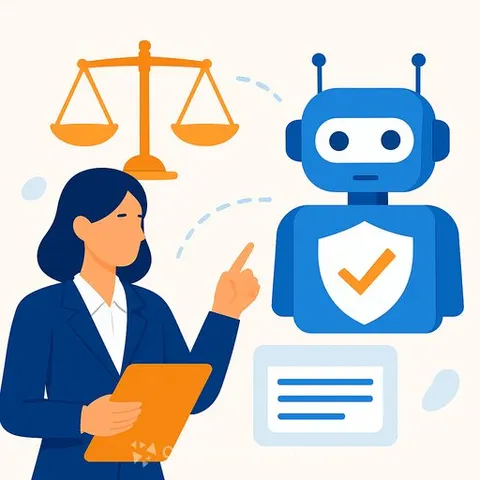
Attorney Oversight Makes Legal AI More Trustworthy, Not Slower
Law firms and in-house legal teams face a choice about how to adopt AI: prioritize speed and convenience, or build in layers of attorney review that verify every output. The evidence suggests the second approach produces better results.
Some legal AI vendors market their tools by emphasizing autonomous outputs and fewer checkpoints. This approach carries risk. An AI system that bypasses careful review may inadvertently encourage lawyers to rely on answers without inspecting sources or checking reasoning - exactly the behavior that creates liability in high-stakes legal work.
Attorney oversight closes the gap between AI-generated text and professional legal work product. It positions AI as a tool that supports a lawyer's reasoning rather than replacing it.
What Lawyers Need From Legal AI
Lawyers can only trust AI when they can see how it reached an answer, what sources it used, and whether the output fits the task. Generative AI tools, without oversight, may produce confident-sounding answers that are incomplete, outdated, or wrong.
A business user might accept a rough draft with errors. A lawyer cannot. The real question is not whether an AI tool works in general, but whether it works for a specific task, with specific data, under a specific level of review.
Four factors signal whether a legal AI platform deserves trust:
- Outputs are grounded in reliable legal and jurisdiction-specific sources
- The platform provides citations and lets lawyers inspect underlying material
- Workflows are repeatable and align with firm or department standards
- The platform supports auditability and governance at scale
The Verification-First Standard
Legal teams have traditionally followed "trust but verify" - assume an output is probably correct, then check it. Generative AI has forced a shift toward "don't trust until verified" - treat outputs as provisional until the lawyer confirms the source, reasoning, and whether it fits the purpose.
In litigation, for example, AI can organize facts, summarize transcripts, and draft motion outlines. But lawyers must still validate the record, check authority, evaluate strategy, and decide what goes in the filing. Any vendor claiming to replace those steps for efficiency is signaling higher risk, not better service.
Red Flags in Legal AI Marketing
When a vendor emphasizes pure automation speed, ask what is being reduced. Are lawyers verifying fewer sources? Are outputs harder to inspect? Are workflows less governed? Is the vendor shifting risk onto your organization?
Speed without oversight means less control. In legal work, that trade-off fails.
Building Trust Into Your AI Program
Improving trust requires making careful use the default. Legal teams need more than access to a tool - they need processes, policies, review standards, permission controls, and feedback loops built into the purchase decision itself.
Question potential providers. Ask whether the platform can support the level of trust and verification your work requires. Can users see sources behind answers? Can lawyers inspect underlying documents? Does the platform explain reasoning? Will the vendor use your client data to train models? Can workflows reflect internal playbooks and precedents?
Build verification-first workflows. Make it easy for lawyers to check what sources the AI used, what the output is supposed to accomplish, and how to review it. For contract review, cite the exact clause. For litigation, link summaries to transcripts or exhibits. For research, show the authority supporting each conclusion.
Form an AI oversight committee. Without clear ownership, users may avoid accountability. A committee of partners, knowledge management, innovation, risk, IT, and practice leaders can set practical rules for tool approval, acceptable use cases, data restrictions, review standards, and escalation paths. The goal is structure that lets lawyers use AI confidently without creating unmanaged risk.
Get input from clients. Clients have expectations about confidentiality, data use, disclosure, and review. Some welcome AI-assisted work for time savings; others have restrictions. Understanding these expectations before applying AI to client matters prevents surprises and identifies the most valuable use cases.
Oversight as Advantage
Oversight does not slow AI-powered workflows to a crawl. Proper oversight means applying the right level of review to the right task at the right time.
When legal AI is grounded in sources, reviewable, secure, and governed, lawyers gain confidence in their tools and move faster without lowering standards. That is the point of oversight.
Learn more about AI for Legal professionals and how to implement these practices in your organization. Paralegals managing document review and contract analysis can explore an AI Learning Path for Paralegals to understand how oversight strengthens their workflows.