
AI news ·
Auburn University's College of Education integrates AI across teaching, research and student preparation
Auburn University's College of Education is embedding AI across all four departments, from teacher prep to rehabilitation counseling. Faculty stress that professional judgment and ethics guide how the technology is used, not the other way around.
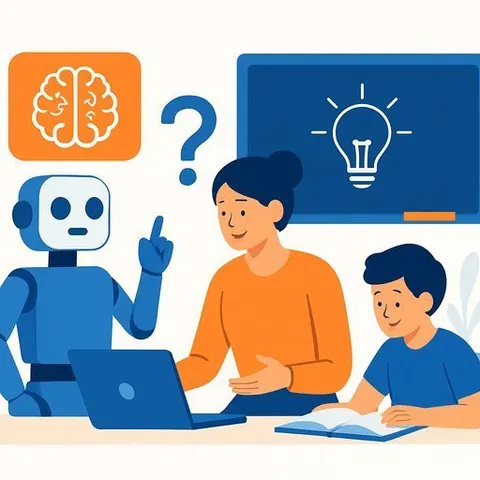
Auburn College of Education Integrates AI Across Teacher and Healthcare Worker Preparation
Auburn University's College of Education is embedding artificial intelligence into its four academic departments, treating the technology as a tool to expand access and enhance learning rather than replace human expertise.
The college's approach reflects a shared commitment to ethics and human-centered practice. Dean Jeffrey Fairbrother said the integration aligns with the college's mission to open doors and improve lives.
What Each Department Is Doing
Curriculum and Teaching: Faculty are developing a course on applied AI in the workplace that includes industry credentialing. Some instructors use AI to expand research capabilities, while others use it to support teaching and learning.
Agricultural Education, Leadership and Communications: A new AI course is in development, alongside patent-pending technologies for agriculture and global food systems. The emphasis remains on human oversight and transparency rather than automated decision-making.
Special Education, Rehabilitation, and Counseling: Clinical Rehabilitation Counseling faculty embed AI into applied coursework, training students to evaluate AI-generated vocational data while grounding decisions in professional judgment. School Counseling students learn to navigate AI's possibilities and limits through ethics-focused coursework, with the understanding that empathy and confidentiality remain irreplaceable.
The EAGLES Program uses AI modules to promote independence and self-advocacy for students with intellectual disabilities, funded by federal grants.
Educational Foundations, Leadership, and Technology: Faculty conduct research on early childhood vocabulary learning and mathematics learning using AI as a research tool. Some incorporate AI into classrooms through tutoring systems and explicit AI instruction in course materials.
School of Kinesiology: Faculty use AI to process large datasets on human movement and exercise. Students analyze data to tailor training plans and think critically about how emerging technologies support safe, evidence-based practice.
The SMART Neuroscience Lab recently added Circuit, an AI-equipped robotic dog, to study whether such robots can reliably track human movement during everyday activities and support older adults' safety at home.
The Human Element
Across all departments, faculty emphasize that AI serves to enhance human expertise, not supplant it. Integrity and professional ethics remain the driving force for how the college uses the technology.
Paul Fitchett, head of Curriculum and Teaching, said maintaining these principles is essential as educators navigate changes ahead.
For more on how institutions are preparing professionals to work with AI, see our coverage of AI for Education and AI Research Courses.