
AI news ·
Australia drops mandatory AI safety rules as US tech giants seek data centre investment
Australia dropped plans for strict AI regulation after the May 2025 election, with former minister Ed Husic saying the government "blinked" over fears of provoking Donald Trump. The shelved policy would have set mandatory guardrails for high-risk AI.
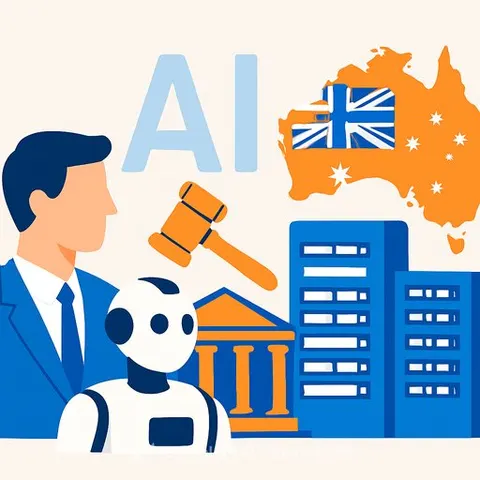
Australia shelves AI safety rules as tech giants plan major investments
The federal government abandoned plans for strict AI regulation after the May 2025 election, according to Ed Husic, the former minister for industry and science who designed the policy. He told Four Corners the decision came partly from concern about provoking US President Donald Trump.
Husic had drafted mandatory guardrails for high-risk AI through a standalone act. The proposal aimed to protect consumers from potential harms including child safety risks, mental health threats, and civil liberties violations. After he lost his ministry in a factional reshuffle, the policy was shelved by year's end.
"We put AI regulation in a 'too hard' basket. We blinked in the face of Donald Trump," Husic said. "We were already attracting heat from him and Elon Musk on social media laws."
Current Minister for Industry and Science Tim Ayres rejected this account, saying the shift had nothing to do with the Trump administration. He pointed to the government's AI Safety Institute and world-leading social media age restrictions for under-16s as evidence of regulatory commitment.
The timing matters: major tech companies are now investing heavily in Australia. Microsoft CEO Satya Nadella announced a $25 billion investment in April. Anthropic signed a memorandum of understanding with the government the same month.
Safety concerns mount as companies expand
Research by the Center for Countering Digital Hate found that OpenAI's ChatGPT can provide detailed instructions for self-harm within minutes. In one study using fake youth profiles, the chatbot generated a personalised suicide plan within 65 minutes.
OpenAI said child safety is a "top priority" and that safeguards are being strengthened. The company did not address the specific findings.
These risks were central to Husic's proposed AI Act. Current privacy laws are insufficient to address them, according to Ed Santow, former human rights commissioner and director of the Human Technology Institute.
"Our privacy law is dangerously out of date. It was largely drafted before the internet, let alone the age of artificial intelligence," Santow said. Updating privacy protections would be "probably the single biggest step" toward protecting Australians from AI-related harms.
Husic sees the regulatory retreat as a strategic mistake. "We've done a 180-degree turn. We've gone from recognising the risk to having a hands-off approach," he said.
Data centres and infrastructure demands
Tech companies are building data centres in Australia to escape US backlash and access cheaper energy and water. Anthropic disclosed to industry sources that it aims for 5 gigawatts of computing capacity by 2030, with longer-term goals of 20 gigawatts.
That would represent roughly a 60 percent increase in Australia's total electricity generation, according to former chief scientist Alan Finkel. "To do that in a decade would be hard. To do that in five years would be extremely difficult," he said.
Data centres also require enormous amounts of water for cooling. The infrastructure will strain Australia's energy and water supplies while potentially conflicting with emissions reduction targets.
Anthropic's memorandum of understanding with the government states the company "recognises the importance of expanding Australia's energy supply." The agreement is not binding.
Copyright battle blocks progress
Tech companies want to train AI models on Australian data without licensing costs. The Tech Council of Australia has pushed for copyright exemptions, arguing current laws make local training impossible.
"If I train in Australia, I need to cut a deal with every single recording artist in the entire world because of the way our copyright laws work," said Atlassian co-founder Scott Farquhar.
APRA AMCOS, which collects royalties for songwriters and composers, called such proposals "theft of people's creative work." CEO Dean Ormston said tech companies lobbying for weaker copyright rules cannot escape responsibility for the outcome.
Senator Ayres said the government will not weaken copyright protections. "We have a sense of real patriotism and attachment to Australian culture," he said.
Husic views the copyright push as evidence that tech companies will override any rules that impede growth. "Big AI wants to get even bigger and they don't want anything to stand in their way," he said. "If data laws, privacy laws, copyright laws get in the way, they want to charge through that."
Learn more about AI for Government and Generative AI and LLM policy implications.