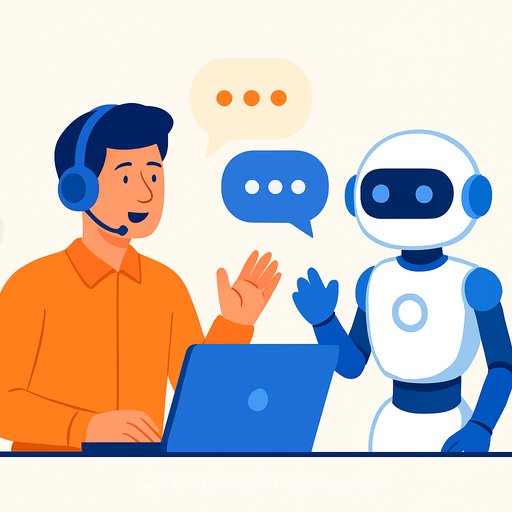
Balancing Technology And Humanity: Redefining Customer Support In The Age Of AI
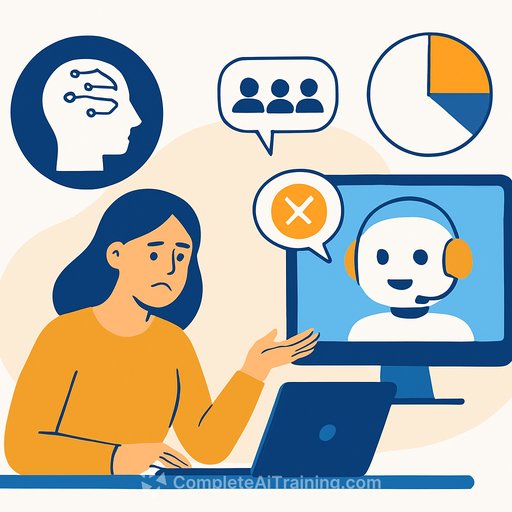
Automation promised speed. What it delivered-too often-is a maze of menus, scripted replies and nowhere to go when the issue doesn't fit the template.
AI should make support stronger by pairing machine speed with human judgment. If you want loyalty, don't replace people. Design systems where each side makes the other better.
Where Automation Breaks
AI is great at routine intake: account lookups, history, basic troubleshooting steps. That's the easy part.
Most real problems live in gray zones-unclear symptoms, fuzzy requirements, emotional stakes. In those moments, customers want someone who listens, reads the room and makes a call. Remove that, and you don't just lose a ticket. You lose trust.
Use AI As A Tool, Not The Boss
AI can summarize, categorize and route with precision. It can't tell when "urgent" is about anxiety, not uptime.
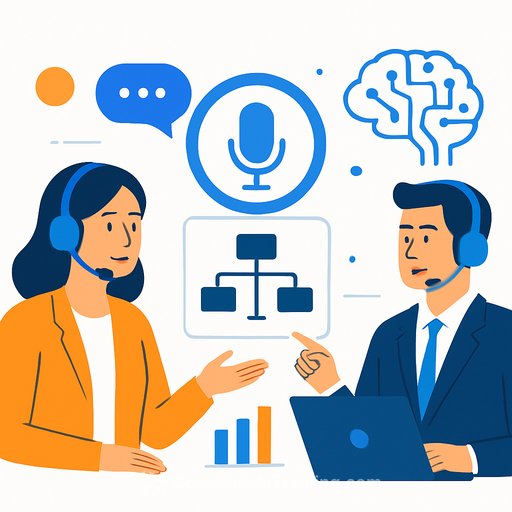
The winning model: machines handle volume; humans handle meaning. Let AI collect context and propose next steps. Let people decide, reassure and own the outcome.
The Hidden Cost Of Over-Automation
When AI does all the first-pass thinking, teams get rusty. Troubleshooting, synthesis and creative leaps fade.
Support is a training ground for judgment. AI should accelerate learning, not replace it.
Ethics Need Human Oversight
Models learn from data, and data carries bias. Left alone, AI can quietly skew tone, priority or access.
Build explainability and guardrails. If AI suggests an action, teams should know why, what inputs it used and where the limits are. For structure, see the NIST AI Risk Management Framework. For governance and risk-management resources tailored to executive oversight, consult the AI Learning Path for CIOs.
The Experience Advantage
As automation becomes standard, genuine human support feels premium. Not because it's slower, but because it's specific, contextual and personal.
That's differentiation. Products look alike. Processes converge. How you make customers feel is the edge.
A Practical Hybrid Playbook
Operationalizing these patterns requires coordination across teams and clear change management; the AI Learning Path for Project Managers offers practical guidance for implementing hybrid workflows.
- Two-turn rule: if the bot can't resolve in two exchanges, route to a human with a clean summary.
- Intent + sentiment routing: detect emotion and topic; prioritize humans for high-stakes or high-frustration cases.
- Warm transfers: pass annotated context (history, steps tried, constraints) so customers never repeat themselves.
- Clear escape hatches: every flow includes "Talk to a person now." No dead ends.
- Fail-open policy: when AI confidence drops below a threshold, escalate-don't guess.
- Human-in-the-loop approvals for refunds, compliance, medical/financial advice and policy exceptions.
- Explainable prompts: require AI to show its reasoning in plain language for agent review.
- Knowledge upkeep: log novel cases the bot can't handle; convert them into new articles and flows weekly.
- Coaching loops: use AI summaries to speed post-call reviews; train agents on nuance, not scripts.
- Balanced metrics: track CSAT, CES, FCR and reopen rate next to AHT and deflection. Reward outcomes, not just speed.
- Trust signals: set response-time SLAs, share status updates proactively and admit uncertainty early.
- Privacy by default: minimize data, mask sensitive fields and log model access for audits.
Playbook To Keep Skills Sharp
- Weekly case huddles: pick three "messy" tickets; discuss how agents framed, probed and decided.
- Shadowing: rotate agents through complex queues to exercise judgment under guidance.
- Scenario drills: simulate edge cases where policy, empathy and business risk intersect.
- Prompt hygiene: teach agents to refine AI prompts and verify outputs, not accept them at face value.
What To Measure (And Why)
- Customer Effort Score: friction predicts churn better than speed alone.
- First Contact Resolution: proof your triage and knowledge are working.
- Escalation quality: did the handoff reduce repetition and time-to-relief?
- Human override rate: where do agents ignore AI? That's your improvement map.
- Retention and expansion by support experience: tie outcomes to revenue, not just cost.
The Bottom Line
Humans aren't a bottleneck. They're the advantage. AI should clear the noise so people can focus on empathy, judgment and trust.
Build systems where machines recommend and humans decide. Done right, support stops being a cost center and becomes a relationship engine.
Next Step
If you're upskilling support teams on AI workflows and prompt quality, the AI Learning Path for Administrative Assistants provides role-focused training and practical exercises.
Your membership also unlocks: