
AI news ·
Autonomous AI agents collapse the traditional travel funnel into a single decision layer
Autonomous AI will replace search engines as the primary travel decision-makers by 2026. Brands must prioritize machine-readable data over traditional SEO to remain visible.
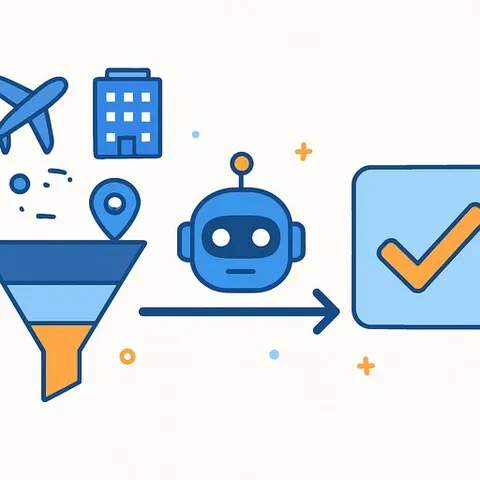
The traditional linear travel funnel is breaking down as autonomous AI systems replace search engines and online travel agencies as the primary decision-makers. According to industry leaders in the "Rise of Agentic AI in 2026" series, this structural shift collapses discovery, planning, and booking into a single intelligent layer. Brands must now optimize for machine interpretation rather than traditional search engine optimization to remain visible.
From search to delegation
Travelers are shifting from manually browsing dozens of tabs to delegating decisions to AI systems that understand intent and constraints. This behavior change forces companies to rethink visibility. Traditional paid acquisition and standard SEO strategies are becoming insufficient. Brands now need to provide structured, machine-readable data so autonomous agents can accurately surface their offerings. "It's almost unfathomable to go back to the way we used to search and peck and hunt," said Michelle Denogean, CMO of Mindtrip.
Redefining operational layers
Agentic AI is taking over repetitive, high-volume tasks that previously required large teams. This transition from novelty to utility is freeing up human workers for higher-value responsibilities. "Low judgment work like general question proposal requests… was very time consuming for companies and today that's eliminated completely," said Ben Manzi, co-founder and COO of Maya. Instead of replacing human expertise, these systems remove operational friction. This reallocation of effort requires hospitality teams to understand how AI Agents & Automation can handle administrative work, allowing staff to focus on creating experiential value.
Context as the new competitive advantage
As the traditional funnel disappears, context is replacing historical data as the primary driver of personalization. Travel decisions now require dynamic, real-time adaptation based on location, intent, and environment. "Context actually matters almost more than data points on the customer," said Marius Nigond, CEO of iWander. This shift levels the playing field, making advanced AI tools accessible to smaller operators. "This is the golden era of small and medium businesses," said Tahnee Perry, an AI expert consultant. However, building these systems does not guarantee visibility, as distribution channels remain highly centralized.
Why this matters for hospitality and events professionals
Hospitality and events professionals must prepare for a market where AI agents, not humans, evaluate and book their services. Optimizing for this reality means prioritizing structured data and clear content over traditional keyword strategies. Furthermore, staff training should shift toward high-touch guest experience and complex problem-solving, as routine inquiries will increasingly be handled by autonomous systems. Understanding AI for Hospitality & Events will be critical for teams looking to remain visible and competitive in an agent-driven booking environment.