
AI news ·
Autonomous IT shifts incident response from human operators to AI systems, raising governance and vendor lock-in concerns
Autonomous IT systems now handle alert triage, root cause analysis, and incident response with little human input-and most IT leaders aren't prepared. Governance gaps, vendor lock-in, and a skills shortage are the real obstacles to safe adoption.
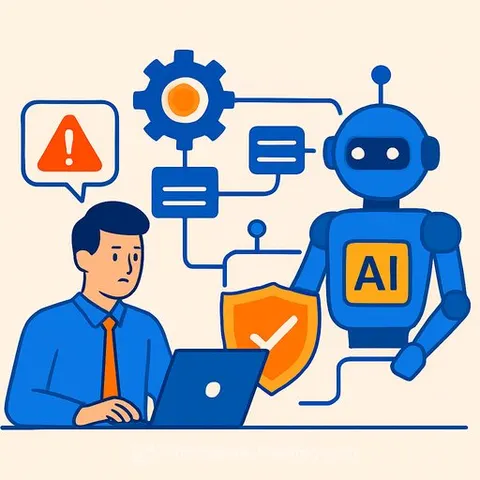
Autonomous IT Systems Are Taking Over Operational Decisions. IT Leaders Aren't Ready.
AI in IT operations has moved beyond alerting and log correlation. A new wave of autonomous systems now handles alert triage, root cause analysis, and incident response with minimal human intervention. The shift raises a hard question for operations leaders: How much control are you willing to hand to machines?
Vendors like LogicMonitor are embedding autonomous capabilities into their platforms, promising to cut alert fatigue and accelerate mean time to resolution. But efficiency gains come with real tradeoffs. As AI makes more operational decisions, organizations face new risks around system trust, vendor dependency, and the skills their teams actually need.
The Skills Problem Is Real
Most IT leaders want less alert noise and faster troubleshooting. Few are ready to trust AI fully with operational decisions.
Autonomous IT shifts required skills from hands-on troubleshooting to AI oversight, policy design, and exception handling. Teams that don't invest in these new skills will see automation stall or fail in unexpected ways. You can't automate your way out of a skills gap.
Platform Consolidation Is Reshaping Vendor Strategy
The real competition is no longer between point tools. Vendors that can't deliver integrated observability, investigation, and automation will lose relevance. Winners will tie autonomous capabilities to business outcomes-faster incident closure matters less than preventing incidents that cost money.
This consolidation pressure creates a second problem: vendor lock-in.
Governance Without It, Autonomous IT Becomes a Liability
Autonomous systems amplify both benefits and risks. Over-automation without clear governance creates new failure modes: opaque decision logic, outages triggered by AI errors, and dependency on a single vendor's platform.
CIOs need granular controls, transparent audit trails, and easy override mechanisms before they can trust autonomous systems at scale. Without them, many will slow adoption or demand multi-vendor strategies to hedge risk.
What Operations Teams Should Watch
- Adoption Timeline: Will large enterprises trust AI to handle triage and remediation by 2027, or will human-in-the-loop remain standard?
- Skills Availability: Can organizations hire or retrain fast enough for AI governance roles?
- Vendor Lock-In: Will platform-first strategies trigger a backlash as organizations seek multi-vendor options?
- Governance Standards: Which vendors will deliver transparent, auditable AI operations frameworks that actually win CIO trust?
The question isn't whether autonomous IT will happen. It's whether your organization will govern it, staff it, and source it responsibly. That requires planning now, not after the tools are deployed.
Learn more about AI Agents & Automation and how autonomous systems are changing operations. CIOs should also review the AI Learning Path for CIOs to understand governance and strategy implications.