AI As 2026's Biggest Tail Risk: What Managers Should Do Now
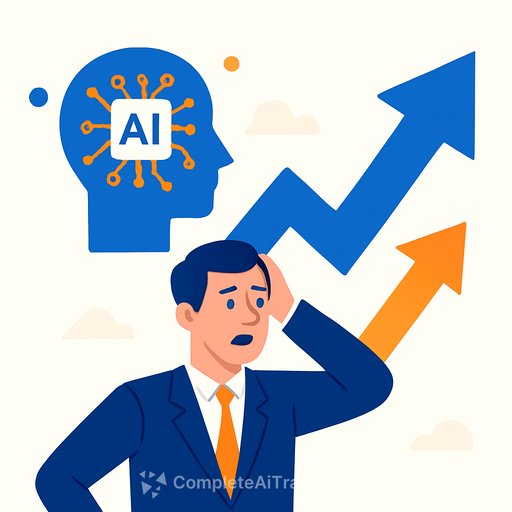
Dmitry Balyasny, CEO and Managing Partner at Balyasny Asset Management, called out artificial intelligence as the largest tail risk for the year ahead. His view cuts both ways: AI could underperform and stall, or it could accelerate faster than expected and stress the job market before people can reskill.
His base case is steady progress. But for managers planning 2026 budgets, workforce moves, and tech bets, the outliers are what matter.
Two AI scenarios leaders should model
- Downside: Demand cools. Hyperscalers rethink capital spending if monetization lags. Knock-on effects hit suppliers, cloud partners, and AI-first product roadmaps.
- Upside: Adoption runs hotter than expected. Productivity jumps, but job losses arrive before retraining catches up. Hiring plans, wage structures, and change management get tested.
Either path can introduce instability. Your plans should absorb both.
Budget and portfolio implications
- Stress-test AI ROI: Run sensitivity analyses on AI projects for revenue lift, cost-to-serve, and time-to-value. Gate new spend on measurable milestones.
- Capex exposure: Map suppliers and vendors tied to hyperscaler spend. Build contingency contracts and alternative sourcing.
- Prioritize quick wins: Fund automation and decision-support that pay back in quarters, not years. Defer speculative bets without near-term metrics.
Workforce and retraining
- Role mapping: Identify tasks most likely to be automated. Redesign roles before changes hit, not after.
- Reskilling pipeline: Stand up short, stackable training sprints for impacted teams. Tie completion to real projects.
- Change guardrails: Communicate the "why," define success metrics, and align incentives so managers actually adopt new workflows.
If you need structured options for teams, see AI courses by job role for fast upskilling paths.
Signals to watch each quarter
- Hyperscaler guidance: Capex and GPU commitments in earnings calls; any pivot in AI infrastructure spend.
- Enterprise adoption: Proof points in case studies, contract sizes, and pilot-to-production conversion rates.
- Labor data: Layoffs in operations/support vs. hiring in data, ML, and automation.
- Unit economics: Cost per inference, latency gains, and margin impact for AI-enabled products.
- Policy shifts: New rules that affect data access, safety, or model deployment.
Why Abu Dhabi is on the radar
Balyasny highlighted momentum in Abu Dhabi: capital inflows, attractive lifestyle for talent, and clear commitment to AI and technology. The firm recently opened an office there, citing early-but-growing financial center advantages.
For managers, that signals two things-new sources of capital and a credible hub for tech talent. Keep an eye on initiatives announced during Abu Dhabi Finance Week.
Context: performance and scale
Balyasny Asset Management manages about $31 billion. The fund returned 2.5% in November and is up 15.3% year to date. That performance backdrop adds weight to how the firm frames AI risk heading into 2026.
Action checklist for 2026 planning
- Build upside and downside AI cases into your annual plan with triggers to shift spend quickly.
- Stage-gate AI initiatives with clear ROI checkpoints and exit criteria.
- Pre-fund reskilling for roles most exposed to automation; start with 90-day sprints.
- Clarify vendor concentration tied to hyperscaler capex; arrange alternates.
- Report a stable set of AI KPIs to the exec team each quarter.
Bottom line: Treat AI as a tail risk on both ends. Plan for variance, instrument your decisions, and move fast when signals change. For a quick refresher on the concept of tail risk, see this overview.
Your membership also unlocks: