Scientists across the Bay Area are deploying artificial intelligence to study why some people stay healthy into their 90s while others develop chronic diseases far earlier. The research spans multiple labs and aims to measure not just how long people live, but how well they age - with implications for drug discovery and early disease detection.
Researchers say AI can uncover early signs of age-related diseases, predict an individual's biological age, and identify factors that contribute to healthier lives by sifting through massive datasets to find patterns nearly impossible for humans to detect. The most ambitious applications, including speeding drug development and testing, remain years away. Still, patients are already seeing some benefits, such as AI-assisted scan readings that reduce false positives.
"We're already seeing the benefits," said Nathan Price, chief scientist at the Buck Institute for Research on Aging in Novato.
Any discovery won't be an anti-aging silver bullet. Social, behavioral, and structural factors - including whether patients can access or choose to use treatments - will play an equally important role, said Angie Perone, director of the Center for the Advanced Study of Aging Services at UC Berkeley. "This is only one piece of an important puzzle," Perone said.
Predicting how cells age
Scientists at San Francisco's Gladstone Institutes recently launched an AI model that predicts how human cells evolve with age. Trained on millions of cells, the model treats aging as a continuous process that can be learned and forecasted, rather than simply comparing snapshots of "young" and "old" cells. The approach allows researchers to map the trajectory of aging and identify potential drivers of age-related decline.
The team, led by physician-scientist Christina Theodoris, tested some of the model's predictions in biological systems, identifying genes expected to accelerate aging and validating those effects in human heart cells and in mice. That kind of experimental follow-up is essential, though the research remains in early stages.
"The real test will be whether these predictions hold up across many tissues and disease contexts," said Hani Goodarzi, a core investigator at Palo Alto-based Arc Institute, noting that current tools, including animal models, are imperfect benchmarks.
Finding hidden patterns in health data
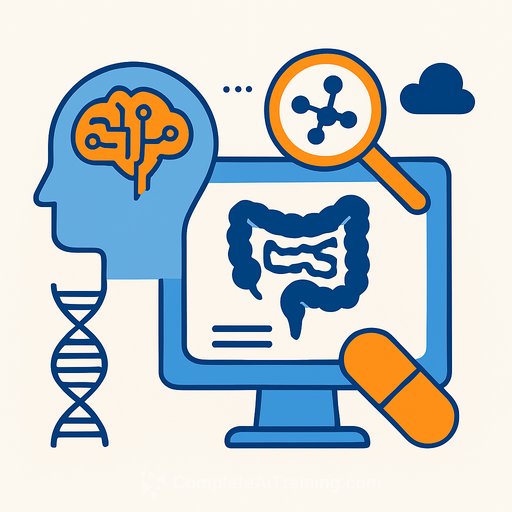
At the Buck Institute, scientists are integrating individual genetic information, clinical lab results, microbiome data, and other health measurements into an AI system that identifies patterns and generates personalized insights about health risks and interventions. The platform draws on a database containing thousands of biological measurements from research participants.
"The microbiome is highly predictive of who will lose weight," Price said, noting that AI can uncover connections hidden within vast datasets. Users can interact with the platform through a chatbot-like interface that generates graphs, health scores, and detailed analyses. The institute expects to release the tool to the public by the end of the year.
The work is part of Healthspan Horizons, a large-scale research initiative supported by a $52 million grant that aims to enroll thousands of participants and better understand the biology of aging on an individual level. For research scientists working with similar datasets, the AI Learning Path for Research Scientists offers structured training on the machine learning techniques underpinning such analyses.
Catching Alzheimer's earlier
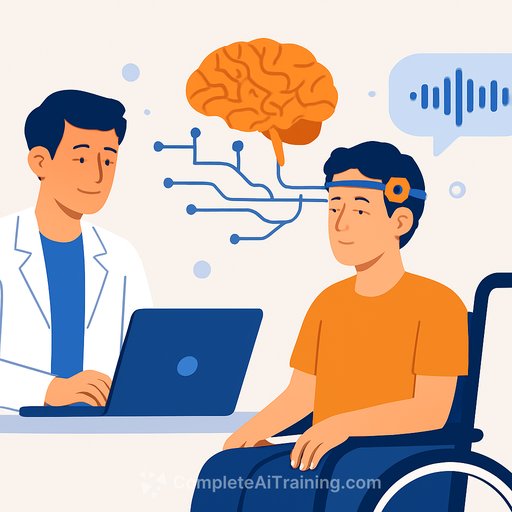
AI is also changing how researchers study Alzheimer's disease by shifting the focus from symptoms to the biological changes occurring inside the brain. Rather than relying primarily on memory loss and other cognitive symptoms, scientists are using AI to analyze complex brain scans and identify those changes earlier and more objectively.
"The way we see Alzheimer's has shifted from seeing it as a clinical cognitive syndrome to a more biological disease," said Duygu Tosun-Turgut, a professor of radiology and biomedical imaging at UC San Francisco and founding director of Medical Imaging Informatics and Artificial Intelligence at the San Francisco Veterans Affairs Medical Center.
That capability is particularly valuable for clinical trials. Before, researchers sometimes enrolled patients whose symptoms resembled Alzheimer's but were caused by other conditions, making it harder to determine whether experimental treatments worked. AI can help identify people with the disease's true biological signatures, improving both patient selection and trial outcomes. Tosun-Turgut believes AI could also improve access to dementia screening in underserved communities, where specialized memory clinics remain scarce. "Hopefully, we can develop tools that are cheap and scalable enough to be distributed to every geographic spot in the world," she said.
The bias hurdle
Researchers cautioned that AI systems are only as good as the data used to train them. Many research cohorts are disproportionately composed of highly educated participants and may not reflect the demographic diversity of the broader population. Until these systems produce accurate, equitable results across diverse populations, human oversight remains essential.
Scientists and startups are betting that AI will play an increasingly central role in unraveling the biology of aging. But the promise hinges on a problem researchers have yet to fully solve: bias.
Why this matters for science and research professionals
The tools described here - from cellular aging models to multimodal health data platforms - are not theoretical. They are being built and validated now, with public releases expected within months. For researchers in aging, drug discovery, or biomedical imaging, the shift toward AI-driven analysis of continuous biological processes represents a methodological change worth watching closely. The models still need validation across broader populations and more tissue types, which means opportunities exist for labs that can contribute diverse datasets or run independent replication studies. The bottleneck is not the technology itself but the quality and representativeness of the data feeding it.
Your membership also unlocks: