
AI news ·
BCG trains sales AI on poor calls as well as successful ones to improve customer interactions
BCG's sales AI, Jamie, trains on both winning and losing calls to identify what drives customers away, not just what closes deals. Salespeople get post-call scorecards; AI agents get real-time guidance during live conversations.
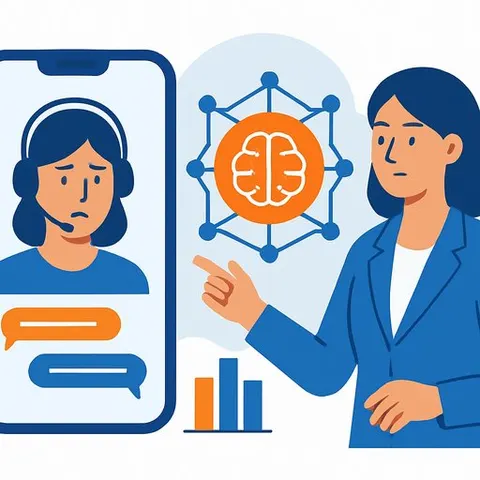
BCG trains sales AI to learn from failures, not just winners
Boston Consulting Group is building an AI agent called Jamie that learns from both successful sales calls and failed ones. The dual-training approach aims to help salespeople close more deals while flagging the tactics that drive customers away.
BCG X, the firm's AI unit, feeds the system customer call recordings, transcripts, and internal company knowledge. Rather than copying a single top performer, the AI identifies patterns across many conversations to spot what works and what doesn't.
Japjit Ghai, a managing director at BCG X, said the system produces two outputs: real-time guidance for AI agents during live customer calls and individualized performance scorecards for human salespeople after each interaction.
How the feedback loop works
After a call ends, a salesperson receives a report flagging strengths and weaknesses. The system might note whether they asked the right questions, handled objections quickly, or used language that resonated with the buyer.
Each interaction feeds back into the model, refining both the AI's guidance and the coaching it offers. Over time, the system becomes more precise about which behaviors consistently drive results.
This mirrors practices already in use. Vercel, a cloud platform for web developers, built an AI agent based on its top sales rep and reduced its SDR team to a single human supervisor, according to company statements last year.
What this means for your role
For salespeople, the technology can shift work away from routine outreach toward handling exceptions and higher-stakes conversations. For organizations, it promises more consistent customer experiences and scalable coaching across teams.
The tradeoff depends on how well the models are trained. If they learn biased or poor behaviors, customers may encounter more friction, not less.
Data and consent issues to know
Training these systems requires access to customer call data. Companies sharing recordings with vendors must have explicit permission from customers and strong data safeguards in place.
Two operational trends are emerging: firms will treat call archives as strategic assets for building AI coaching tools, and organizations will need tighter policies around data sharing and auditing to prevent models from learning harmful patterns.
BCG emphasizes that Jamie learns from aggregated patterns rather than mimicking any single person. That distinction matters for scaling desirable skills while reducing the risk of repeating poor tactics.
For more on how AI is reshaping sales roles, explore AI for Sales or the AI Learning Path for Sales Representatives.