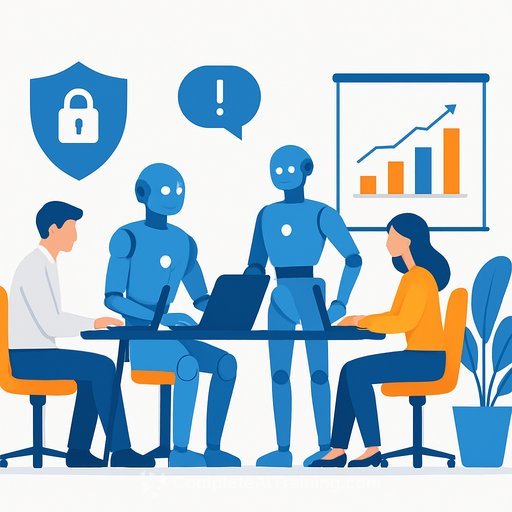
Trustworthy data management for ethical AI and stronger business outcomes
Trust is a business strategy. Data management is how you prove it. Build systems that protect how you collect, process, store and use data, and you earn credibility with customers, regulators and markets.
Compliance is the baseline. Data management is the day-to-day discipline that makes compliance repeatable, scalable and audit-ready. The payoff: fewer surprises, cleaner AI, faster decisions and a brand people believe.
What the law expects in India (plain English)
The Digital Personal Data Protection Act, 2023 (DPDPA) requires data fiduciaries to process personal data on a clear legal basis: informed, specific and explicit consent, or a narrowly defined legitimate use tied to a purpose. Processing minors' data needs verifiable parental consent, and guardians' consent is needed for persons with disabilities.
Individuals must be able to correct and erase their data. You need a working grievance mechanism. Security measures are mandatory, and you must have enforceable contracts with processors. Fines can go up to USD 27.75 million. You must notify affected people about every personal data breach-material or not.
DPDPA essentials for management
- Define lawful bases per use case, and log consent with proof of notice.
- Build verifiable parental/guardian consent checks into sign-up and support flows.
- Stand up rights handling: correction, erasure and verification with SLAs.
- Enable a grievance channel that actually resolves issues and records outcomes.
- Implement technical and organisational controls; test them quarterly.
- Use processor agreements with audit rights, sub-processor controls and breach duties.
- Prepare breach playbooks that notify affected persons in all cases.
Sectoral rules raise the bar
Some sectors face tighter guardrails. The RBI's digital lending norms and SEBI's cybersecurity and cyber resilience framework set detailed requirements on collection, processing, safeguards and accountability-think fair processing, data minimisation, purpose limits and storage limits throughout the lifecycle.
Non-personal data is not regulated for privacy. Still, CERT-In's 2022 directions require reporting suspected or actual data leaks, breaches or unauthorised access within six hours, and CERT-In may direct mitigation. Treat data management as a trust program, not a checkbox exercise-your reputation depends on it.
Turn governance into an advantage
Trust reduces risk, accelerates partnerships and makes your AI safer and more useful. Managing personal data well signals respect for privacy. Managing non-personal data well ensures accuracy, integrity and provenance-critical for AI training and evaluation.
High-quality datasets with clear ownership and consistent handling prevent skew and bias. Teams collaborate more when data is dependable and traceable. The result: fewer silos, better insights, smoother customer experiences, easier scale and simpler future compliance.
The management playbook: 12 moves to implement now
- Name an accountable owner. Appoint a Data and AI Governance lead with board visibility and a clear RACI.
- Map your data. Inventory personal and non-personal data, systems, vendors, locations and flows (including cross-border).
- Set lawful bases and consent flows. Capture, version and store notices and consents; document legitimate uses; verify parental/guardian consent where needed.
- Enforce purpose limits and minimisation. Collect the least data required and lock uses to stated purposes.
- Operationalise rights. Self-serve portals for correction and erasure, identity checks, SLAs and audit trails.
- Strengthen security. Role-based access, encryption, network segmentation, logging, vulnerability management and periodic red-team testing.
- Control your vendors. Data processing agreements, DPIAs for critical services, sub-processor approvals and breach notification clauses.
- Prepare for incidents. Breach runbooks, legal review, comms templates, CERT-In six-hour reporting, and tabletop drills twice a year.
- Manage the lifecycle. Retention schedules by purpose and law, automated deletion or archival, and proof of destruction.
- Govern AI datasets. Provenance checks, quality gates, bias testing, documentation, and a register of training and evaluation data.
- Measure what matters. DSAR turnaround time, open vulnerabilities, DLP events, patch SLAs, third-party risks, training completion.
- Train and reward. Role-based training for product, data, engineering, sales and support; tie compliance to performance goals.
AI project checklist (before you train or deploy)
- Do we have the right to use each dataset for this purpose? Is PII isolated or transformed (anonymisation/pseudonymisation)?
- Have we documented notices, consents and lawful bases, including for minors and sensitive data?
- Is dataset quality verified (freshness, balance, label accuracy) and provenance recorded?
- Have we run bias and safety tests and defined acceptable thresholds with a rollback plan?
- Is there human review for critical decisions, with explanations and an appeal path?
- Are vendors/models covered by contracts, security reviews and breach obligations?
- Do we have monitoring for drift, incident response coverage and an audit trail end to end?
What good looks like in 6-12 months
- A single, living data map with owners, purposes and retention for each system.
- Rights requests resolved within SLA and reported to leadership monthly.
- Zero surprise audits; evidence is one click away.
- Clean AI pipelines with dataset registers, testing reports and approvals.
- Breaches are rare; when they occur, reporting is timely and clear to affected people.
- Fewer silos, better forecasting and higher customer satisfaction.
Useful resources
Next step for your leadership team
If you need to upskill managers on AI governance and data practices, explore focused learning paths here: AI courses by job.
For governance leadership, explore the AI Learning Path for CIOs.
For regulatory compliance and data protection governance, consider the AI Learning Path for Regulatory Affairs Specialists.
Your membership also unlocks: