
AI news ·
Beyond Juicery + Eatery CEO says human connection in restaurants can't be automated
Beyond Juicery CEO Jasmine Miller says restaurants are over-indexed on data and technology. She predicts the industry will soon shift back to human connection as the real competitive edge.
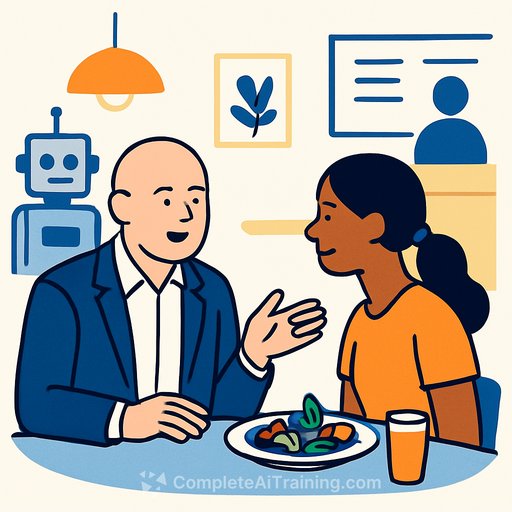
Beyond Juicery CEO: Human Connection Can't Be Automated
Jasmine Miller, CEO of Beyond Juicery + Eatery and director of Detroit Wing Company, has a straightforward message for the restaurant industry: stop chasing noise and get back to basics.
Speaking at the National Restaurant Association Show, Miller said the most useful innovation for her brands isn't technological. It's simplification-cutting through the clutter to answer a single question: what problem are you solving for your customer?
"There's a lot of noise in general right now," Miller said. "Being focused on your customers' needs and solving their problems is the ultimate point that aligns with profits."
Skepticism About AI Misuse
Miller uses AI regularly in her business but expressed concern about how the tool gets deployed. She noticed her team becoming fixated on a single model, producing similar outputs without questioning whether they were asking the right questions in the first place.
"The output that you get is highly based on the questions you ask," Miller said. "If you don't ask the right questions, you don't get the right results."
Her larger concern: AI could erode critical thinking and human creativity. "I'm skeptical of what AI is going to do to critical thinking, to creativity, to human interaction. And connection," she said.
Miller described creativity as an inefficient process-and that inefficiency matters. When people solve problems without help, they learn. Automation can short-circuit that learning.
The Shift Back to Hospitality
Miller predicts the industry will soon pivot away from data obsession toward something simpler: people who can make genuine connections with customers.
"I feel that all that noise, all of that data that we now have access to, the pendulum is going to shift the other way," she said. "It's going to be, where are the people who can make that connection?"
Beyond Juicery is investing in hospitality training. The tagline-"feel beyond good"-requires hands-on work, not kiosk ordering. Miller said customers want options. Some prefer speed. Others want recognition and interaction.
"Our customers want to be recognized. They want that interaction," Miller said. "Everyone is staring at a computer screen or phone. We don't want to pass people off to kiosks."
That balance matters. A customer who chooses a kiosk gets one. A customer who wants human engagement gets that instead. The assumption that faster is always better doesn't hold up-restaurants should ask customers what they actually want.
Intentional Hospitality
Surprising and delighting customers is possible in quick-service restaurants, Miller said, but it requires intention. The details matter-the kind of attention that author Will Guidara describes in his work on hospitality.
"You can do that," Miller said. "But you have to be intentional about it."
And AI won't do it for you. The work happens in stores, with teams, one customer at a time.
For hospitality professionals, the takeaway is direct: tools support the work, but they don't replace it. AI for Hospitality & Events works best when it removes friction, not when it removes the human element that drives loyalty and satisfaction.