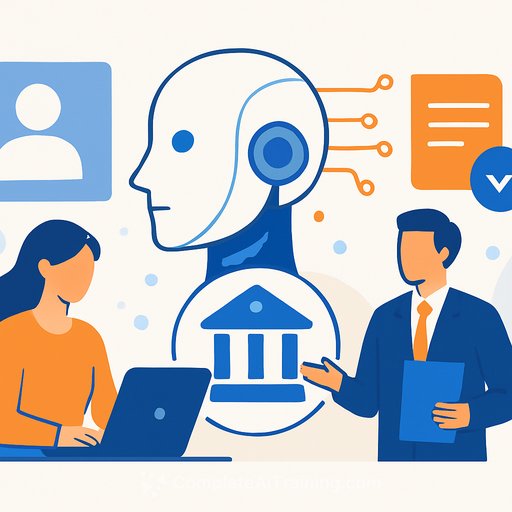
AI-enabled workforce transformation in government: from experimentation to enterprise value
Government HR is being asked to deliver more with tighter budgets, aging systems, and a workforce under constant change. Employees expect simple answers and quick resolution. HR teams carry the weight of pay accuracy, benefits access, policy clarity, and real human support. This isn't just a technology problem. It's a people problem that tech can finally help solve-if we move beyond pilots and focus on outcomes.
Where government HR stands now: high interest, high complexity
AI activity in government has surged over the past year, pushed by workforce gaps, modernization mandates, and public urgency. The pace is exciting, but it's also adding strain to already stretched teams. Pilots are everywhere, value is uneven, and leaders need a clear path to scale what works.
A crowded, fragmented AI environment
Many agencies are running multiple pilots at once-each with its own interface, data model, and governance. For HR, that often creates friction instead of relief.
- Employees don't know where to go for answers.
- HR supports several tools without clear ownership.
- Investments overlap and the experience feels inconsistent.
- Leaders can't tell which pilots are ready to scale.
As one HR leader put it: "We don't need more pilots. We need something that helps our people-and that we can stand behind."
Regulatory and compliance realities
Government can't "move fast and break things." Every change must respect strict frameworks-security (for example, FedRAMP), data residency, union rules, pay structures, and workforce protections (see OPM pay and leave policy). HR leaders carry a dual mandate: improve service for employees while protecting trust, compliance, and institutional integrity. Any AI solution must do both.
The real opportunity: AI that understands government-and the people who serve it
AI works in government HR when it starts with people, not platforms. Implemented responsibly, it reduces daily friction for employees and frees HR to focus on complex cases, workforce health, and mission-critical work.
Help employees in the moments that matter
Instead of digging through policy PDFs or waiting in a queue, employees get clear, accurate guidance on pay, benefits, leave, or life events-on demand, in plain language. That means fewer repeat inquiries and more confidence across the workforce.
Support HR professionals, not replace them
Let AI handle routine questions, triage, routing, and simple updates. HR focuses on higher judgment work-accommodations, labor relations, wellness, and sensitive cases-where human expertise is irreplaceable.
Turn workforce insight into action
Move beyond static reports. Use AI to surface skill gaps, retirement risk, and trend signals in near real time-so leaders can plan proactively instead of reacting to the next issue.
Guide people through change
System upgrades create uncertainty. AI can be the steady guide-explaining what's changing, what to expect, and how to complete new tasks without confusion.
These are not future promises. Agencies are using these capabilities today-and seeing practical value for HR teams and employees.
Why governments choose IBM: experience, scale, and trust
Many vendors offer AI. Few understand government HR from the inside. IBM's own "Client Zero" modernization proves what it takes to make AI work in practice: cultural change, workflow redesign, adoption at scale, and trust-building across the enterprise.
For over a decade, IBM has delivered HR services to government organizations, supporting roughly half a million federal employees. Its AI models are trained and tuned against real government HR policies-driving accuracy and consistency that generic tools miss. IBM-supported capabilities are helping agencies improve HR service delivery and prepare for major modernization efforts, including one of the first new federal payroll deployments in nearly twenty years. This is AI grounded in operations, policy, and people.
From pilots to enterprise value: a practical path for HR leaders
- Pick 3-5 high-volume journeys to fix first (for example, new hire, leave, benefits changes, life events). Define success metrics upfront.
- Create a single "front door" for employees to ask questions and start HR requests. Reduce channel switching.
- Name accountable owners for knowledge, data, model performance, and change management. No orphaned tools.
- Stand up a secure data foundation: classification, access by role, retention rules, and privacy-preserving retrieval for policy grounding.
- Build compliance into design: ATO path, audit logs, model cards, fairness testing, and controls that map to FedRAMP baselines and union agreements.
- Keep a human in the loop for complex or sensitive cases, with clear escalation and service levels.
- Prepare the workforce: proactive comms, hands-on training, change champions, and living FAQs.
- Measure what matters: time to answer, case deflection, first-contact resolution, CSAT/ESAT, accuracy, and equity of outcomes.
- Scale with guardrails: reusable connectors, pattern libraries, and playbooks so each new use case is faster and safer than the last.
What to ask any AI HR vendor
- How is guidance grounded in our policies, contracts, and pay rules-and how often is it refreshed?
- Where is data stored and processed? What are the encryption, retention, and isolation controls?
- What audit, explainability, and bias monitoring do you provide out of the box?
- What is the FedRAMP authorization path and timeline? Who maintains ATO documentation?
- How does it integrate with our HRIS, case management, knowledge bases, and identity systems?
- What is the total cost to operate after the pilot-licenses, compute, support, and change management?
Next steps
If you're ready to cut tool sprawl and deliver real outcomes, start small, measure obsessively, and scale what works. Focus on the employee journeys that create the most tickets and frustration, then build from there. If your team needs upskilling to evaluate and run AI safely, explore practical programs built for professionals, including HR-focused options at Complete AI Training.
Modern HR service in government is within reach. With Design that is people-first, strong governance, and partners who know your policy reality, AI can help your teams serve better-with confidence and at scale.
Your membership also unlocks: