The AI Paradox: Why Your Support Job Is Getting Harder, Not Easier
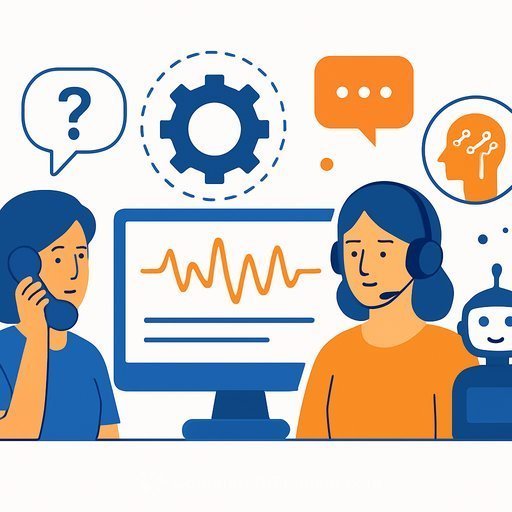
Artificial intelligence was sold to you as a support tool. A digital assistant to make your job easier. But if you work on the front lines of customer support, you know the reality is often the opposite. You feel more drained, not less.
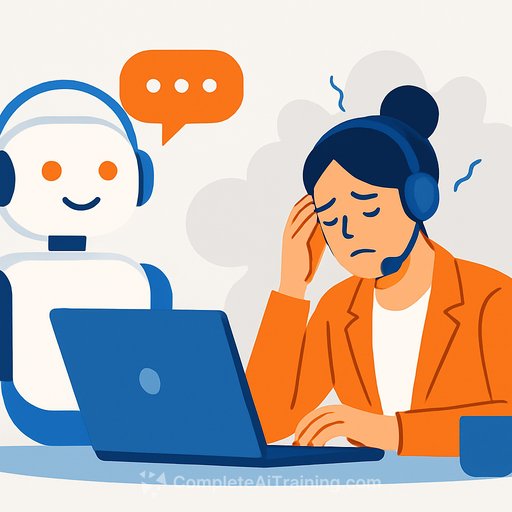
It's not just a feeling. A recent Omdia CX survey shows that leaders are scrambling to deal with employee burnout. Another study confirms it: 78% of supervisors worry that rising agent stress is actively damaging the customer experience.
From Helper to Watchdog
Here's the problem: AI was meant to be a helping hand, but it's acting more like a watchdog. Most contact centers have successfully automated the simple, repetitive tasks. This sounds good in theory, but it means you are left to handle only the toughest and most emotional calls, all day long.
The pressure is immense. According to Michael Moran, Vice President of IT at NQX, this constant exposure to high-stakes interactions is burning agents out. The system has changed. "Previously, only a small sample of agent calls could be manually reviewed and evaluated," Moran explains. "Today, automated QA solutions can analyze 100% of calls."
This means every small error during an intense call is spotted instantly and escalated. The feeling of being constantly watched is amplified by tools like real-time sentiment analysis, creating what Moran calls a "'Big Brother' effect."
The Empathy Squeeze
Think about this common scenario. An angry customer calls. A bot tries and fails to solve their problem. By the time they get to you, they're even more irritated after realizing they were talking to a machine.
You're expected to use empathy to de-escalate, but you were never trained for this new environment. You have an AI whispering instructions in your ear while monitoring every word for compliance. A single slip of the tongue becomes a data point on a dashboard.
This new reality breaks old metrics. As Moran says, companies need to rethink how they measure performance. "More complex calls naturally mean higher average handle time and lower first call resolution. Their expectations and KPIs around these metrics should adjust accordingly."
The Critical Training Gap
Companies rushed to deploy AI to cut costs. In the process, they skipped the most important step: training their human agents to work with these new systems. Joel Martins, CTO at Calabrio, warns that this is a fundamental mistake.
"Too often, AI tools are introduced without the guidance and without a context," Martins says. "When agents don't understand how AI makes decisions or how it benefits them, the tools feel intrusive rather than empowering."
The data backs this up. A Harvard Business Review study found that employees with hands-on AI training reported 144% higher trust in the technology. Yet, according to Pew Research, only about 12% of workers have received any AI-related training.
Without proper guidance, AI feels like a threat. Bridging this gap is critical, which is why specialized AI training for your job role is no longer a luxury, but a necessity for survival and success.
As Mark Speare, Chief Customer Success Officer at B2Broker, puts it, AI's logical analysis has created unrealistic expectations for human precision. But support is not a logical exchange between machines.
"Customers aren't robots, and neither are the agents helping them."
Your membership also unlocks: