
AI news ·
BU Metropolitan College hosts symposium on AI, robotics, and digital twins in construction
Boston University hosted a symposium April 7 on AI, robotics, and digital twins in construction. Speakers stressed that core skills like communication and leadership still matter as the tools change.
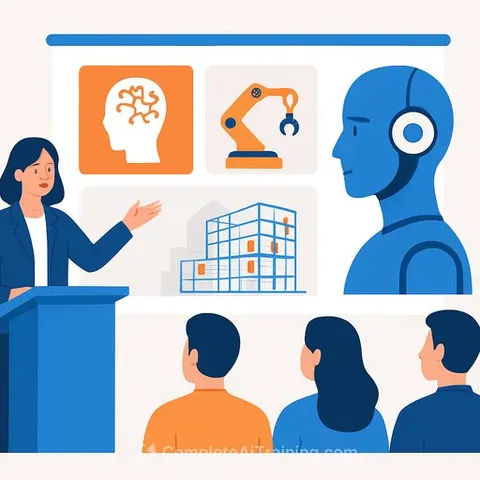
Boston University symposium examines AI and robotics reshaping construction management
Boston University Metropolitan College hosted a half-day symposium on April 7, 2026, where industry leaders, academics, and students examined how artificial intelligence, robotics, and digital twins are changing construction and project delivery. The event focused on practical applications rather than speculation about future possibilities.
Keynote speakers presented concrete examples of AI improving project planning, safety management, forecasting, and decision-making on construction sites. Robotics demonstrations showed advances in automation and precision. BU itself served as a case study, with one speaker detailing how the university applies these technologies in capital planning and project delivery.
Core skills remain essential amid technological change
A consistent theme emerged across presentations: rapid technology adoption does not eliminate the need for traditional project management principles. Leadership, communication, stakeholder engagement, adaptability, and systems thinking remain critical-perhaps more so in automated environments.
The symposium highlighted a central tension participants grappled with: data centers powering AI consume significant energy, yet AI itself can contribute to sustainability efforts in construction. Speakers did not resolve this contradiction but acknowledged it as a real trade-off the industry must address.
Panels connect classroom to jobsite
Two panel discussions followed the keynotes. The first examined current construction technology trends, workforce development, and entry points for early-career professionals. Industry practitioners explained how AI-driven tools and digital twin systems are already changing what project teams expect from each other.
The second panel featured Boston University alumni and current students discussing how technology is affecting their careers in construction, engineering, and project management. Their accounts underscored the importance of bridging academic preparation with real-world application.
The networking portion extended beyond the formal program, with attendees discussing potential collaborations, research opportunities, and internships.
What this means for managers
For professionals managing construction projects or overseeing technology adoption, the symposium reinforced that tools change faster than principles. Understanding AI capabilities and limitations matters. So does maintaining the human skills-clear communication, decision-making under uncertainty, team coordination-that no system has replaced.
Learn more about AI for Management and AI for Real Estate & Construction.