A Culture of Ethics is Needed to Address the AI Challenge
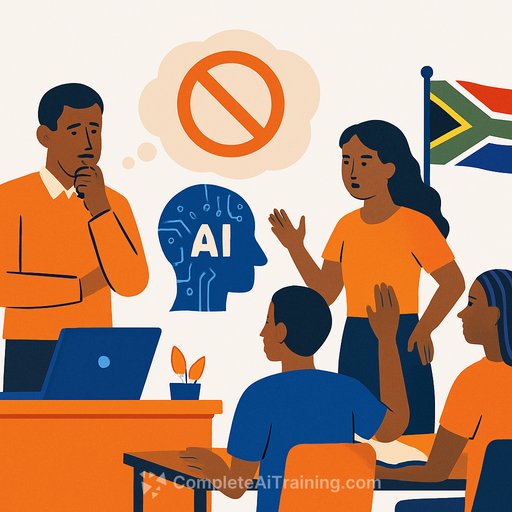
South African tertiary education providers face growing criticism as some students allegedly use generative artificial intelligence (AI) tools to cheat through their degrees. Institutions find themselves struggling with an unclear strategy to address this challenge effectively. South Africa has a history of producing highly sought-after graduates known for their dedication and hard work. However, unchecked technological advances have led to increased incidents of academic dishonesty, putting these institutions under pressure.
Leaders in academia need to understand the technology and guide students toward responsible use. Rather than simply combating AI, they must cultivate a culture of ethics and accountability.
Limited Tools to Combat AI-Enabled Cheating
Duncan Park, registrar at Mancosa, highlights the difficulties faced by tertiary institutions. He explains that current detection tools like Turnitin are unreliable against AI-generated content. For example, Turnitin flagged a human-written paragraph as 70% AI-generated, yet failed to detect AI-generated text as such. These flaws make it nearly impossible to penalize students solely based on suspicion of AI use.
As technology advances, institutions must shift focus from detection to education. Teaching students ethical AI use and fostering responsibility are crucial steps.
Changing Strategies for Academic Integrity
Distance learning institutions are more vulnerable to AI-enabled cheating, Park notes. Some face-to-face institutions have reverted to handwritten assignments and oral exams to curb dishonest practices. Others require students to write assignments during monitored tutorials to ensure authenticity.
However, this approach is harder to implement in distance learning, where students juggle work and family commitments and may not attend classes at set times. Mancosa, a technology-focused institution, embraces AI’s potential and seeks to prepare students for its impact rather than reject it.
Razack Uddin, director of Teaching and Learning at Mancosa, shares that the institution has developed an Institutional AI Framework and guidelines promoting ethical AI use. Faculty receive training to boost AI literacy and innovate teaching methods without compromising academic standards. Students learn technical AI skills alongside critical thinking and ethical reasoning. This prepares the entire academic community to adapt responsibly to AI’s growing role.
Integrating AI to Enhance Learning
Many institutions rely on traditional methods to combat AI misuse, but the technology demands a fresh approach. Both Park and Uddin emphasize that AI should be integrated as a learning tool, not just seen as a threat.
Mancosa incorporates AI into their programs to enrich learning while safeguarding academic integrity. Students use AI for research and content creation but also develop skills in source evaluation and proper citation. Assessments now focus on higher-order thinking skills that AI cannot easily replicate. This balance ensures graduates have both technical expertise and sound judgment.
AI also supports personalised learning through interactive videos, scenario-based modules, and gamified experiences. This flexibility benefits working professionals who need self-paced study options.
Challenges Ahead for Institutions
Adopting this new approach will require time, effort, and a shift in mindset. Park and Uddin acknowledge the complexity, noting that implementing AI integration responsibly may take years depending on the institution's size.
Mancosa’s approach includes:
- Redesigning assessments to test skills beyond AI’s reach
- Training staff to identify AI biases and enforce fairness
- Ensuring strict data protection and regulatory compliance
This framework balances the benefits of AI with a commitment to academic excellence and ethics.
Building a culture of ethical behaviour is vital but challenging, especially when proving misconduct is difficult. Encouraging good faith and integrity among students will yield long-term benefits but requires patience and persistence.
For those in PR and Communications working with educational institutions, understanding this shift is key. Supporting transparent communication about AI policies and ethics can help manage stakeholder expectations and foster trust.
To learn more about ethical AI use and education, consider exploring resources and training programs such as those offered by Complete AI Training.
Your membership also unlocks: