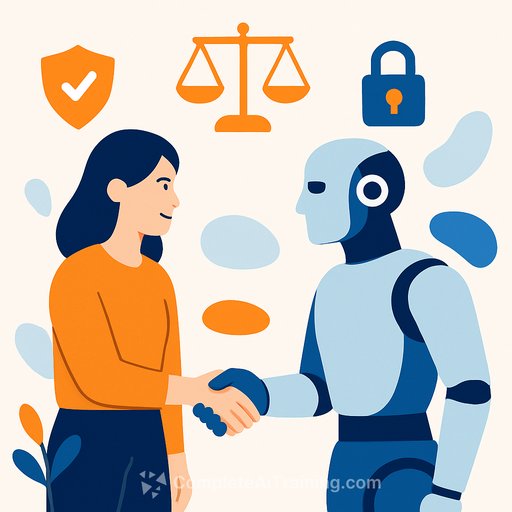
The Evolving Role of Artificial Intelligence in Society
Artificial intelligence (AI) began as the concept of creating machines capable of intelligent behavior. Since the term was coined in 1955, AI has grown far beyond simple problem-solving. Today, the focus extends beyond intelligence alone; trustworthy and socially responsible AI is essential for real-world applications.
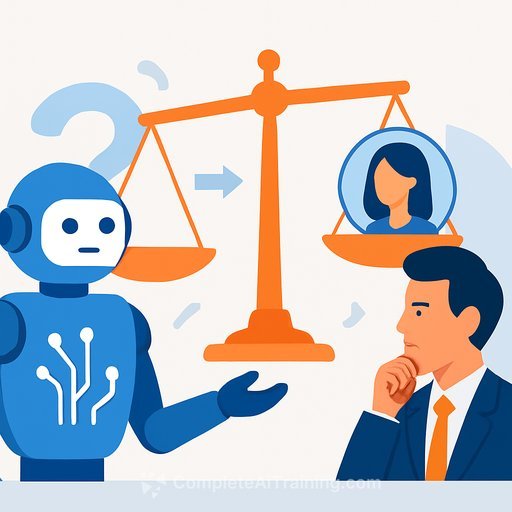
AI systems learn from specific datasets, meaning any bias or error in the data can lead to unreliable or unfair outcomes. Because AI lacks intrinsic morality or fact-checking abilities, continuous human oversight is critical to ensure ethical and accurate use.
Edge cases—rare or extreme scenarios—pose significant challenges for AI deployment, especially in high-stakes fields like aerospace, medicine, and finance. Failure to anticipate these scenarios can result in catastrophic outcomes and erode trust in AI systems.
Researchers are working to design AI that not only performs well but also improves reliability, fairness, and trustworthiness compared to traditional methods. Scientific measurement and rigorous evaluation are key to informed AI integration, avoiding hype or fear-based decisions.
AI and Legal Reform
Legal systems often reflect deep-rooted social biases. One project tackled the challenge of identifying and redacting racist language from property deeds dating back over a century. Leveraging AI enabled a county government to review millions of records efficiently, saving tens of thousands of labor hours.
Procedural inefficiencies in government are also a target for AI intervention. An AI-powered research assistant was developed to identify outdated legal requirements that unnecessarily burden staff and resources. This work has informed policy changes aimed at streamlining government processes.
When applied responsibly, AI holds promise for improving public services and expanding access to justice.
Addressing Fairness in Medical AI
Bias in medical AI arises when training data underrepresents certain populations, leading to diagnostic tools that perform unevenly across diverse groups. New algorithmic methods are being developed to ensure equitable accuracy in AI-powered medical diagnoses.
Another focus is on “unlearning”—techniques that allow AI to remove harmful or private information from its training set without degrading overall effectiveness. This is crucial for protecting patient privacy and correcting biases.
Efforts also extend to linguistic fairness. For example, fine-tuning large language models for underrepresented languages helps make AI accessible and useful for diverse global communities. Such initiatives highlight the importance of equitable AI benefits across populations.
Enhancing Safety in Autonomous Systems
AI applications controlling air traffic, autonomous vehicles, and drones face the challenge of operating safely under uncertainty. These systems must manage complex, high-speed movements while coping with imperfect sensor data.
Ensuring safety requires AI that can handle a wide range of possible behaviors and sensor noise without failure. Current research includes developing validation algorithms and educational resources to support safety-critical AI systems.
There is growing interest in how language models might contribute to monitoring and managing safety by encoding commonsense knowledge that helps detect unexpected system behaviors before failures occur.
Building AI That Earns Trust
The examples from law, medicine, and engineering demonstrate the multifaceted challenges of creating AI that works effectively and ethically. Similar principles apply across other fields such as education, security, and the arts.
Failures in AI systems can lead to harm and exclusion, making it essential to acknowledge their limitations and address them systematically. The goal is not perfect AI, but AI that earns and maintains the trust placed in it by society.
For professionals engaged in AI research and development, maintaining a focus on fairness, reliability, and transparency is critical for advancing AI that serves the public good.
Your membership also unlocks: