C-suite overconfidence in AI could prove bad for business, says survey
Many business leaders are showing misplaced confidence in their companies’ responsible AI practices, according to a new survey by EY. As AI continues to integrate into business operations, this gap between perception and reality could have serious consequences.
Adapting to AI in a Changing Business Environment
Success in business increasingly depends on the ability to adapt quickly. With AI evolving constantly, companies are trying to build agility into their decision-making processes to handle whatever AI developments come next, even without having all the answers yet. As Jad Shimaly, global managing partner at EY, puts it, AI’s uncertain future requires flexibility rather than fixed solutions.
However, as AI adoption grows, the question remains: are consumers comfortable with the risks companies are taking?
What Responsible AI Really Means
EY’s Responsible AI Pulse survey reveals a disconnect between how C-suite executives view responsible AI and what consumers expect. Definitions of responsible AI vary widely, and this lack of clarity can affect trust and competitive advantage.
The survey found that many C-suite leaders in companies with fully integrated AI systems believe their responsible AI practices are strong and aligned with consumer concerns. But this confidence may be misplaced. If consumer trust erodes, companies risk losing their edge, especially as more advanced AI systems like agentic AI become common.
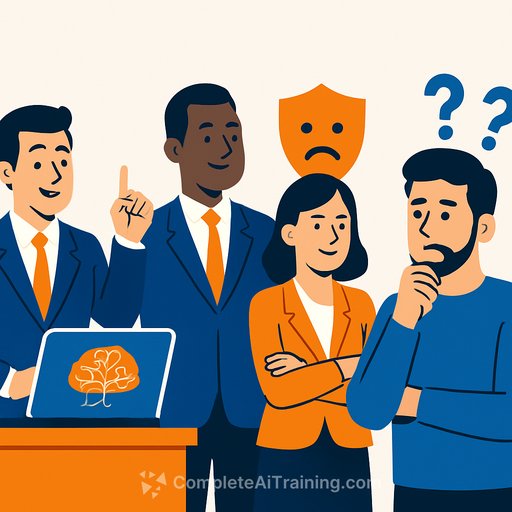
Interestingly, CEOs tend to be more cautious and closer to consumer sentiment about AI risks than their senior teams. According to the survey, only 20% of CEOs feel they have AI risk under control, compared to about a third of other C-suite members. This gap may stem from differences in awareness, accountability, or understanding of AI’s potential impact.
Jad Shimaly expects that clearer, harmonized AI regulations worldwide will help ease consumer concerns by ensuring better risk management.
Perception Gaps Between Leaders and Consumers
The survey highlighted several areas where concerns differ between business leaders and consumers:
- AI-generated misinformation
- AI’s potential to manipulate individuals
- Impact on vulnerable groups
Both groups showed less worry about job losses, the one topic where their views aligned. Companies still in the process of adopting AI tend to have concerns more in line with their customers, unlike those with fully integrated AI systems. Only 51% of C-suite leaders in the early adoption stage feel aligned with consumer views, compared to 71% in companies where AI is fully embedded.
What This Means for Business Leaders
The survey suggests that overconfidence in AI risk management can backfire. Business leaders need to:
- Improve transparency about AI practices
- Engage consumers to understand their concerns
- Prepare for evolving regulations around responsible AI
- Foster alignment within the leadership team about AI risks
For executives looking to deepen their knowledge of AI and responsible practices, exploring specialized courses can be a practical step. Resources such as Complete AI Training’s latest AI courses offer focused guidance on current AI capabilities and risks.
In short, managing AI responsibly is not just about technology. It’s about aligning leadership views, listening to consumers, and staying ahead of regulation to maintain trust and competitiveness.
Your membership also unlocks: