Cambodian Authors: AI Can Polish Text, But It Cannot Write With Heart
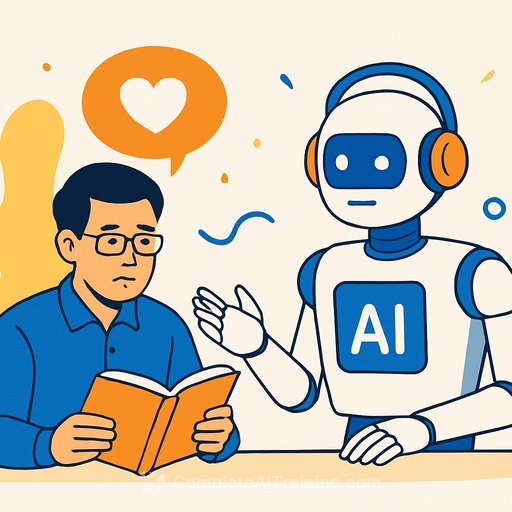
Cambodian writers say artificial intelligence can organize ideas and speed up research, but the technology fails at the emotional core of storytelling. Readers sense when a book lacks a human voice, they argue, and that absence cannot be masked by technically correct prose.
Meyson Sotheary, a fiction and nonfiction writer with more than three decades of experience, tested AI in 2023. She asked it to generate a story based on her ideas. The result was grammatically sound but emotionally empty.
"AI can write words correctly, without repetition and without looking dull," Sotheary said. "But the sentences are breathless. They have no emotion, unlike real writers who transmit their feelings when readers open their books."
Chansothida, a novelist and film scriptwriter with six years of experience, had a similar encounter. When she asked AI to build a story from her outlined ideas, the output lacked emotional depth.
"It felt like the story had no soul," she said.
Puthy, a self-development writer publishing for nearly four years, identified a different problem: AI-generated text stripped away authorial voice. Readers recognize a writer's unique perspective on the page. Without that voice, a book loses its authenticity.
"We cannot focus only on meaningful content and then sell it," Puthy said. "Without the writer behind it, the book has no soul."
Where AI Adds Real Value
The writers do not reject AI outright. They see it as a tool that can handle specific tasks and free up time for deeper creative work.
Sotheary said AI excels at restructuring disorganized storylines, checking grammar, and gathering information that would otherwise require hours of research. It can provide details for scenes writers have never experienced-courtroom trials, laboratory settings, unfamiliar environments.
"By handling those technical tasks, writers can focus more energy on shaping the emotional core of their stories," she said.
Puthy agrees AI can organize ideas more clearly, but only if the writer maintains control. "I am still the director," he said. "AI only helps arrange the ideas."
The Risk of Dependence
All three writers warn that heavy reliance on AI carries consequences. The technology can weaken the skills writers depend on to improve.
Sotheary compared AI to a modern pen. "No matter how good the pen is, the person holding it must decide the direction of the story," she said. Authors who outsource their storytelling to machines risk losing their identity and credibility with readers.
Chansothida noted that readers detect when writing lacks a human voice. "If AI is used too much, the quality of the story suffers," she said. "Readers can notice."
Puthy worries that writers who rely on AI to generate answers instantly may stop reading, researching, and reflecting. Their knowledge stagnates. "Their speech will show it," he said. "When they are invited to discussions or public talks, they will have nothing to share."
For him, AI should remain a limited tool, not a shortcut to improvement. "Depending too much on it does not mean a writer will improve faster," he said.
No Immediate Threat-But Protections May Be Needed
AI-generated content has not yet become a direct threat to Cambodian authors. Readers still choose books because they trust the voice and experience of the person who wrote them.
Sotheary believes writers must focus on developing their own identity rather than imitating others or relying on machines. "If you depend on AI and think it will turn you into a real writer," she said, "you will suffer from that dependence later."
Puthy encourages aspiring authors to embrace the slower path. "I write when I am curious," he said. "When I discover solutions to problems in life, I can explain them through my books."
Chansothida expects AI capabilities to grow rapidly. She hopes stronger legal protections will eventually protect writers' rights as the technology advances.
Kok Ros, head of the Department of Book and Reading at the Ministry of Culture and Fine Arts, described AI as a double-edged tool. "If we use it well, it brings benefits. If we use it wrongly, it brings drawbacks," he said. The ministry has not yet introduced specific measures on AI in publishing.
For writers looking to understand how AI fits into their practice, resources like AI for Writers offer structured guidance. Scriptwriters may find AI Learning Path for Scriptwriters particularly relevant.
Your membership also unlocks: