
AI news ·
Canada considers extending children's social media ban to AI chatbots
Canada is considering restricting children's access to AI chatbots as part of upcoming online harms legislation that will also ban youth from social media. No decisions have been made, but officials are debating which AI tools would be covered.
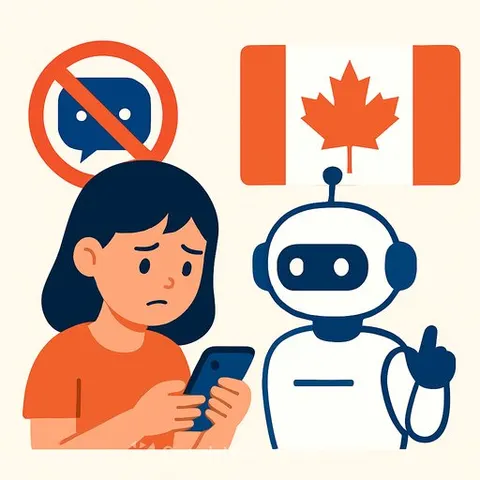
Canada weighs AI chatbot restrictions for children alongside social media ban
The federal government is considering restricting children's access to AI chatbots as part of planned online harms legislation, three sources told The Logic. Culture Minister Marc Miller plans to table the legislation later this year, which will also include a social media ban for youth.
The Liberal party voted at its policy convention last month to set a minimum age of 16 for social media access. The government has now begun debating whether to extend similar restrictions to chatbots, though officials have not finalized what types of AI tools would be covered.
A spokesperson for Miller said no decisions have been made. "Our government intends to act swiftly to better protect Canadians, especially children," the statement said.
Why chatbot restrictions are more complicated
Restricting social media is straightforward compared to banning chatbots. Unlike Instagram or TikTok, AI tools have legitimate educational uses for young people preparing for future jobs.
Emily Laidlaw, Canada Research Chair in cybersecurity law, said a broad prohibition on chatbots for children is vulnerable to legal challenge. "It's more difficult to justify banning a general-service AI when there are all kinds of benefits in terms of information, learning and access to knowledge," she said. The government asked Laidlaw to advise on the proposal as a member of its expert advisory committee.
The restrictions also raise constitutional and privacy questions as Canada pursues AI leadership domestically.
The Tumbler Ridge incident
Public pressure for chatbot restrictions intensified after a February shooting in Tumbler Ridge, B.C. The teenager who killed eight people had troubling conversations with ChatGPT before the attack, according to news reports. Federal ministers subsequently demanded stricter safety protocols from OpenAI executives, including CEO Sam Altman.
How Canada's approach compares internationally
A blanket chatbot ban would position Canada as more aggressive than other countries. Australia enacted age-verification rules earlier this year but limited them to chatbots capable of generating sexual or graphic content. The U.S. is considering House and Senate bills that would set minimum ages for "companion" chatbots designed to encourage human-like interactions.
What officials are considering
Unresolved questions include whether any ban would be permanent or temporary until a regulator is established, and which specific chatbots would fall under restrictions.
In a speech last weekend, Miller said the government would pair any ban with other measures to ensure platform accountability. "It should not be a partisan thing that you want to protect kids and, once you've done that, make sure that platforms have a duty to act responsibly," he said.
For government officials evaluating these policy options, understanding the technical capabilities and current limitations of AI systems is essential. The AI Learning Path for Policy Makers provides frameworks for analyzing AI regulation and governance decisions.