
AI news ·
Canada releases national AI strategy with a pro-worker focus and implications for hiring and training
Canada's new AI Strategy regulates algorithmic hiring and requires worker training. Data shows 80% of manufacturing and finance workers report AI improves their performance.
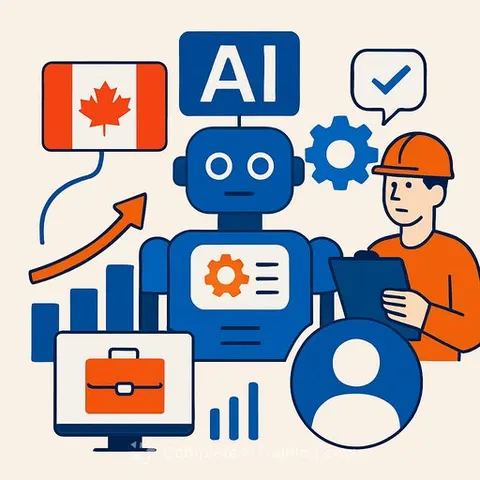
Canada's federal government released its National Artificial Intelligence Strategy, AI for All, on June 4, 2026. The six-pillar framework aims to accelerate responsible AI adoption while protecting workers and strengthening national sovereignty. For government employers, the strategy signals upcoming legislation on algorithmic hiring, new training expectations, and a clear pro-worker stance that will shape procurement and workplace AI use.
Pro-worker AI adoption model
The strategy frames AI as a tool to "augment human expertise rather than displace it." It cites OECD survey data showing that 80% of manufacturing and finance workers across seven countries, including Canada, said AI improved their performance. AI users were four times more likely to report gains in job satisfaction, physical and mental health, and fair management.
Workforce training and AI literacy
The government plans to create sector-specific workforce alliances that bring together employers, unions, post-secondary institutions, and Indigenous partners. These groups will identify skill gaps and coordinate training pipelines. The strategy also commits to free entry-level AI training and will scale employer-led upskilling programs for mid-career workers. Employers are positioned as central partners in delivering AI literacy and managing workforce transitions.
AI in hiring: bias and transparency
Hiring is identified as a high-risk area where AI can embed bias and harm vulnerable communities. The strategy warns that algorithms used in screening, ranking, or evaluating applicants may produce discriminatory outcomes. The government has committed to updating laws and standards to protect against algorithmic bias. For government HR teams, adopting AI-powered recruitment tools will require careful oversight. AI for Human Resources training can help teams understand these risks and implement safeguards.
Why this matters for government professionals
The strategy is a policy document, not a new employment law. Its impact will depend on the legislation, standards, and program details that follow. But government departments and agencies that procure or deploy AI tools will face growing pressure to align with the strategy's principles of transparency, accountability, and human oversight.
Practical steps include mapping current AI uses in HR and workforce management, reviewing vendor contracts for AI platforms, and establishing internal governance policies that define when human review is required. Unionized workplaces should also consider whether AI-driven changes trigger consultation or bargaining obligations. Programs like AI for Government can help public sector organizations build the internal capacity to meet these emerging expectations.