
AI news ·
Canadian hotels lead global shift to AI-powered guest services in 2026
Canadian hotels jumped from 1.5% AI adoption in 2025 to widespread use in 2026, setting practices other countries now follow. Robots, smart rooms, and AI concierges handle routine tasks while staff focus on complex guest needs.
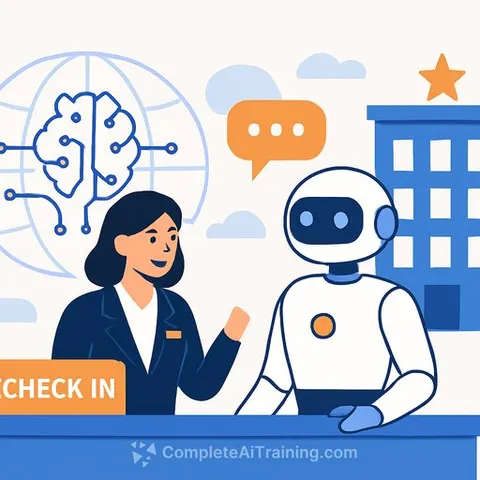
Canadian Hotels Are Setting the Standard for AI Adoption in 2026
Hotels across Canada are deploying AI systems at scale, establishing practices that other countries now follow. The shift from 1.5% of Canadian accommodation businesses using AI in 2025 to widespread adoption in 2026 reflects how quickly the technology has moved from pilot projects to daily operations.
The changes affect every part of a guest's stay-from arrival to checkout. Robots greet guests, AI concierges suggest dining options, and smart rooms adjust temperature without human intervention. For hospitality professionals, this means learning to work alongside these systems rather than replacing them.
Check-In and Guest Arrival
AI-powered check-in systems have eliminated most waiting time in hotel lobbies. Robots and virtual agents now handle initial guest interactions, process bookings, and answer routine questions around the clock.
Canadian hotels deployed AI chatbots to manage customer inquiries 24/7, reducing pressure on front desk staff during peak hours. These systems handle straightforward requests-room upgrades, local recommendations, transport bookings-freeing staff to focus on complex guest needs.
Service Robots in Daily Operations
Service robots deliver room service, fresh towels, and amenities without requiring staff to climb stairs or carry heavy loads. In the United States, the Department of Labor funded apprenticeship programs to train hospitality workers to operate and maintain these robots.
The technology works, but reliability remains an issue. Robots require regular maintenance and can fail during peak service times. Hotels that deploy them successfully treat robots as tools that reduce physical strain on staff-not replacements for human workers.
Personalization Through AI Concierges
AI concierges analyze guest booking history, preferences, and even social media activity to recommend activities, restaurants, and services. The system adjusts recommendations in real time as guests interact with the hotel.
This approach increases revenue. Guests spend more on services matched to their interests than on generic offerings. For hospitality staff, it means fewer generic inquiries and more conversations about specialized requests.
Smart Room Technology
Hotel rooms now respond to voice commands. Guests control lighting, temperature, and entertainment without touching switches or remotes. The systems link reservation data with energy management, so rooms reach optimal temperature just before guests arrive.
The U.S. Environmental Protection Agency reports that connecting energy systems to reservation platforms can reduce energy use by up to 45%. Hotels lower heating and cooling when rooms are empty, then adjust before guests check in.
Predictive Maintenance Reduces Downtime
AI monitors equipment wear and tear across the property, scheduling repairs before failures occur. Hotels in Canada use data platforms to track energy consumption and occupancy patterns, allowing maintenance teams to work during low-occupancy periods.
This prevents the scenario where a guest arrives to find a broken air conditioner or malfunctioning shower. It also cuts emergency repair costs.
Kitchen Automation and Robotic Service
Robotic systems prepare meals with precision in some hotel kitchens. Robotic servers deliver food to tables in restaurants, creating novelty that attracts diners.
Research from the U.S. National Institute for Occupational Safety and Health notes that while robots reduce physical exertion, they can create reliability challenges. Kitchens still need staff to troubleshoot when robots malfunction.
Virtual and Augmented Reality for Bookings
Potential guests can now tour hotel rooms and nearby attractions through VR before booking. This reduces uncertainty and increases confidence in the reservation decision.
The UK's 5G Smart Tourism project demonstrated how AR and VR increase tourism by offering immersive previews of cultural landmarks. Canadian hotels adopted similar approaches to encourage longer stays.
Dynamic Pricing and AI Booking Platforms
AI-powered booking systems adjust room rates based on demand, weather, and upcoming local events. The same systems recommend packages tailored to individual guest profiles.
Integration with loyalty programs and flight data allows hotels to offer frictionless bookings. A system might automatically suggest a late checkout or restaurant reservation based on a guest's flight time and dining history.
Multilingual Chatbots and Support
AI chatbots provide 24/7 support in multiple languages, answering questions about amenities, local transport, and services. International guests can request room service or extra towels without calling the front desk.
For hospitality teams, this means fewer routine calls and more capacity to handle complex requests from guests with specific needs.
Biometric Security Systems
Facial recognition and biometric access systems allow guests to enter rooms without key cards. Staff use the same systems to access restricted areas, reducing theft risk.
Canadian hotels operate under strict government guidelines for these systems to protect guest privacy while improving security.
Back-Office Automation
Robotic process automation handles payroll, procurement, and scheduling tasks. Machine learning algorithms forecast demand and optimize staffing levels.
This frees administrative staff to focus on strategy and guest-facing work rather than data entry and routine processing.
Autonomous Vehicles for Guest Transport
Self-driving shuttles transport guests between airports, hotels, and attractions. Canadian tourism bodies are testing autonomous buses for resort access and event transportation.
These vehicles integrate with hotel booking systems, allowing guests to arrange transport when they reserve their room.
What This Means for Hospitality Professionals
AI and robots are not eliminating hospitality jobs-they are changing what the work entails. Staff spend less time on repetitive tasks and more time on guest interactions that require judgment and empathy.
For anyone working in hotels or events, understanding how these systems function is now essential. AI for Hospitality & Events covers practical applications in guest experience, event management, and hotel operations. AI Agents & Automation provides deeper insight into the chatbots, robots, and back-office systems reshaping the industry.
The hospitality industry in 2026 operates with technology handling routine work and staff handling everything else. That balance-not technology replacing people-is what Canadian hotels have demonstrated works.