
AI news ·
Cargill embeds AI across full food value chain after winning 2026 intelligence excellence award
Cargill embedded AI across its full food development pipeline - from farm to formulation - winning a 2026 BIG AI Excellence Award. R&D teams now use predictive models to cut failed trials, while scientists focus on validation and scale.
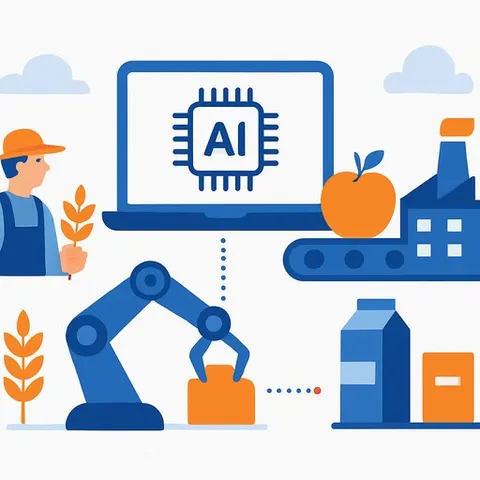
Cargill embeds AI across product development, not just pilots
Cargill has integrated AI into core operations across its food innovation pipeline - from farm to formulation to customer collaboration - rather than testing it at the margins. The company won a 2026 BIG Artificial Intelligence Excellence Award for embedding these systems across the full value chain.
For product development teams, the shift matters because it changes how work gets done. Instead of AI sitting in separate projects, it's woven into everyday decisions about which formulations to test, how products will perform in market, and where to focus R&D effort.
AI narrows the development path, but doesn't replace validation
Cargill uses AI to combine consumer data, sensory science, and predictive modeling to anticipate product performance before physical trials begin. This reduces the number of failed experiments and reformulation cycles - a direct cost savings in a sector with tight margins.
But the company is explicit about limits. Abhishek Roy, senior director of AI R&D at Cargill, said that ingredient formulations must still meet strict standards for safety, regulatory compliance, sensory performance, and scalability. "AI helps us narrow pathways early," he said, "but scientific expertise and real-world validation remain essential."
Generative AI accelerates ideation and surfaces insights from complex datasets, but it doesn't produce commercially viable formulations on its own. A human-in-the-loop model ensures outputs are practical, safe, and aligned with what customers actually need.
R&D teams shift from doers to orchestrators
As AI takes on more analytical work, the scientist's role doesn't shrink - it changes. Teams spend less time on routine analysis and more on high-value work: defining customer problems, refining solutions, and ensuring ideas work at scale.
Roy said R&D teams are becoming "orchestrators, ensuring outputs are scientifically sound, scalable, and aligned with regulatory and safety requirements." They interpret data, validate what AI produces, and translate insights into solutions that function in real conditions.
This requires more human oversight, not less. The need for context, validation, and judgment increases as systems become more capable.
Co-creation with customers moves faster
AI-driven tools let Cargill and its customers explore formulation options and refine concepts in real time. Rather than waiting weeks for a development cycle, teams can now test ideas, gather feedback, and adjust targets for taste, texture, and functionality more quickly.
Roy said the company can "bring insights, concepts, and formulation options forward much earlier," enabling more transparent collaboration. While fully real-time co-creation at scale is still developing, faster feedback loops are already changing how customer partnerships work.
Precision beats speed as the primary benefit
Speed matters in product development, but precision matters more. By combining predictive models with sensory science and consumer data, teams better anticipate how products will perform before launch.
In food, sensory performance drives repeat purchase. Predictive models help teams understand how ingredients behave across applications and markets, enabling more accurate targeting of taste and texture. The result is fewer failed launches and higher odds of commercial success.
Roy said: "Speed comes not just from automation, but from better data, stronger selection, and expert interpretation."
AI as infrastructure, not a tool
The broader lesson from Cargill's approach: value comes from embedding AI into core processes, not from isolated pilots. In a sector where variability is high and margins are tight, integrating AI across the value chain - while maintaining human oversight - positions it as foundational infrastructure rather than a discrete technology.
Competitive advantage in food innovation will depend less on simply adopting AI and more on how deeply it's embedded into decision-making systems. For product development teams, that means AI becomes part of how you work, not something you consult on the side.
Learn more about AI for Product Development and how to apply these approaches in your organization.