Cartesia brings real-time voice AI to India - what customer support leaders should know
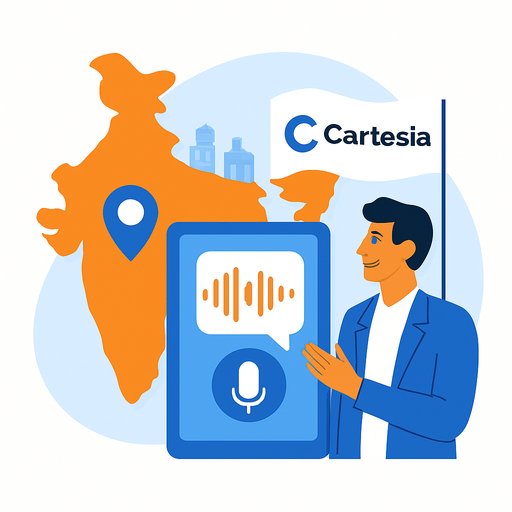
Cartesia, a San Francisco-based startup building real-time voice AI agents, is launching operations in Bengaluru with a $2.5 million investment over the next 12-24 months. After adding support for nine Indian languages in November 2025, India quickly became the company's second-largest market, according to cofounder and CEO Karan Goel.
Founded in September 2023 by Stanford AI Lab researchers Karan Goel, Albert Gu, Brandon Yang, and Arjun Desai, Cartesia has raised $100 million from Kleiner Perkins, Index Ventures, Lightspeed, and Nvidia. The India office will start with a team of around 10 and grow over time, with most hiring focused on research for the foundation layer of the tech.
"Most startups in India are building applications on top of voice AI. We operate at the foundational model layer - we train the models from scratch and build the infrastructure to run them in real time," said Goel. "Cartesia is like OpenAI for interactive voice models. Startups and enterprises use our platform to build their specific solutions, but the core models and low-latency systems come from us."
Why this matters for customer support
- Real-time conversations: Low-latency voice agents that interrupt, respond, and hand off seamlessly can reduce wait times and keep callers engaged.
- Multilingual coverage: Support for nine Indian languages helps teams serve regional markets without spinning up separate workflows.
- Scalability during spikes: Infrastructure built for concurrency lets you handle seasonal peaks without overstaffing.
- Cost efficiency with controls: Automate repetitive queries while routing edge cases to agents, improving AHT and containment without killing CSAT.
- More human delivery: Natural prosody and barge-in handling make voicebots feel less scripted and more serviceable.
Who's using it
Cartesia reports adoption across enterprises like Magicbricks, Gupshup, and One Point One Solutions (BPO), plus startups such as Grey Labs, SpeakX, and Supernova for voice tutoring. These teams lean on Cartesia's real-time voice infrastructure to scale interactions, automate common queries, and deliver more natural experiences at volume.
How to pilot in your contact center (fast and low-risk)
- Start narrow: Pick one call type with high volume and clear guardrails (order status, appointment scheduling, password resets).
- Define success: Track AHT, FCR, containment rate, CSAT, and transfer-to-agent quality. Set a go/no-go threshold.
- Design for handoffs: Ensure smooth agent takeover with transcripts, caller intent, and summary notes passed into your CRM.
- Integrate lightly: Begin with IVR deflection or callback bots before moving into full telephony/CCaaS integration.
- Train your team: Coach agents on escalations from bots, interruption etiquette, and how to use real-time summaries.
- Roll out in phases: Limited hours → single queue → expanded coverage, with weekly QA and tuning.
Foundation vs. app layer: choose your stack
Cartesia positions itself at the foundational model and infrastructure layer. Many Indian startups are building the application layer on top (industry-specific scripts, workflows, and dashboards). In the U.S., Cartesia competes with Deepgram, PlayHT, and Hume AI - all offering low-latency speech APIs for real-time voice use cases. If you want faster time-to-value, you might work with an app-layer partner powered by these platforms. If you need deeper control, go closer to the foundation.
Budget and team structure
With a Bengaluru presence, Cartesia plans to support onboarding and client management locally. For a pilot, plan for a small tiger team: one ops lead, one QA specialist, one engineer (or vendor), and a data analyst. Keep the initial scope small, then scale if metrics hold.
Vendor checklist for voice AI in support
- Languages and accents supported; tuning for Indian English and regional languages.
- Latency under real call conditions; barge-in and interruption handling.
- Telephony and CCaaS compatibility (SIP, PSTN, Twilio, Genesys, Five9, etc.).
- Security: PII redaction, data residency, retention, SOC2/ISO options, VPC or on-prem.
- Reliability: uptime SLAs, concurrency limits, fallback flows on errors.
- Voice quality: natural prosody, emotion range, controllable speaking rate.
- NLU accuracy, intent coverage, and guardrails for compliance-heavy domains.
- Analytics: transcripts, QA scoring, sentiment, and real-time summaries to CRM.
- Transparent pricing: per-minute, per-call, or concurrency-based; unexpected fees.
India vs. US: the mindset gap
Goel points out that Indian corporations are highly cost-focused, which limits R&D appetite. For support leaders, that's a cue to ring-fence a small experimentation budget with strict success criteria. Treat pilots as controlled bets: small, measured, and tied to specific KPIs.
Helpful links
- Nvidia - an investor in Cartesia and a key player in AI infrastructure.
- AI Learning Path for CIOs - guidance for enterprise leaders planning AI strategy, governance, and infrastructure.
- AI Learning Path for Technology Managers - resources for tech teams leading AI program deployment and operations.
- AI courses by job role (Customer Support) - curated training to upskill your team before and during a voice AI rollout.
Bottom line
If you manage customer support in India, the timing is favorable. With local operations, multilingual support, and enterprise-grade infra, Cartesia makes it easier to test real-time voice agents without a full rebuild. Start small, measure hard, and scale what works.
Your membership also unlocks: