
AI news ·
Catawba Valley Health CIO says AI adoption and cybersecurity must advance together
Catawba Valley Health System CIO Nadin Knippschild says AI and cybersecurity must advance together-not separately. She urges health systems to build governance frameworks before deploying AI in clinical settings.
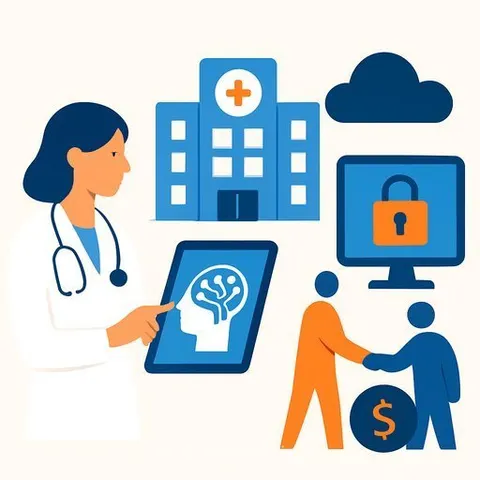
Health System CIO: AI and Cybersecurity Must Advance Together
Nadin Knippschild, assistant vice president and CIO at Catawba Valley Health System in Hickory, North Carolina, faces a dual mandate that defines modern healthcare IT: deploy artificial intelligence to cut costs and improve care, while defending against cyber threats that grow more sophisticated each year.
Nearly 37% of U.S. hospitals operate at a loss. Medical supply and technology expenses rise faster than reimbursement. For an independent health system like Catawba Valley, AI offers a practical solution-automating routine work, optimizing clinical workflows, and flagging care gaps before they become costly problems.
"Smart use of AI can help us do more with less," Knippschild said. About 70% of healthcare CIOs plan to increase data analytics and AI initiatives, she noted, viewing data-driven tools as essential to delivering better care under financial pressure.
But each step toward digital transformation expands the attack surface. A single ransomware incident could disable operations and destroy patient trust overnight.
Security as a Strategic Priority
Cybersecurity now ranks as the top strategic initiative for nearly two-thirds of healthcare CIOs. Hospitals have become prime targets for attackers because disrupting care can be life-threatening-and organizations often pay substantial ransoms to restore critical services.
The risk extends beyond downtime. Breaches create lasting damage: recovery costs, regulatory fines, and reputational harm that can take years to repair.
"Cybersecurity must advance hand-in-hand with AI and cloud adoption," Knippschild said. "Blending these priorities isn't optional-it's the only path to a sustainable, independent future."
Responsible AI Requires Guardrails
Generative AI has generated justified concerns about opaque algorithms and potential bias in patient care. Knippschild emphasizes that responsible AI is an ethical issue, not just a technical one.
"We feel a duty to ensure any AI that influences clinical decisions is transparent, validated and aligns with our care standards," she said.
For health system leaders, Knippschild recommends establishing a formal governance framework that treats innovation and security as inseparable. This means creating an AI steering committee with IT, clinical, security, legal, and finance representatives to evaluate new technologies for both potential value and risk before deployment.
Set explicit ethical guidelines: policies on algorithm bias, transparency, and validation of AI recommendations. Leaders should signal that innovation is welcome-but only within guardrails that protect patients and data.
Enabling Safe Experimentation
Governance shouldn't become a barrier to progress. Knippschild advocates for pilot programs and sandbox environments where clinicians can test AI-driven ideas while containment measures manage risk.
"By doing this, one can cultivate innovation and keep it aligned with the organization's mission," she said. In healthcare, digital progress depends on trust-if frontline providers or patients lose confidence in a system's safety, adoption stalls.
Strong governance, in her view, isn't bureaucracy. It's how leadership ensures advanced technologies solve problems and earn trust.
Learn more about AI for Healthcare and explore an AI Learning Path for CIOs to build skills in governance, risk management, and strategic AI deployment.