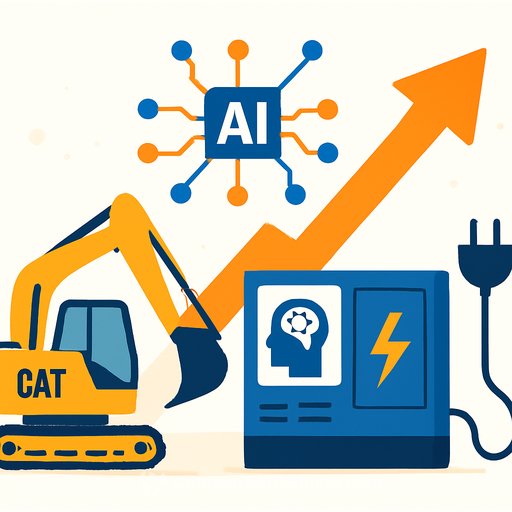
Caterpillar's AI-fueled demand vs. tariff drag: sales takeaways that move deals forward
Caterpillar closed the quarter with strong momentum in generators and related energy systems, lifted by AI data-center buildouts. At the same time, the company flagged a heavy tariff bill for 2026, which could keep margins tight even with healthy top-line growth.
Translation for sales teams: budgets are flowing into on-site electricity and resiliency. Price pressure from tariffs is real, but urgency from buyers is stronger.
The signal: data centers need continuous electricity
Quarterly sales in Caterpillar's energy segment (generators) climbed more than 20%, making it the company's largest line by revenue. Orders are rising for "prime" generator systems-units built to run 24/7-as hyperscalers and colocation sites add on-site capacity to keep up with fast growth.
If you sell into industrials, utilities, EPCs, or data infrastructure, this is your window. Reliability, uptime, and deployment speed are beating nice-to-have features every day of the week.
The numbers you'll want on hand
- Revenue: $19.1B vs. $16.2B a year ago.
- Adjusted EPS: $5.16 vs. $5.14 a year ago (consensus was $4.68).
- Stock reaction: up ~4.4% in early trade.
- Tariffs: ~$2.6B expected in 2026 (vs. ~$1.8B last year).
- Margins: company expects adjusted operating margin near the bottom of its target range this year due to tariffs. Long-term framework remains 15%-19% through 2024, rising to 21%-25% by 2030, depending on sales levels.
- Street view: construction expected to return to growth in 2026 on stronger dealer orders, steadier non-residential activity, and higher rental fleet demand.
Analysts called out that tariff costs limited margin expansion despite better-than-expected sales. Expect that theme to stick through 2026.
How to turn this into pipeline
- Target accounts: hyperscalers, colocation providers, utilities, EPCs, and rental partners expanding generator fleets.
- Lead with outcomes: uptime, on-site electricity resilience, and time-to-energize. Back it with clear cost-of-downtime math.
- Pricing strategy: build in tariff clauses and indexed adjustments. Offer financing and long-term service to spread capex and protect margins.
- Attach more value: pair generators with monitoring, maintenance SLAs, and fuel-switch options. Sell continuity, not just equipment.
- Partner early: coordinate with dealers and rental providers ahead of forecasted construction strength. Pre-reserve inventory where possible.
- De-risk the buy: address lead times upfront. Lock critical components early. Be explicit about surcharge mechanics.
- Measure what matters: quote speed, win rate vs. battery-only alternatives, service attach rate, and delivery reliability.
Suggested outreach (short and direct)
Subject: Cut your data center downtime by X% with on-site generation
Hi [Name],
We're seeing AI buildouts strain grid capacity. Teams like yours are adding on-site generation to keep availability high and deployment schedules intact.
If a [MW/kW] system with [target uptime]% availability and a [X]-week deployment window helps your 2026 roadmap, I can share options with tariff-safe pricing and service built in.
Worth a quick call this week?
Context you can cite with buyers
Data-center electricity needs keep climbing as AI workloads scale. For a broader view, see the IEA's work on data-center electricity trends: IEA report.
On tariffs, buyers will ask why pricing moved. Point them to public references on Section 301 actions from the USTR: USTR Section 301 overview.
Upskill your team on AI buyers
If your territory includes AI-led accounts, level up your fluency in their priorities, vocabulary, and buying triggers. A fast way to ramp: AI courses by job role.
Bottom line
AI is pulling forward generator demand and making energy resilience budget-worthy. Tariffs tighten margins, but urgency wins the deal-if you frame it around uptime, speed, and clear economic impact.
Your membership also unlocks: