
AI news ·
Celebrities turn to trademark law to fight AI misuse of their likenesses
Taylor Swift and Matthew McConaughey have filed trademark applications covering their voices and likenesses to block unauthorized AI use. Legal experts call it a deterrent, not a guaranteed shield-and untested in court.
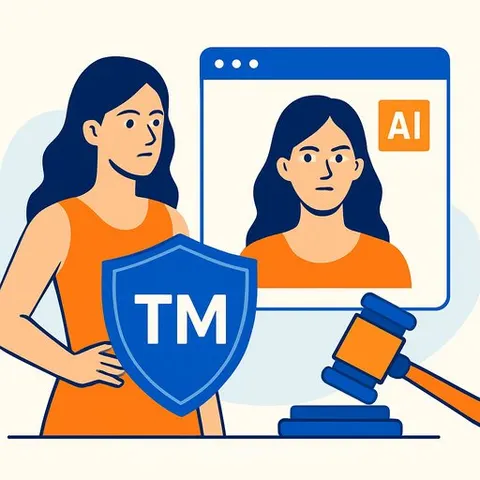
Celebrities Register Trademarks to Block AI Misuse of Their Likenesses
Taylor Swift and Matthew McConaughey have filed trademark applications with the U.S. Patent & Trademark Office listing their voices, images and likenesses as protected marks. Legal experts believe the move is designed to deter artificial intelligence companies and users from replicating their identities without permission.
The strategy remains untested in court. McConaughey's attorney, Jonathan Pollack, described trademark registration as a deterrent rather than a foolproof legal shield. "It's a round peg in a square hole," Pollack said, acknowledging that trademark law wasn't designed for this purpose.
Why celebrities are taking action
Public figures have faced a growing problem with AI-generated content. Deepfake pornographic images of Swift circulated online. An AI video falsely showed Swift endorsing Donald Trump's 2024 campaign. Scarlett Johansson objected to OpenAI's use of a voice for its Sky AI assistant, saying it sounded "eerily similar to mine." Tom Hanks warned followers about an AI version of himself promoting a dental plan.
McConaughey raised concerns about AI protections with his lawyers several years ago. Pollack explored potential legal guardrails, examining state-level right of publicity laws and federal false endorsement statutes before settling on trademark registration.
How trademark registration might work
McConaughey registered sound clips and images of himself from the film "Dazed and Confused." Swift filed applications for her voice and likeness. Jennifer Rothman, a law professor at the University of Pennsylvania, said this approach is "not entirely novel," but registering voice clips specifically could spark a trend among actors and musicians.
Other celebrities have used trademark law to protect their identities. Michael Jordan sued supermarket chains for using his name and jersey number in advertisements. Beyoncé and Dwyane Johnson have registered "self marks" using their names in commercial ventures. Lizzo and DJ Khaled have trademarked song lyrics.
The registrations require that celebrities use their likenesses or voices in a commercial context. This requirement limits who can benefit from the strategy.
The uncertainty ahead
Robert Brauneis, an intellectual property law professor at George Washington University, said these trademarks may function primarily as a warning. "Having a registration certificate, with a number that you can refer to - it'll sometimes impress people," he said. "Sometimes that's all you need, right?"
Existing laws already provide some protection. State right of publicity laws could prevent unauthorized AI replications used for commercial purposes. Fraud statutes could apply if someone used a celebrity's likeness for financial gain. Unregistered trademark protections are also available if celebrities can prove their likenesses are part of their goods and services.
McConaughey is not opposed to AI generally. He invested in ElevenLabs, an AI voice company that produces a Spanish-language version of his newsletter. He told the Wall Street Journal he wants permission before any AI-generated content uses his likeness.
Legislative alternatives
Congress has not voted on the No FAKES Act, introduced in 2024, which would protect individuals' voices and likenesses from unauthorized computer-generated content. McConaughey's legal team and his union, SAG-AFTRA, have pushed for legislation addressing the issue.
SAG-AFTRA said in a statement: "Individuals need control in a world awash with digital clones, but that control cannot harm the freedom of expression our industry relies upon to entertain and inform the world."
Limits for ordinary people
These trademark strategies offer little protection for non-public figures worried about AI deepfakes. Trademark law protects commercial use, and registering a mark requires using it in goods or services. Rothman said: "Unless you're using your likeness in your goods or services, you may not successfully register a mark."
Pollack expressed skepticism that any nonpublic figure would need trademark protection against AI misuse, given the commercial requirements built into trademark law.
The registrations McConaughey and Swift filed remain theoretical until tested in court. "I wouldn't say this is grasping at straws," Pollack said. "But I think this is the best we can do right now."
For legal professionals tracking intellectual property developments, understanding how trademark law is being adapted for AI protection is increasingly relevant. AI for Legal professionals covers emerging strategies like these, while AI Learning Path for Paralegals addresses how legal teams are handling AI-related document review and contract analysis in this evolving area.