
AI news ·
Celebrity endorsements mask legal AI's risks, critics warn
Jude Law and Aaron Judge now front legal AI products, but celebrity polish doesn't reveal how these tools handle hallucinations, biased training data, or edge cases. Lawyers remain liable for their work regardless of who endorses the software.
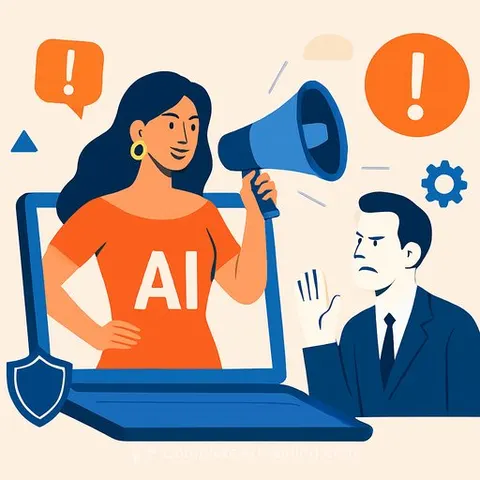
Legal AI Gets the Celebrity Treatment-and That's a Problem
Celebrity endorsements are reshaping how legal AI reaches the market. Actor Jude Law and baseball star Aaron Judge now front legal technology products, lending polish and credibility to systems that many lawyers have yet to fully evaluate.
The trend raises a practical concern for legal professionals: as these tools become more polished and mainstream, the line between marketing and substance blurs. Lawyers may struggle to distinguish between what a product actually does and how effectively it presents itself.
When Packaging Obscures Performance
Legal AI systems handle real work-document review, contract analysis, legal research. But they also make mistakes. Hallucinations, missed nuances in case law, and biased training data remain documented problems.
Celebrity-backed marketing can make these limitations harder to spot. A well-produced advertisement doesn't tell you whether a system will catch the edge case that matters in your case. It doesn't explain how the algorithm was trained or what it was trained on.
Lawyers bear responsibility for their work. That liability doesn't transfer to the vendor or the celebrity endorsing the product.
The Real Risk: Algorithmic Authority Without Visibility
The deeper issue isn't the celebrity endorsements themselves. It's that slick packaging can create false confidence in algorithmic decision-making.
When a tool looks professional and carries a recognizable name, users may trust its output more readily than they should. They may skip the verification step. They may assume the system has been tested in ways it hasn't.
Legal work requires skepticism. It requires knowing what you don't know about the systems you're using.
What Lawyers Should Actually Know
Before adopting any legal AI tool, ask specific questions: What data trained this system? How often does it fail, and in what scenarios? Who tested it, and how? What does the vendor warrant, and what do they explicitly not warrant?
Check independent reviews and case studies from practitioners in your practice area. Pilot the tool on lower-stakes work before relying on it for critical matters.
The celebrity factor should be irrelevant to your decision. If it's influencing your judgment, step back.
Building Professional Standards
The legal profession has ethics rules for a reason. Those rules exist to protect clients and maintain the integrity of the system. They don't disappear because a tool is well-marketed.
Law firms adopting AI need clear protocols: who validates outputs, what gets human review, what stays off-limits for algorithmic assistance. These are operational questions, not marketing ones.
For legal professionals looking to understand how AI actually fits into practice, AI for Legal resources provide grounded information on real applications and limitations. Those training in AI for legal roles can explore AI Learning Path for Paralegals to build practical competency.
The legal industry will continue adopting AI tools. That's not inherently bad. But adoption should be driven by evidence of what the tool does, not by who's selling it.