AI transformation requires leadership - CGI trains all its personnel to use AI
AI adoption is a leadership issue first, a technology project second. CGI is investing one billion dollars globally in AI and training its entire workforce so that generative AI becomes part of daily work - not a side experiment. For guidance on aligning leadership, strategy and governance, see AI for Management.
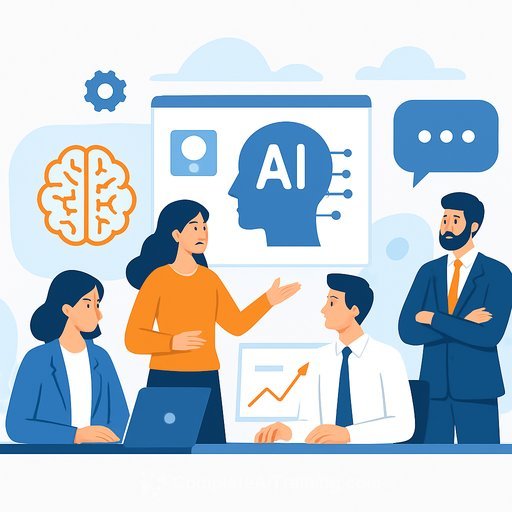
"Using AI is not just a technical development project - it is a change process that affects the entire organisation," says Henna Poutiainen, AI change management consultant at CGI.
Set the direction: strategy, vision and measurable outcomes
AI needs a clear purpose. Define why you are using it, where you are going and what success looks like. Make the message reach everyone through role-specific training and practical communication.
Measure progress from both angles: technical performance and human adoption. Implementation alone doesn't create value. People must know when AI supports their work - and when human expertise is the right call.
Technology and people - you need both
"The technological foundation must be in place, but it is equally important to consider people and how the organisation operates," says Poutiainen. Tech moves fast; habits change slower. Change management is the bridge.
Set clear expectations for roles and responsibilities. Start with an AI readiness assessment: what your people know today and what skills they'll need next. This speeds up projects and enables repeatable deployment.
Focus on real business problems
One of the biggest pitfalls is chasing generic use cases. The best results come from solving concrete business problems that the business owns. IT supports with tools and platforms; the business defines the problem and owns the outcome.
Role-specificity matters. Different teams use AI differently. Align training, tools and ways of working to the needs of each function. Set ethical guidelines and clear principles so people aren't guessing what's acceptable.
Responsible AI: data, ethics and security
Data quality drives outcomes. Decide who owns which data and who keeps it current. If your models learn from internal guidelines, outdated inputs will produce wrong answers.
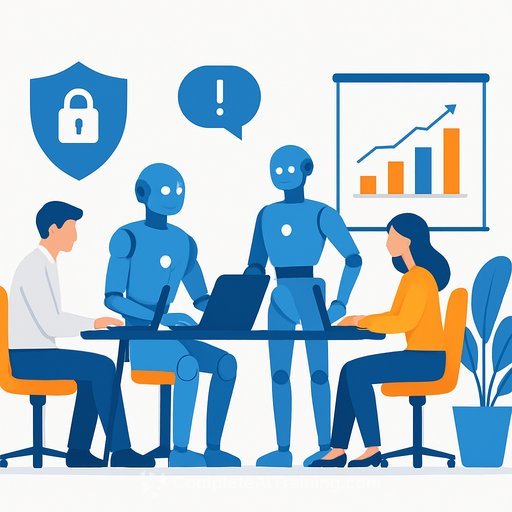
Build a strong security culture. Closed AI systems help, but they still require judgement. Not all information belongs in them. People must know what is safe, allowed and off-limits.
What customers ask for - and what they need
Organisations want help making AI part of everyday work: training design, internal communications, deployment practices and governance. Leaders are also asking the big questions: Where are we taking AI and how do we manage it?
On the product side, technical assistance is common. On the change side, the priority is integration. "Without a solid understanding of AI, no use cases will arise," says Poutiainen. Every function - HR, finance, operations - must spot its own opportunities, not wait for IT to hand them over.
How CGI is doing it internally
CGI trains all personnel in AI fundamentals, then deepens learning by role and technology. Training is personalised and built into ongoing skills development.
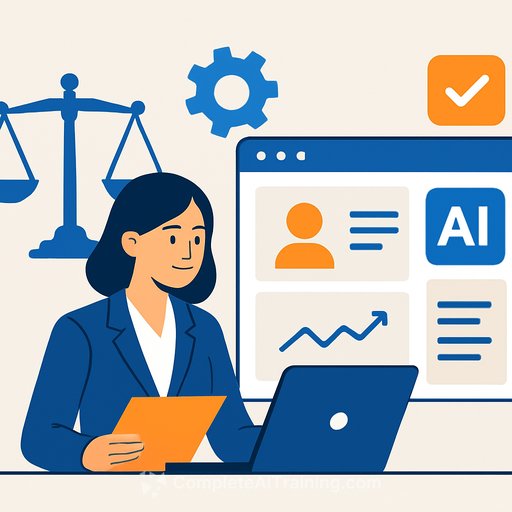
The company has also developed a framework for responsible AI: transparent and explainable models, evaluated for fairness, equality and reliability, with strict data protection and information security requirements.
Finland's AI position - strong base, limited private investment
Finland ranks high relative to its population in international comparisons and holds a solid position among the Nordics. The foundation - research and infrastructure - is strong, but private investment is still limited.
For broader context, see the Stanford AI Index for global benchmarks and trends: AI Index Report.
Society, organisations, individuals - different speeds, one direction
Regulation is still being refined at the societal level. Inside organisations, systematic change management is essential: roles, responsibilities, processes and data management must be explicit and enforced.
Individual adoption is uneven. Differences between sectors are significant, which is why training and communication are critical. Don't assume people will see the potential on their own.
Leadership is the lever
"It is crucial for organisations to appoint someone to coordinate the AI transformation. AI alone will not drive change - active management is required," says Poutiainen.
Leaders must know what AI is, which projects are running and what impact they create. Without ownership and coordination, efforts stay fragmented and value leaks.
Your AI action checklist for management
- Define a clear AI vision tied to business outcomes. Share it in plain language across the organisation.
- Assign a single accountable owner for AI transformation and governance.
- Run an AI readiness assessment; build a role-based training plan.
- Prioritise business-owned use cases with measurable impact.
- Establish ethical guidelines, data ownership and security practices.
- Track both adoption (people) and performance (technology) - iterate fast.
Need help building AI literacy and role-based training?
If you're building organisation-wide capability, explore a practical learning path tailored to training and development leaders: AI Learning Path for Training & Development Managers.
"People need to build confidence in using AI and understand when it can support work and when human expertise is required," Poutiainen reminds. Leadership sets the tone - and makes the shift stick.
Your membership also unlocks: