China's OpenClaw Frenzy Shows How Beijing Shapes Tech Adoption
An Austrian-built AI assistant called OpenClaw sparked a craze across China in March, with hundreds of people lining up outside tech company headquarters and millions adopting customized versions they called "lobsters." The phenomenon reveals how China's government-directed approach to technology development differs sharply from Western markets.
Wang, an IT engineer running a TikTok Shop business, exemplifies the appeal. His customized OpenClaw version can generate up to 200 product listings in two minutes-a task that normally takes him a full day. "My lobster is better than I am at this," he said. "It writes better, and can instantly compare my prices with every competitor."
OpenClaw's code is open-source, making it accessible to Chinese developers. That matters because Western AI models like ChatGPT and Claude are not available in China. The tool's flexibility allowed tech giants Tencent and Baidu to release their own versions, drawing crowds seeking free customized installations.
Government Incentives Drive Adoption
Beijing signaled its priorities early. Several cities offered subsidies for OpenClaw applications-Wuxi provided up to five million yuan ($726,000) for manufacturing and robotics uses. Once the government sets direction, the market follows.
Tech companies across manufacturing, transport, healthcare, and household electronics have rushed to integrate AI into operations. China calls this strategy "AI Plus"-take AI, apply it everywhere. More than 100 AI models have emerged since 2023, though only about 10 remain competitive.
The government sees practical value. China faces a youth unemployment rate above 16%. Many subsidies explicitly target "one-person companies"-startups run by individuals with AI assistance. Young people facing a tight job market are the most likely builders.
The Hype Cools Quickly
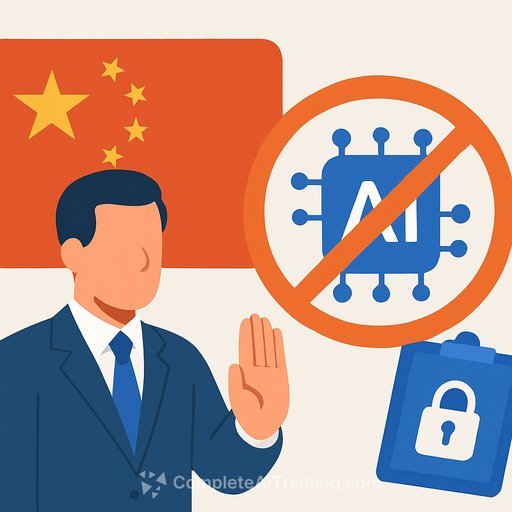
The initial enthusiasm has already faded. Using OpenClaw requires spending tokens, and costs add up. More significantly, Beijing's cybersecurity authorities warned of serious risks from improper installation and use.
Government agencies began banning staff from installing the tool. The trend reversed from promotion to removal within weeks. This contradiction is typical of China's system, according to observers. Local governments compete for approval by adopting what Beijing wants, then pull back as problems emerge.
Fear of Falling Behind
The pressure to adopt AI tools is real. State newspaper People's Daily published commentary warning: "Some say that in 2026, if you don't 'raise lobsters', you've already lost at the starting line."
Jason, an IT programmer, sees the consequences directly. His team now only hires people with AI tool experience. "It's mostly people leaving, with very few new hires coming in," he said. "It is genuinely terrifying."
Wang acknowledges the fear but remains optimistic about his position. "Everyone could be replaced," he said. "But I probably won't need to work, and this could become my full-time job." When asked what happens if AI systems eventually run TikTok shops themselves, he had a simple answer: "I'll use AI to find another business."
Learn more about Generative AI and LLM Courses and AI Agents & Automation to understand how these tools function in practice.
Your membership also unlocks: