
AI news ·
China opens its first AI hospital in Hainan, linking online and offline care through automated triage and patient matching
China opened its first AI hospital in Hainan Province on March 26, connecting patient intake, diagnosis, and follow-up care into one system. Patients upload records before arrival, AI handles triage, and monitoring continues at home after treatment.
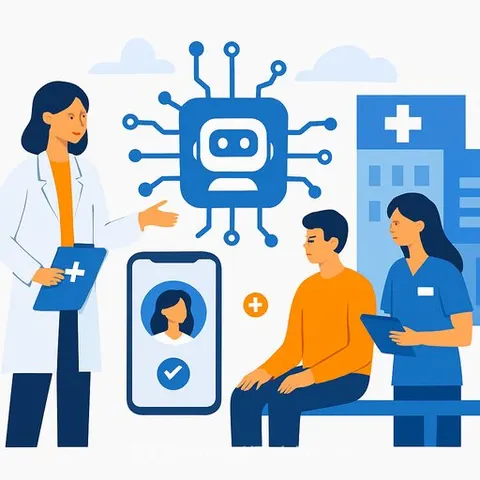
China Opens First AI Hospital, Redefining Patient Care Delivery
China launched its first AI hospital in Boao, Hainan Province, on March 26, marking a shift from isolated AI experiments to systematic integration across healthcare. The facility, operated as Hainan Boao Super Digital Intelligence Hospital, represents a new model where artificial intelligence connects patient intake, clinical decision-making, and follow-up care into a continuous system.
The opening coincided with the release of an international consensus definition for AI hospitals during the Zhongguancun Forum 2026 in Beijing. According to the definition, an AI hospital integrates artificial intelligence deeply into healthcare systems, linking offline clinical expertise with online services to enable proactive, continuous, and patient-centric care.
How the System Works
Patients upload medical records and symptoms through mobile platforms before arriving at the hospital. AI performs initial triage and generates risk alerts, allowing doctors to receive structured case summaries in advance. This preparation accelerates decision-making and reduces diagnostic delays.
After treatment, AI systems continue supporting care through follow-up reminders and medication alerts. The hospital's AI network includes "thousand-disease agents" and "thousand-hospital agents" that track global drug and device innovations, then identify eligible patients and match them with appropriate therapies.
The system reduces the burden of cross-regional treatment-seeking. Patients follow a three-step care model: local consultation, treatment at Lecheng, and home-based follow-up. This approach minimizes travel while expanding access to specialized care.
From Reactive to Proactive Care
Traditional hospitals respond to patient-initiated visits. AI hospitals shift toward early detection through wearable devices and home-based monitoring systems, intervening before symptoms worsen.
This represents a fundamental change in healthcare delivery. Patients gain access to continuous, real-time health monitoring and personalized interventions rather than waiting until illness occurs.
AI hospitals also create unified ecosystems where online and offline services operate together. Patients access complete health records across platforms without repeatedly sharing medical histories.
Policy Support and Scale
China's National Health Commission issued guidelines in November 2025 to regulate and promote AI in healthcare, emphasizing its role across prevention, diagnosis, rehabilitation, and long-term health management. The country's 15th Five-Year Plan (2026-2030) prioritizes AI as a strategic sector.
By May 2025, China had developed approximately 300 medical AI models. Remote imaging services had processed over 68 million cases, strengthening primary healthcare systems.
The Boao Lecheng International Medical Tourism Pilot Zone, China's only special medical zone approved by the State Council in 2013, hosts more than 30 medical institutions. Over 200,000 patients have benefited from more than 500 innovative drugs and devices introduced in the region as of early 2025.
Challenges and Unresolved Questions
Rapid adoption raises concerns about patient overwhelm. Overly detailed AI-generated reports may increase anxiety rather than clarity. Experts caution that regulation, accountability, and ethical boundaries remain unresolved.
Initial investments in AI hospitals are substantial. Experts believe long-term benefits-reduced waiting times, lower travel expenses, and improved operational efficiency-will justify costs, though this remains to be proven at scale.
For healthcare professionals implementing or evaluating AI systems, understanding AI for Healthcare applications and AI Data Analysis methods is essential to assess both opportunity and risk in your organization.
The Broader Goal
The objective of AI hospitals extends beyond technology adoption. The stated goal is to create a more equitable healthcare system where high-quality medical resources are accessible to all, following the pattern of previous innovations like vaccines and antibiotics that expanded healthcare access.