China signals AI-driven job creation and job upgrade: practical takeaways for HR
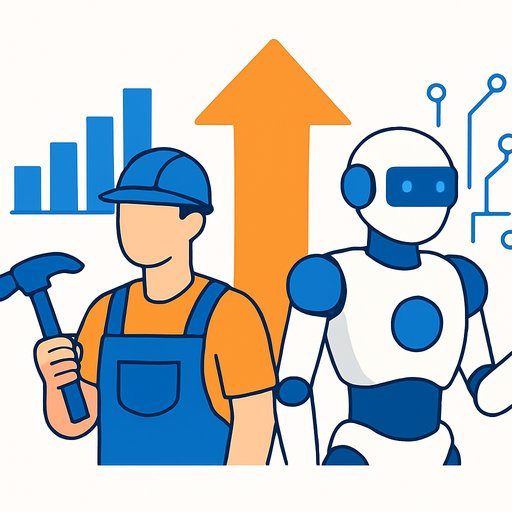
At a press conference during the fourth session of the 14th National People's Congress in Beijing on March 7, 2026, Minister of Human Resources and Social Security Wang Xiaoping said China is studying measures to use AI to create new jobs and to upgrade traditional roles.
The aim: align technological progress with real improvements in people's livelihoods. Expect policy that pairs AI adoption with job stability, skills growth, and stronger worker protections.
Policy direction for 2026-2030
- Employment-first strategy continues in the 15th Five-Year Plan period (2026-30), with coordinated efforts to stabilize, expand, and improve employment.
- Stabilize jobs by backing labor-intensive sectors such as foreign trade, construction, and accommodation and catering-using industry development to protect headcount.
- Expand capacity in the digital economy, high-end manufacturing, and modern services-where industrial upgrading can generate new roles.
- Improve job quality by adjusting the minimum wage mechanism, regulating the human-resources market, and fully enforcing wage-payment protections for migrant workers.
- Targeted support for older workers, migrant workers, people at risk of returning to poverty, and other vulnerable groups via skills training, broader employment channels, and ongoing assistance.
Wang noted that steady employment during 2021-25 reflected consistent prioritization of jobs, a complete industrial system, a large market, and new growth drivers that absorb and redeploy labor. She said the fundamentals for long-term improvement remain intact and that the ministry is confident about keeping overall employment stable and trending better.
Li Changan, a professor at the Academy of China Open Economy Studies under the University of International Business and Economics, said employment work faces both opportunities and challenges, urging full use of positive factors to build a foundation for high-quality, full employment.
What this means for HR leaders
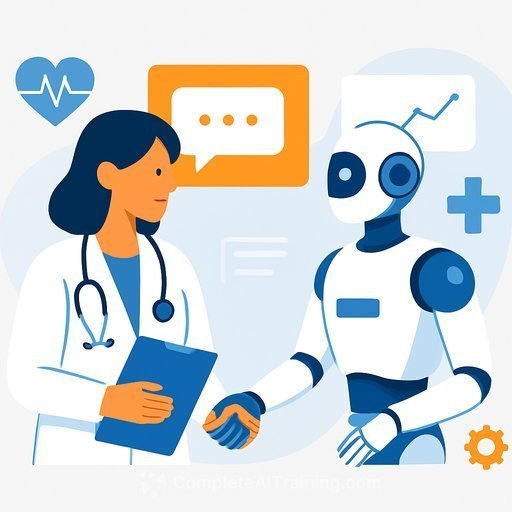
- Job architecture: Map roles where AI can augment work (quality, speed, safety) rather than replace workers. Redesign roles to combine human judgment with AI outputs.
- Skills strategy: Prioritize reskilling for older workers and upskilling for frontline teams. Tie training to clear role transitions and pay bands.
- Fair pay and compliance: Prepare for minimum wage mechanism adjustments. Tighten wage-payment controls for migrant workers (on-time pay, transparent records, grievance channels).
- Labor-market integrity: Strengthen vendor and platform due diligence. Standardize contracts, data handling, and AI usage policies across hiring channels.
- AI governance: Set rules for data privacy, model oversight, worker consent, and bias checks. Involve worker reps early to improve adoption and trust.
Near-term opportunities by sector
- Foreign trade: Use AI to forecast demand, tag skills to orders, and schedule shifts. HR can pilot multilingual support tools and document automation to cut cycle time.
- Construction: Apply AI for safety analytics, site logistics, and equipment maintenance alerts. Build micro-credentials so workers can move into higher-value tech-assisted roles.
- Accommodation and catering: Deploy AI for demand prediction, staffing, and training simulations. Tie productivity gains to transparent incentive plans.
Protecting workers while deploying AI
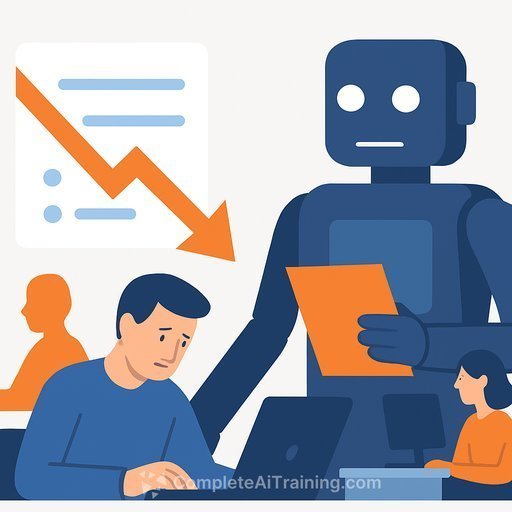
Policy signals emphasize both adoption and protection. For HR, that means pairing every AI use case with a worker safeguard: clear task boundaries, retraining paths, wage floors, overtime controls, and fair evaluation standards that don't punish workers for model errors.
- Link AI adoption to measurable job quality improvements (safety, workload balance, shift predictability).
- Publish wage and scheduling rules in worker-accessible formats and languages.
- Audit pay for migrant workers monthly; reconcile discrepancies before payroll close.
Practical 90-day plan
- Days 0-30: Inventory roles and repetitive workflows; run a skills gap analysis for older and frontline workers. Draft AI usage and data policies.
- Days 31-60: Launch 2-3 AI pilots tied to clear KPIs (quality, time-to-fill, safety incidents). Start wage-compliance stress tests and vendor audits.
- Days 61-90: Convert pilots into job redesigns; publish reskilling ladders and pay impacts. Stand up an AI oversight group with HR, IT, legal, and worker reps.
If you're building an HR roadmap for AI, see AI for Human Resources and the executive-focused AI Learning Path for CHROs for strategy, tooling, and workforce planning ideas.
For policy updates and regulations, check the Ministry of Human Resources and Social Security's official site: mohrss.gov.cn.
Your membership also unlocks: