
AI news ·
China turns to AI to close gaps in medical resources and healthcare access
Chinese doctors are using AI to cut paperwork and match patients to clinical trials. A surgeon in Lanzhou built his own records tool without coding; Beijing Cancer Hospital now auto-matches lung cancer patients to trials overnight.
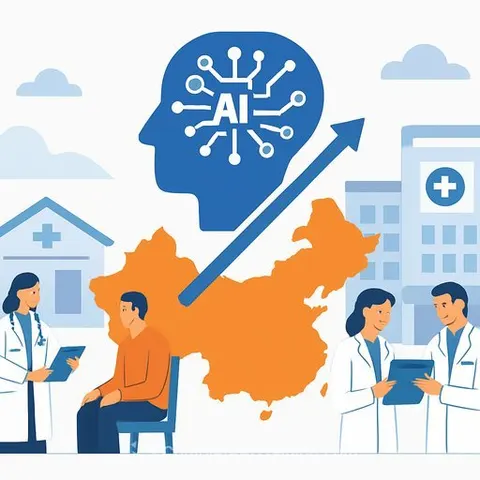
Chinese doctors turn to AI to manage paperwork and improve patient matching
Doctors in China are adopting AI tools to handle administrative tasks and improve clinical decisions, part of a broader national effort to address gaps in medical resources across the country.
Li Bin, a surgeon at the First Hospital of Lanzhou University in northwestern China, built an application that extracts information from doctor-patient conversations and lab report photos, then organizes the data into structured medical records. He used open-source AI software running on a standard computer to create the tool without coding experience.
"A doctor with no coding training can build such applications at very low cost," Li said.
The work reflects China's push to integrate AI into healthcare. Experts say the technology could help distribute medical resources more evenly and raise efficiency across hospitals.
Matching patients to clinical trials
At Beijing Cancer Hospital, an AI system now handles a task that once required manual work. The system runs overnight, matching patients with lung cancer against available clinical trials and producing ranked lists of suitable studies for each person by 7am.
Song Yuqin, deputy head of the hospital, said the system has improved how the hospital conducts clinical trial research.
Broader adoption of such tools could address a persistent challenge: China's medical resources are unevenly distributed, with better-equipped hospitals concentrated in major cities while rural and smaller urban areas face shortages of doctors and equipment.
For healthcare professionals, the trend points to a shift in how work gets done-less time on data entry and administrative matching, more time on patient care and clinical judgment.
Learn more about AI for Healthcare and how organizations are applying AI Data Analysis to medical workflows.